
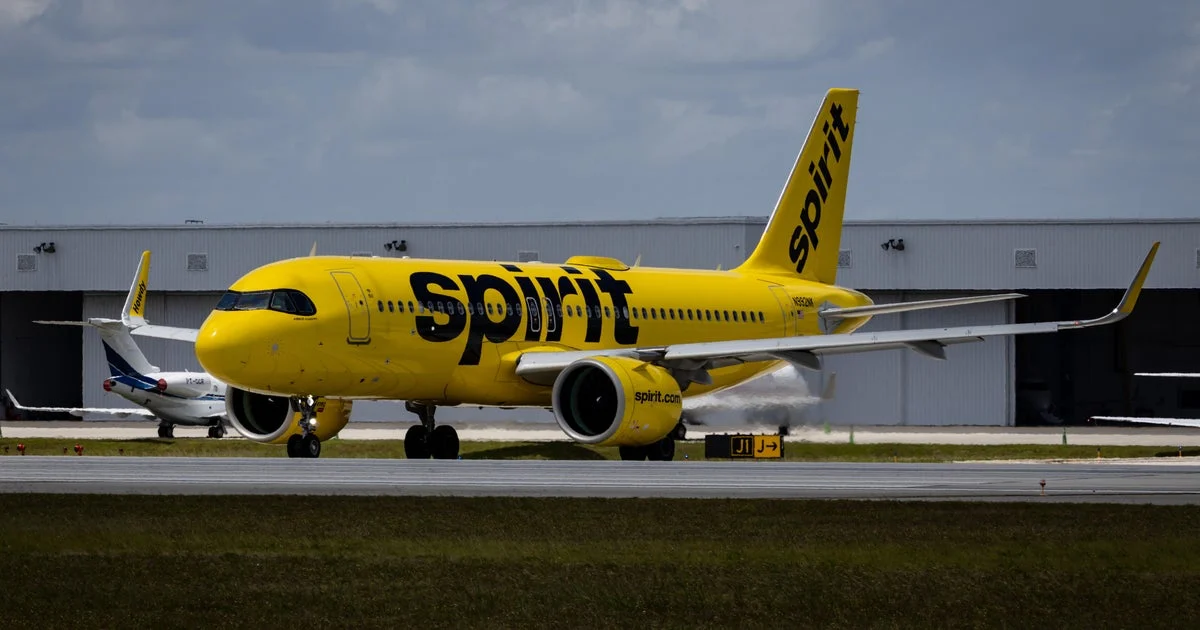
Former President Donald Trump confirmed on April 23, 2026, that he is considering a government-backed purchase of Spirit Airlines to save jobs and stabilize the struggling budget airline. Trump expressed interest in acquiring the airline “for the right price,” with plans to eventually resell it once oil prices decline.
Speaking at an Oval Office event unrelated to the airline, Trump highlighted Spirit’s valuable assets, including its fleet and airport slots, and stated, “I’d love to be able to save those jobs. I’d love to be able to save an airline.” He also mentioned having “a smart person” in mind to potentially lead the airline toward financial recovery.
Trump’s comments came after a Spirit Airlines lawyer disclosed in a U.S. Bankruptcy Court hearing that the carrier is engaged in advanced talks with the federal government regarding financing to emerge from Chapter 11 bankruptcy protection. The discussions reportedly include a potential loan of up to $500 million, which might grant the government a substantial ownership stake through warrants.
Spirit Airlines, based in Fort Lauderdale, Florida, employs approximately 15,000 people, with around 6,000 stationed in Florida. The airline filed for bankruptcy protection twice in recent years, in November 2024 and August 2025, amid rising jet fuel costs driven by the ongoing Iran conflict. Creditors recently questioned Spirit’s viability, increasing the likelihood the airline could be forced to liquidate without intervention.
Spirit Airlines President and CEO Dave Davis responded to Trump’s remarks with gratitude, expressing hope for a solution that preserves jobs, maintains competition, and keeps fares affordable for consumers.
The federal government’s involvement to support a single airline is an uncommon move, distinct from broader industry bailouts previously employed after the 9/11 attacks and during the COVID-19 pandemic. Transportation Secretary Sean Duffy acknowledged the challenge, emphasizing the need to evaluate whether assistance would make Spirit viable or risk wasting taxpayer money.
The prospect of a federal bailout has drawn mixed reactions from lawmakers. Some Republican senators, including Ted Cruz and Tom Cotton, voiced strong opposition, calling it a poor use of public funds given Spirit’s repeated bankruptcies. Conversely, Spirit’s pilots’ union expressed “strong support” for a rescue deal, citing the airline’s role in providing affordable travel options nationwide.
Why it matters
Spirit Airlines is one of the largest ultra low-cost carriers in the U.S., known for its budget-friendly fares. A federal takeover backed by taxpayer funds would be an unusual intervention in the airline industry and could set a precedent for future bailouts. Additionally, preserving Spirit could impact competition and pricing in the air travel market. The debate also reflects broader tensions around government involvement in private enterprise and the use of public resources to support struggling companies.
Background
Spirit’s financial troubles intensified after the Biden administration sued to block JetBlue Airways’ planned $3.8 billion acquisition of Spirit in 2023. A federal judge ruled against the merger, citing concerns over reduced competition and higher fares. Following this, Spirit faced escalating financial stress exacerbated by increased fuel costs amid geopolitical instability in the Middle East. The airline’s bankruptcy filings and ongoing restructuring efforts have not yet restored profitability.
Spirit’s fleet primarily consists of Airbus A320 family aircraft, with plans to downsize from approximately 131 planes to 76-80 by late 2026 as part of its reorganization. Despite past acquisition interest from rivals like JetBlue and Frontier, Spirit remains an independent carrier under significant financial strain.
Read more Politics stories on Goka World News.