
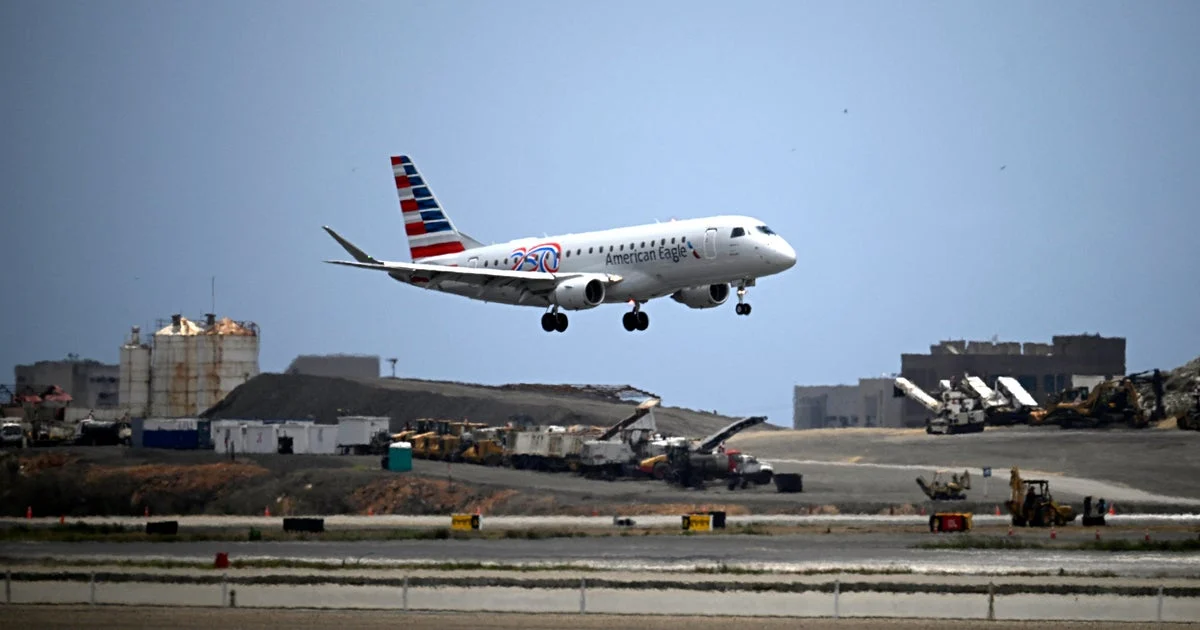
On April 30, 2026, officials from the Trump administration boarded the first nonstop commercial flight between the United States and Venezuela in seven years, signaling a significant shift in diplomatic and economic relations. The American Airlines flight departed Miami bound for Caracas, carrying key U.S. government representatives, including Jarrod Agen of the National Energy Dominance Council, and Venezuela’s newly appointed ambassador to the U.S., Félix Plasencia.
Advancing U.S. Business Interests in Venezuela
The delegation aims to promote agreements between U.S. companies and Venezuela’s state-run oil company PDVSA, as well as mining enterprises. American energy firms such as HKN Energy, backed by Ross Perot Jr., and Hunt Energy are among those entering the Venezuelan market. Agen indicated plans to meet with interim Venezuelan President Delcy Rodríguez to discuss further collaboration.
Since the January 2026 special forces operation that resulted in the capture and extradition of former Venezuelan President Nicolás Maduro and his wife on drug trafficking charges, the Trump administration has eased sanctions on Venezuela’s oil sector to foster U.S. investment. Energy Secretary Chris Wright and Interior Secretary Doug Burgum have previously led delegations, underscoring the country’s importance due to its vast oil reserves.
Political Transition and Challenges
Despite Maduro’s removal, his regime remains operational with Rodríguez, his former vice president, installed as interim leader and recognized by the U.S. as Venezuela’s sole head of state. Rodríguez appears positioned to complete Maduro’s six-year term, potentially delaying elections until 2030. The Trump administration has avoided setting a firm timeline for democratic elections, focusing instead on economic stabilization.
The continued presence of Diosdado Cabello, a powerful former security official and alleged drug trafficker with a U.S. bounty, illustrates ongoing internal complexities. While sanctions on Rodríguez were lifted recently, Cabello remains sanctioned and designated as a terrorist by the U.S. government.
Industry Perspectives
Chevron, the U.S.’s second-largest energy company, has maintained operations in Venezuela throughout the political upheaval and supports regulatory reforms proposed by Rodríguez’s government to attract investment. CEO Mike Wirth said recent changes to hydrocarbon laws show progress but acknowledged the regulatory framework still requires improvement to generate significant new investments.
Wirth noted the depletion of Venezuela’s energy workforce over two decades has posed challenges, though Chevron retains a skilled core team. He also highlighted ongoing discussions with U.S. officials, including Secretary of State Marco Rubio, about the eventual need for elections.
Why it matters
The resumption of direct commercial flights and warming economic ties exemplify the Trump administration’s strategy to stabilize Venezuela’s economy by revitalizing its oil industry. This approach bypasses earlier strict sanctions and offers U.S. companies opportunities in one of the world’s largest crude oil reserves. However, the uncertain political landscape and delayed elections raise questions about Venezuela’s democratic trajectory and long-term stability.
Sources
This article is based on reporting and publicly available information from the following source:
Read more Business stories on Goka World News.