
Scientists at MIT’s Picower Institute for Learning and Memory have demonstrated that different mutations in the MECP2 gene cause distinct abnormalities in Rett syndrome, underscoring the need for personalized treatments tailored to specific genetic variants.
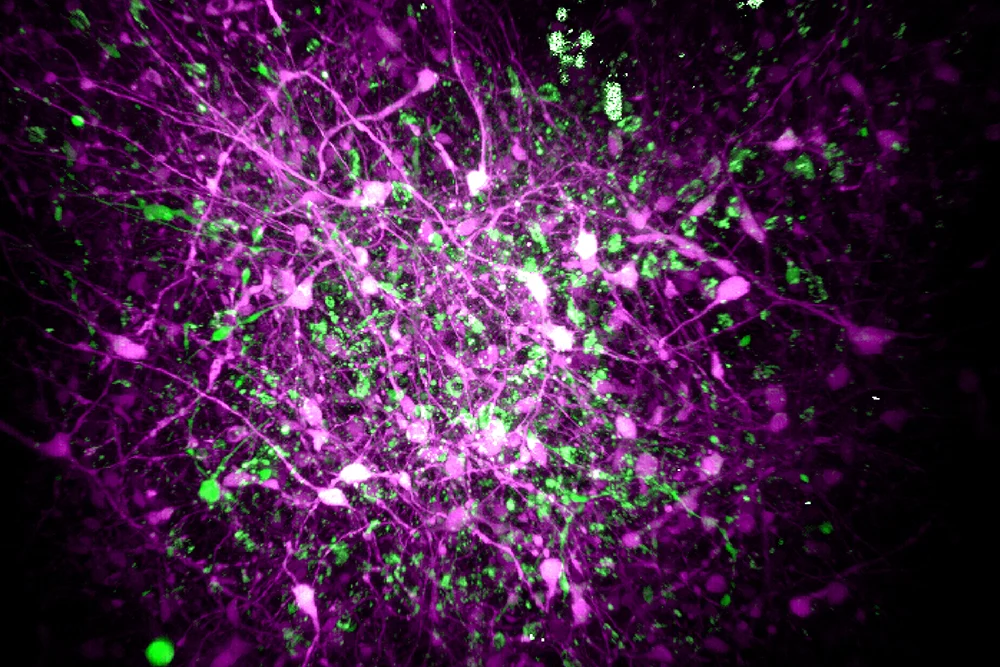
The study, published in Nature Communications, focused on two MECP2 mutations—R306C and V247X—using advanced three-dimensional human brain organoids derived from the skin or blood cells of Rett syndrome patients. These “minibrains” mimic human brain tissue and allowed researchers to observe mutation-specific structural and functional changes at cellular resolution.
Distinct Mutation Effects on Brain Organoids
Rett syndrome, a neurological disorder primarily affecting females, is caused by mutations in MECP2. While over 800 mutations are linked to the disorder, eight mutations account for more than 60% of cases. The R306C mutation, present in 7-8% of cases, alters a single DNA base pair, while the rarer V247X mutation results from a single base deletion that produces a truncated, dysfunctional protein.
After three months in culture, organoids harboring the V247X mutation displayed larger size and altered layer thickness compared to controls, while R306C organoids resembled controls more closely. Both mutations impaired the development of neuronal axon projections and reduced neural spiking activity and synchronicity.
However, measures of network efficiency, assessed by “small-world propensity” (SWP), diverged between mutations: SWP decreased in R306C organoids but increased in V247X. These findings were corroborated by EEG studies in children with Rett syndrome, conducted in collaboration with Boston Children’s Hospital, which indicated similar mutation-specific differences in neural network properties.
Mutation-Specific Molecular Pathways and Treatments
Single-cell RNA sequencing revealed hundreds of gene expression differences unique to each organoid type. For example, R306C organoids showed elevated levels of HDAC2, a gene product that suppresses gene expression, while V247X organoids exhibited reduced expression of GABA receptor genes and astrocyte dysfunction.
Based on these molecular insights, researchers tested targeted therapies: an HDAC2 inhibitor restored neuronal activity and network efficiency in R306C organoids, and the GABA receptor agonist baclofen normalized network function in V247X organoids. Both drugs have prior clinical research in other contexts, suggesting potential for repurposing.
Lead author Tatsuya Osaki emphasized that using personalized organoid models enables mutation-specific insight and therapeutic testing that broad gene knockouts cannot provide. Senior author Mriganka Sur noted plans to extend this approach to study additional MECP2 mutations against standardized controls.
Why it matters
This research highlights the complexity of Rett syndrome as a single-gene disorder with mutation-specific pathological mechanisms. It supports the growing precision medicine paradigm by demonstrating that effective treatment may require tailoring interventions to individual genetic mutations. The organoid platform provides a promising tool for rapid testing of variant-specific therapies, accelerating development of more effective personalized interventions for Rett syndrome patients.
Sources
This article is based on reporting and publicly available information from the following source:
Read more Science Discoveries stories on Goka World News.