
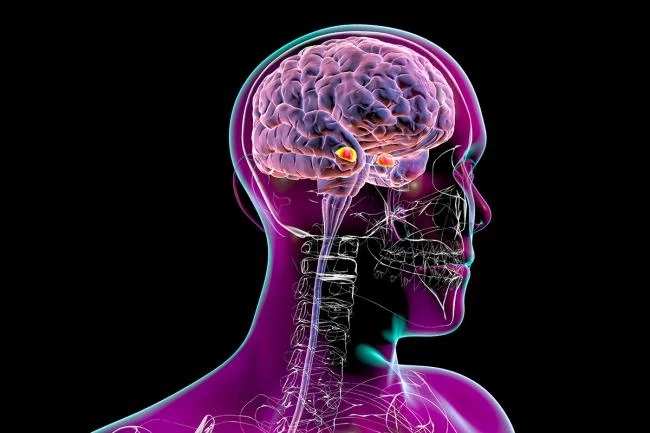
A National Institutes of Health (NIH)-funded study has revealed how emerging oral small-molecule GLP-1 receptor agonists reduce hedonic, or pleasure-driven, eating by engaging a deep brain reward circuit in mice. This discovery sheds new light on the mechanism behind next-generation weight-loss drugs like the FDA-approved orforglipron.
Researchers at the University of Virginia focused on the ability of small-molecule GLP-1 drugs to penetrate brain regions previously thought inaccessible to these compounds. Unlike the larger injectable GLP-1 peptides, which suppress appetite by acting on the hypothalamus and hindbrain, the oral drugs stimulated activity in the central amygdala, a deeper brain area involved in desire and reward.
The team used gene editing to humanize GLP-1 receptors in mice before administering orforglipron and danuglipron. They observed that activation of the central amygdala led to decreased dopamine release within key circuits governing the brain’s reward system during hedonic feeding. This finding suggests that these oral GLP-1 drugs directly moderate food cravings linked to pleasure rather than solely reducing energy-driven hunger.
“As accessibility and patient use of these medications increase, understanding how they alter neural circuits is critical,” said Lorenzo Leggio, clinical director of NIH’s National Institute on Drug Abuse (NIDA), which partly funded the research. Co-author Ali Guler, a professor at the University of Virginia, noted the implications extend beyond eating behaviors: “Now it seems oral small-molecule GLP-1s also dial back eating for pleasure by engaging a brain reward circuit.”
The researchers highlight the potential for these drugs to influence cravings related to other reward-driven disorders, including substance use. Planned follow-up studies aim to explore their effects on addiction.
Why it matters
This research identifies a previously unknown brain pathway through which orally available GLP-1 drugs suppress hedonic feeding, offering insights for developing treatments targeting compulsive eating and possibly addiction. Small-molecule drugs like orforglipron provide a more accessible and cost-effective alternative to injectable peptides, potentially broadening therapeutic options. Understanding drug action at neural circuit levels is essential for optimizing weight-loss treatments and extending their use to other reward-related conditions.
Background
GLP-1 receptor agonists are a class of drugs that promote weight loss primarily by reducing appetite. Injectable peptides such as semaglutide have been well-studied for their effects on hypothalamic and hindbrain circuits controlling hunger. In contrast, small-molecule oral GLP-1 drugs, approved more recently, are less expensive to produce and easier to administer but have been less understood in terms of their brain penetration and mechanisms. This study uses advanced gene editing to model human responses and reveal new brain targets for these medications.
The study was funded by NIH institutes including NIDA, National Institute of Neurological Disorders and Stroke, and others. The findings were published in Nature in 2026 and reported ahead of any FDA approval for indications beyond weight loss.
Sources
This article is based on reporting and publicly available information from the following source:
Read more Health & Public Health stories on Goka World News.