
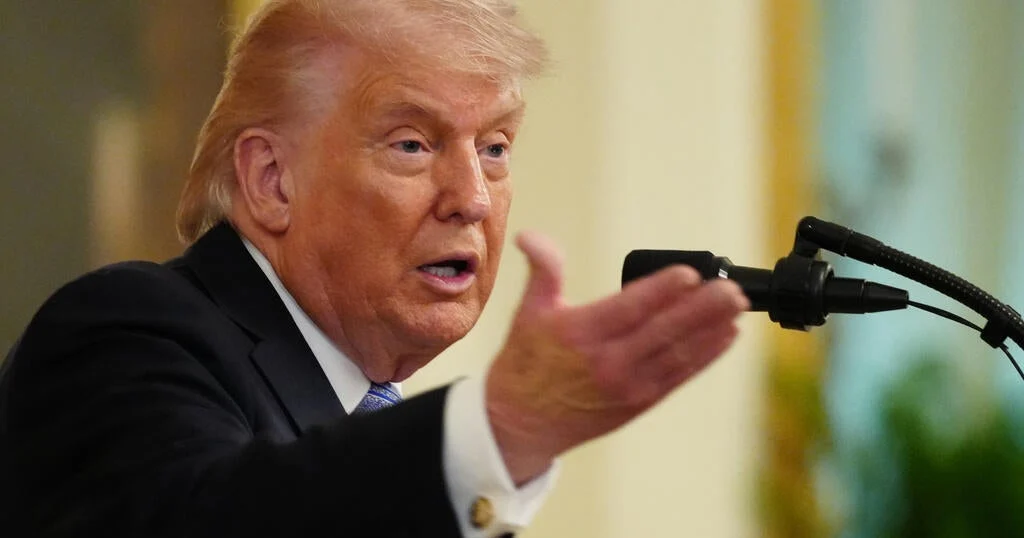
President Donald Trump’s campaign to remove Indiana Republican state senators who opposed a GOP-backed redistricting plan largely succeeded in Tuesday’s primary elections, according to projections from The Associated Press.
Five incumbent Republican senators who voted against redrawing Indiana’s congressional maps were defeated by challengers endorsed by Trump. A sixth Trump-backed candidate won a GOP primary for an open Senate seat where the previous incumbent, who also opposed the map, chose not to run for reelection. One incumbent previously opposing the redistricting survived a primary challenge, and another race remained too close to call as of Tuesday night.
Redistricting Conflict Splits Indiana GOP
The conflict centers on a proposed redistricting map intended to favor Republicans in all nine of Indiana’s congressional districts. The map, supported by Governor Mike Braun and passed by the state House, aimed to consolidate GOP control after Trump’s 19-point win in the state in 2024.
Despite holding a 40-10 supermajority, the Indiana Senate blocked the plan, with 21 Republicans—including State Senate President Rodric Bray—voting against it. Dissenting senators criticized the map on both ethical grounds and practical political concerns, with Bray stating the caucus was “fairly evenly split” and that the map was “not the right way for Indiana to move forward.”
Academic observers noted that resistance to gerrymandering among Hoosier voters factored into the senators’ opposition, suggesting concerns about constituent approval contributed to the vote against the map.
Trump’s Campaign and Financial Support
Trump launched a public campaign targeting the anti-redistricting senators on his social media platform, Truth Social, labeling them “pathetic,” “incompetent,” and “Republicans In Name Only.” He endorsed 8 challengers in the contested primaries and gave support to 11 incumbents who voted for the map.
Trump-aligned groups also invested heavily in advertising, with outside spending on the Senate primaries estimated at $9 million and total ad spending tracked at $13.5 million—dramatically higher than the roughly $300,000 spent two years earlier. Indiana Senate Republicans also increased their financial involvement in the races.
Some senators opposing the plan experienced doxxing and harassment prior to the elections. Although Bray is not up for reelection until 2028, his leadership role may be jeopardized by the reshaped caucus following the primaries.
Reactions and Implications
Governor Braun described Tuesday as a “historic night for Indiana,” while Republican U.S. Senator Jim Banks praised the election of “more conservative Republicans” to the state Senate.
Among those defeated was longtime GOP leader State Sen. Travis Holdman, who upheld his vote against redistricting and expressed no bitterness over his loss. His victorious challenger, Blake Fiechter, committed to representing all constituents and “turning the page.”
Why it matters
This election cycle highlights President Trump’s deepening influence over intra-party battles in state legislatures, extending to low-profile but strategically significant races. The redistricting fight in Indiana illustrates the ongoing national dispute over congressional map drawing, where control at the state level directly affects federal representation.
The ousting of senators who resisted party-backed gerrymandering plans signals potential shifts in how state legislatures approach redistricting, with repercussions for electoral competitiveness and partisan balance.
Background
Redistricting occurs every 10 years following the census to redraw congressional and legislative district boundaries. In many states, including Indiana, the process is politically contentious, with parties seeking maps that maximize their electoral advantage.
Trump’s involvement in state-level primaries related to redistricting reflects his broader strategy to consolidate GOP power through controlled electoral maps, a tactic deployed in other battleground states such as Texas.
Sources
This article is based on reporting and publicly available information from the following source:
Read more Politics stories on Goka World News.