
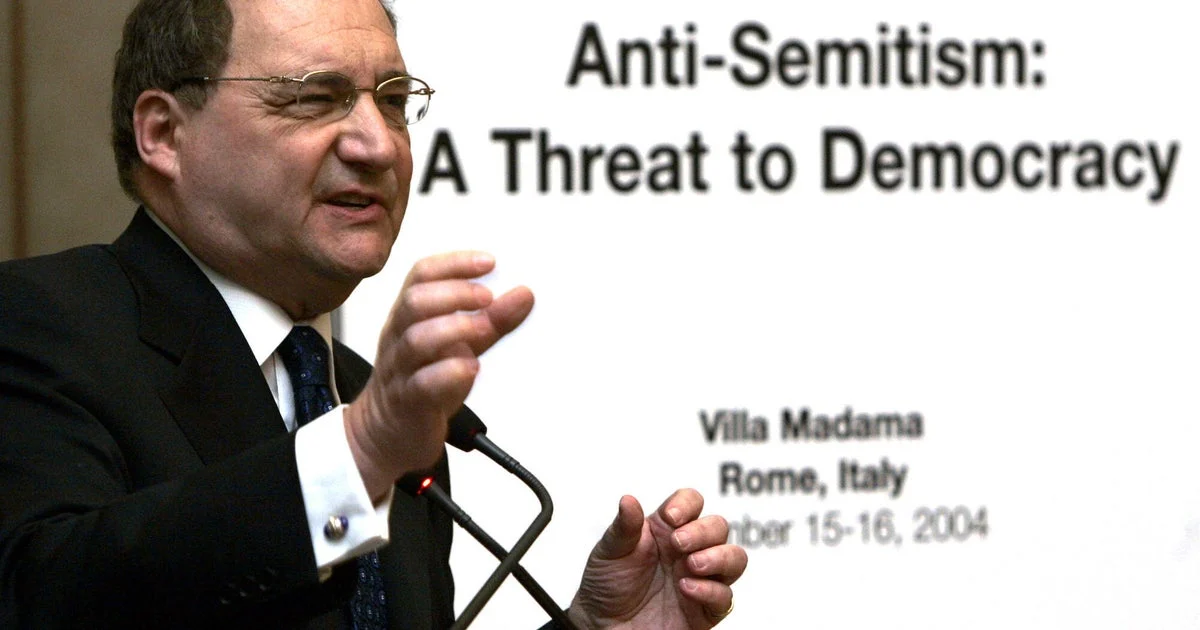
Abe Foxman, who led the Anti-Defamation League (ADL) for nearly three decades and was a major voice against antisemitism and hate, died at 86, the organization announced on Sunday. Foxman’s tenure as national director lasted 28 years until his retirement in 2015.
During his leadership, Foxman counseled U.S. presidents, international leaders, CEOs, and cultural figures, challenging antisemitic remarks and advocating for the Jewish community worldwide. ADL Director Jonathan Greenblatt described Foxman as a figure whose voice was respected globally by popes, presidents, and prime ministers.
Career and Advocacy
Born in 1940 to Polish Jewish parents in modern-day Belarus, Foxman survived the Holocaust by concealing his Jewish identity under a Catholic baptism arranged by his nanny. After World War II, he reunited with his family and immigrated to New York.
Foxman earned a law degree before joining the ADL as a staff lawyer. He spent his entire 50-year professional career with the organization, becoming national director in 1987. Under his leadership, the ADL expanded efforts beyond Jewish issues to combating white supremacy, supporting immigrant and LGBTQ rights, and promoting diversity training for law enforcement.
The ADL also created educational programs about the Holocaust, civil rights legislation, and bullying prevention. Despite facing criticism for either overreacting to antisemitic incidents or forgiving high-profile individuals who apologized for anti-Jewish remarks, Foxman maintained that accepting apologies was crucial to building alliances and reducing hatred.
Concerns About Rising Online Hate
Upon retiring, Foxman expressed concern about how the internet enabled the rapid, anonymous spread of hate speech and bigotry. He saw this as a significant challenge to efforts against antisemitism and other forms of bias.
Why it matters
Foxman’s leadership strengthened the ADL’s role as a premier organization addressing antisemitism, hate crimes, and civil rights in America and globally. His approaches to balancing firm criticism with opportunities for reconciliation influenced how advocacy groups engage with public figures and the broader society.
His death marks the passing of a significant figure in modern civil rights and antisemitism advocacy, emphasizing ongoing challenges in combating hate speech both offline and online.
Sources
This article is based on reporting and publicly available information from the following source:
Read more US News stories on Goka World News.