
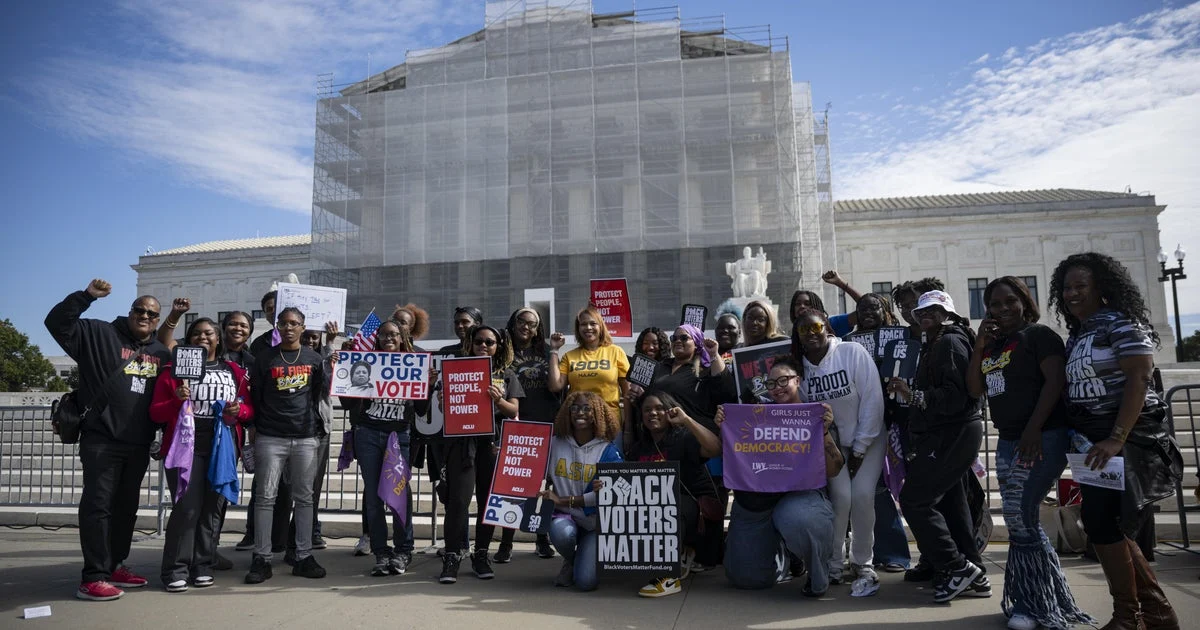
The U.S. Supreme Court on Monday cleared the way for Alabama to implement its 2023 congressional district map, overturning lower court decisions that had blocked the GOP-drawn plan. The ruling arrives ahead of the 2026 midterm elections and follows the court’s recent landmark decision that weakened enforcement provisions of the Voting Rights Act.
In a 6-3 decision, the justices vacated the rulings from a three-judge district court panel which had prevented Alabama from using the 2023 map. The plan contains one majority-Black congressional district out of seven total districts. The three dissenting justices—Sonia Sotomayor, Elena Kagan, and Ketanji Brown Jackson—argued that the Supreme Court’s decision would cause confusion as Alabamians prepare to vote soon.
Alabama lawmakers drew the 2023 map after the Supreme Court struck down a 2021 congressional plan that was deemed likely to violate Section 2 of the Voting Rights Act by diluting Black voting strength. That 2021 map was replaced by a court-drawn map used in the 2024 elections, which included two majority-Black districts.
Governor Kay Ivey signed legislation authorizing special elections for districts affected should the state revert to the 2023 boundaries. The primary election is set for May 19, underscoring the time-sensitive nature of the Supreme Court’s intervention.
Democratic Representative Shomari Figures, one of Alabama’s two majority-Black district members, called the Supreme Court ruling “incredibly unfortunate,” warning it could undermine Black political representation reminiscent of earlier decades. Figures expressed hope that the lower courts would maintain the existing map despite the high court’s ruling.
Why it matters
The decision marks a significant shift in Alabama’s congressional map just ahead of critical elections, reshaping minority voting power and political representation. It reflects the broader impact of the Supreme Court’s recent ruling that limited Section 2 protections under the Voting Rights Act, influencing redistricting battles in Southern states. The ruling enables a GOP-favored map with fewer majority-Black districts, affecting the partisan and racial composition of Alabama’s congressional delegation.
Background
Since 2021, Alabama’s congressional maps have been subject to extensive litigation over alleged violations of the Voting Rights Act, specifically Section 2, which prohibits voting practices that discriminate based on race. The original 2021 Republican-drawn map was struck down for likely diluting Black voters’ influence, prompting a courtsupervised remedial map with two majority-Black districts. The 2023 map, also created by Republicans, reduced this to one majority-Black district, sparking new legal challenges. This case is part of an ongoing national pattern of contested redistricting following the Supreme Court’s narrowing of racial protections in voting laws.
Sources
This article is based on reporting and publicly available information from the following source:
Read more Politics stories on Goka World News.