
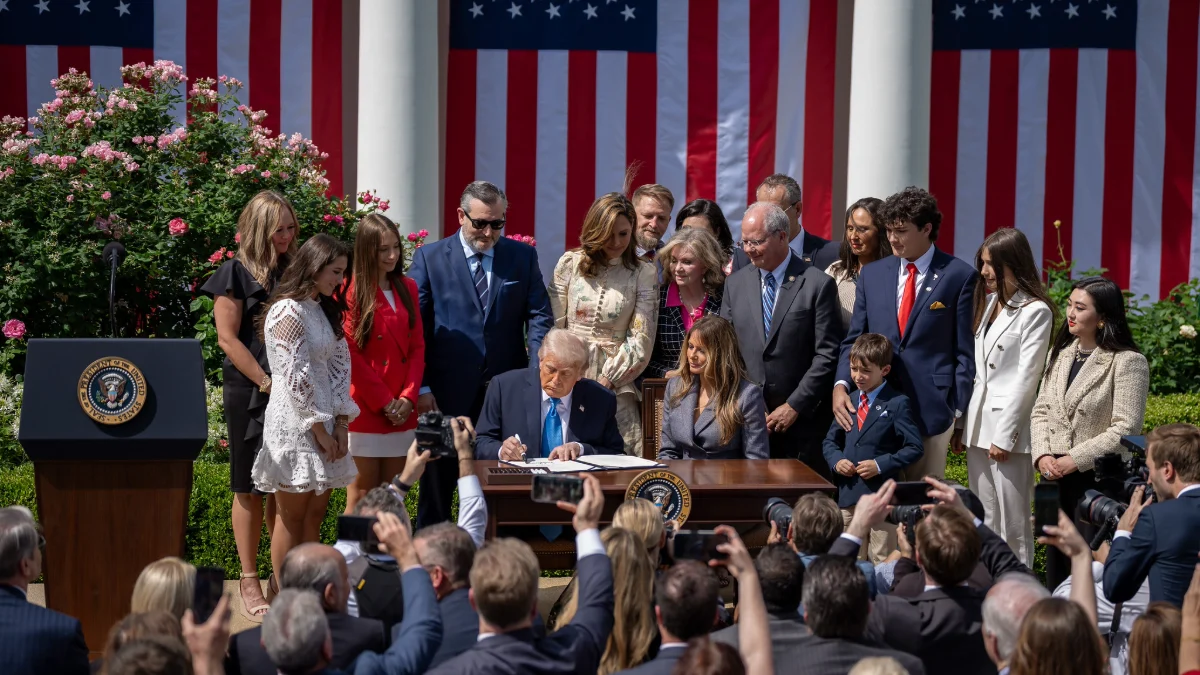
One year after President Donald Trump signed the TAKE IT DOWN Act into law on May 19, 2025, which criminalizes the publication of non-consensual intimate images—including AI-generated deepfakes—the prevalence of such content online has increased rather than decreased. The Federal Trade Commission (FTC) recently reminded businesses of their compliance obligations under the law as the first enforcement deadline approaches, but researchers report limited evidence of impact on the deepfake ecosystem.
Deepfake Pornography Supply and Demand Rise
The TAKE IT DOWN Act classifies online platforms hosting user-generated content as “covered platforms,” requiring them to implement notice-and-removal procedures for non-consensual intimate images within 48 hours of a valid takedown request. Despite this, major online communities where deepfake pornography is shared have seen sharp increases in both the production and demand for such content since the law’s passage.
Notably, following the shutdown of MrDeepfakes—a notorious deepfake porn site that closed shortly before the law’s enactment—other platforms and online forums with millions of users have absorbed the activity. These include previously understudied websites labeled as Website A and Website B, alongside well-known communities like 4chan. On 4chan, a dedicated subforum for nudification requests illustrates continuing user demand.
Creation tools for AI-generated sexual imagery have become widely accessible and inexpensive, with some mainstream AI services like xAI’s Grok responding to explicit prompts. Additionally, specialized websites allow users to generate deepfake images quickly for low or no cost. Tech-savvy individuals can also run AI models offline to avoid regulatory oversight.
Enforcement and Platform Responsibility
Despite the legal framework, compliance with takedown procedures remains limited. While 4chan has published takedown instructions under the law, researchers observed few content removals, and the major platforms with large user bases have yet to implement formal protocols. The enforcement timeline gives platforms until May 19, 2026, to establish these procedures.
Internationally, the United Kingdom’s Online Safety Act (OSA), which covers a broader range of harms including sexual deepfakes, has already initiated enforcement actions. UK regulator Ofcom designated 4chan as a covered platform, demanded risk assessments, and issued fines. Similar enforcement efforts against other platforms in the UK are underway.
The TAKE IT DOWN Act’s first criminal conviction occurred last month, marking a milestone in enforcement. However, advocacy groups like the Electronic Frontier Foundation have raised concerns about potential misuse of takedown requests to suppress legitimate speech.
Why it matters
The continued growth of non-consensual deepfake pornography highlights ongoing challenges in combating online sexual abuse despite new federal legislation. The TAKE IT DOWN Act represents a significant legal step by criminalizing these acts nationally, replacing fragmented state laws. Yet, the effectiveness of the law depends heavily on consistent enforcement and platform compliance.
Victims of non-consensual deepfake content face severe emotional and social harms, underscoring the urgent need for effective removal mechanisms and deterrence. The current data suggest that criminalization alone has not deterred perpetrators or stemmed the demand, pointing to a complex digital environment where technology advances rapidly, and illicit content proliferates across resilient online ecosystems.
Background
Before the TAKE IT DOWN Act’s enactment, non-consensual intimate image laws varied widely across U.S. states, lacking federal uniformity. The law addresses both real and AI-generated explicit images, classifying online platforms with user-generated content as responsible for implementing takedown processes. It also sets specific standards for valid removal requests, including signed declarations by victims.
The rise of sophisticated AI technologies has made it easier and cheaper to produce high-quality synthetic pornography, fueling demand and challenging existing content moderation and legal efforts. Previous major deepfake pornography communities like MrDeepfakes responded to the looming legal landscape by shutting down, but activity has since migrated to larger and more diffuse platforms that remain difficult to regulate.
Sources
This article is based on reporting and publicly available information from the following source:
Read more AI Regulation stories on Goka World News.