
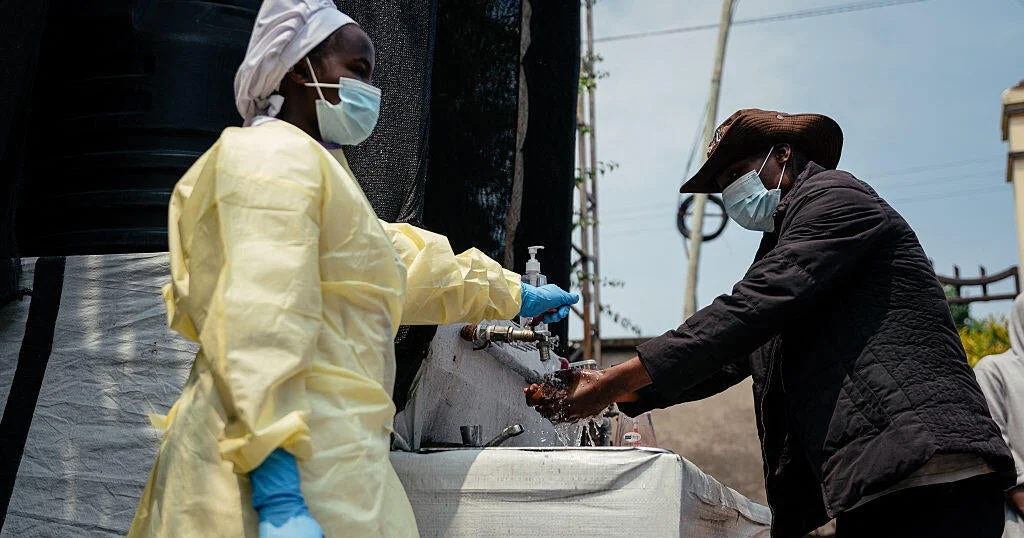
The Ebola outbreak affecting the Democratic Republic of Congo and Uganda has rapidly expanded to over 500 suspected cases, with at least 131 deaths confirmed as of May 19, 2026. Health officials have identified the causative agent as the Bundibugyo virus, a rare Ebola strain for which no vaccines or approved treatments currently exist.
Unlike the more common Zaire strain of Ebola virus, which has an approved vaccine and treatment, the Bundibugyo virus presents unique challenges. The only licensed Ebola vaccine, ERVEBO, produced by Merck, targets the Zaire strain and is not authorized for protection against Bundibugyo. Merck stated that existing research on cross-protection is limited, non-human, and does not apply to ERVEBO specifically.
This outbreak marks only the third known occurrence involving the Bundibugyo virus. The first was detected in Uganda’s Bundibugyo District in 2007, resulting in 149 cases and 37 deaths. A second outbreak in Congo in 2012 led to 57 cases and 29 deaths. Compared to the Zaire strain—which can have fatality rates as high as 90%—the Bundibugyo virus has a lower fatality rate estimated at 30 to 50% based on previous outbreaks.
Symptoms of Bundibugyo virus disease begin with nonspecific signs such as fever, fatigue, muscle pain, headache, and sore throat, which can be confused with other illnesses. These initial symptoms may progress to vomiting, diarrhea, abdominal pain, rash, organ dysfunction, and occasionally internal or external bleeding. The virus spreads through direct contact with bodily fluids from infected individuals.
Among those infected in the current outbreak is an American doctor working with a missionary group in Congo. Several other healthcare workers are reported to have been exposed to the virus.
There are ongoing research efforts to develop vaccines targeting diverse Ebola virus strains, but none currently close to deployment address the Bundibugyo virus specifically. Medical experts emphasize the importance of early supportive care—including rehydration and symptom management—to improve survival chances.
Why it matters
The detection of the Bundibugyo virus in this outbreak raises urgent public health concerns due to the absence of vaccines or targeted treatments. The virus’s potential for severe illness and significant fatality highlights the need for vigilant containment and rapid supportive healthcare. Given the limited data on Bundibugyo, health authorities face challenges in predicting outbreak dynamics and preparing appropriate medical responses.
Background
Ebola disease is caused by several orthoebolavirus species, with the Zaire, Sudan, and Bundibugyo strains historically responsible for major epidemics. Vaccines and treatments to date have focused solely on the Zaire virus, which has caused numerous outbreaks since it was first identified in 1976. The Bundibugyo virus, discovered in 2007, remains much less understood due to fewer outbreaks and limited research.
Sources
This article is based on reporting and publicly available information from the following source:
Read more Health & Public Health stories on Goka World News.