
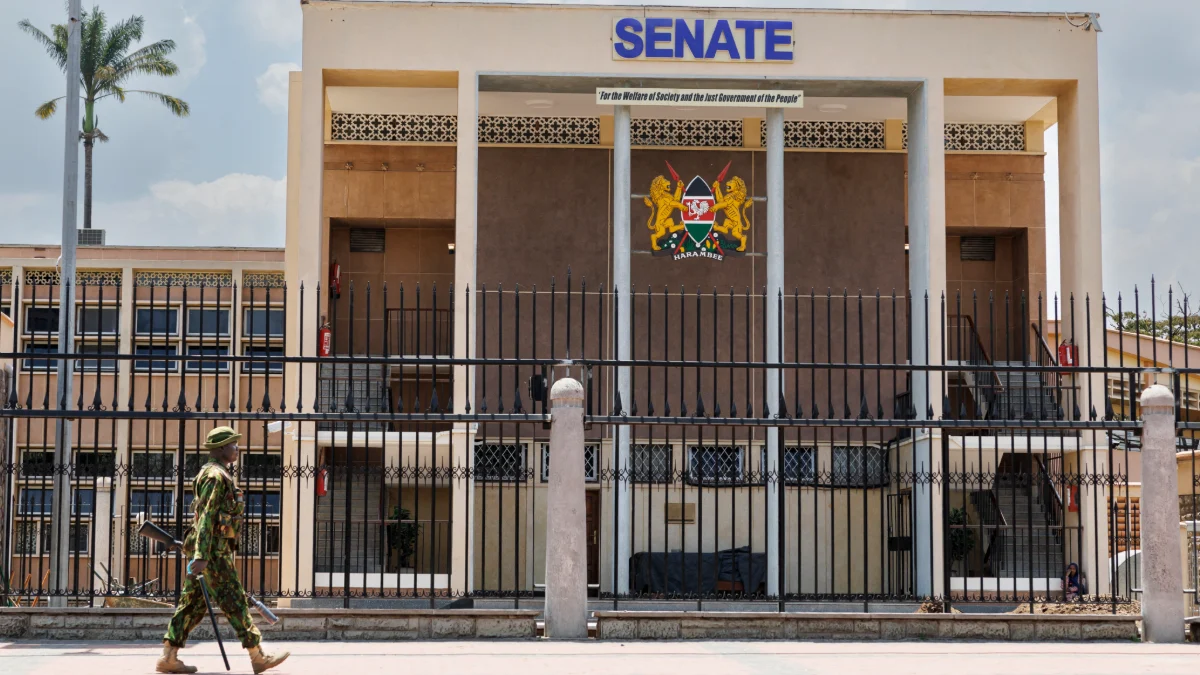
Kenya’s Artificial Intelligence Bill, 2026, currently before the Senate, introduces mandatory disclosure of AI-generated content and criminal penalties for certain uses of deepfakes, raising concerns about impacts on political expression and regulatory proportionality ahead of the 2027 general elections.
Provisions Targeting AI-Generated Content
The bill requires that any AI-generated content resembling real persons, places, or events must be clearly labeled as such, aligning Kenya with global trends seen in the EU, China, and South Korea. This transparency measure aims to help combat misinformation.
Additionally, the legislation criminalizes the creation or distribution of deepfakes intended to deceive, defame, or incite violence. Violators face penalties of up to 5 million Kenyan shillings (KES) and two years imprisonment. This provision responds to documented uses of AI-generated disinformation targeting politicians and activists in Kenya, including explicit AI-manipulated content aimed at silencing female leaders.
Criticism of Penalty Structure and Free Expression Safeguards
Experts have criticized the bill’s penalty framework for lacking proportionality. Unlike the EU AI Act, which links penalty severity to risk classifications and uses administrative sanctions with exceptions for small businesses, Kenya’s bill applies the same severe criminal penalties across different violations—ranging from serious offenses like prohibited AI systems to transparency failures—without differentiating based on risk.
Moreover, the bill offers no explicit exemption for artistic, satirical, or fictional uses of AI-generated content. This absence is significant given Kenya’s constitutional protections for freedom of expression, and the political role satire plays, particularly among younger generations using AI tools for civic engagement and accountability.
Recent youth-led AI initiatives, such as chatbots exposing political corruption and tools clarifying legislative texts, illustrate the vibrant civic use of AI that could be threatened by the bill’s vague provisions.
Existing Legal Context and Political Risks
Kenya already has laws criminalizing false information, which have been applied to AI-related cases. For example, individuals have faced charges or arrests for sharing AI-generated images of political figures or events, with some cases resulting in acquittals or government crackdowns. This existing enforcement highlights concerns that imprecise AI-specific rules could be selectively used to curtail dissent or activism.
Need for Coordinated Policy and Multistakeholder Input
The bill was introduced independently of Kenya’s ongoing national AI and emerging technologies policy development led by the Ministry of ICT and KICTAnet. This raises questions about alignment with broader digital strategies and technical expertise.
Stakeholders urge that Kenya’s AI regulation proceed through inclusive, consultative processes that balance disinformation control with protections for political speech and innovation. The bill could channel oversight to a future AI commission tasked with enacting tailored industry regulations collaboratively with media and information stakeholders.
Why it matters
With Kenya’s general elections approaching in 2027, the regulation of AI-generated political content is highly sensitive. The bill’s provisions have significant implications for free expression, particularly political satire and civic engagement by youth. The potential for harsh criminal sanctions without clear exceptions risks stifling democratic discourse and innovation in AI, while existing laws already address many disinformation concerns. Carefully designed AI governance that accounts for constitutional rights and technological realities is critical to avoid chilling effects on political communication and civic activism.
Background
Kenya’s AI Bill follows earlier attempts, such as a 2023 proposal to create a regulatory body for AI and robotics practitioners, which faced opposition from the tech community for potentially hindering innovation. The current bill advances the legislative discussion on AI governance but arrives amid ongoing policy development efforts aimed at creating a comprehensive national AI strategy informed by multi-stakeholder input.
Sources
This article is based on reporting and publicly available information from the following source:
Read more AI Regulation stories on Goka World News.