
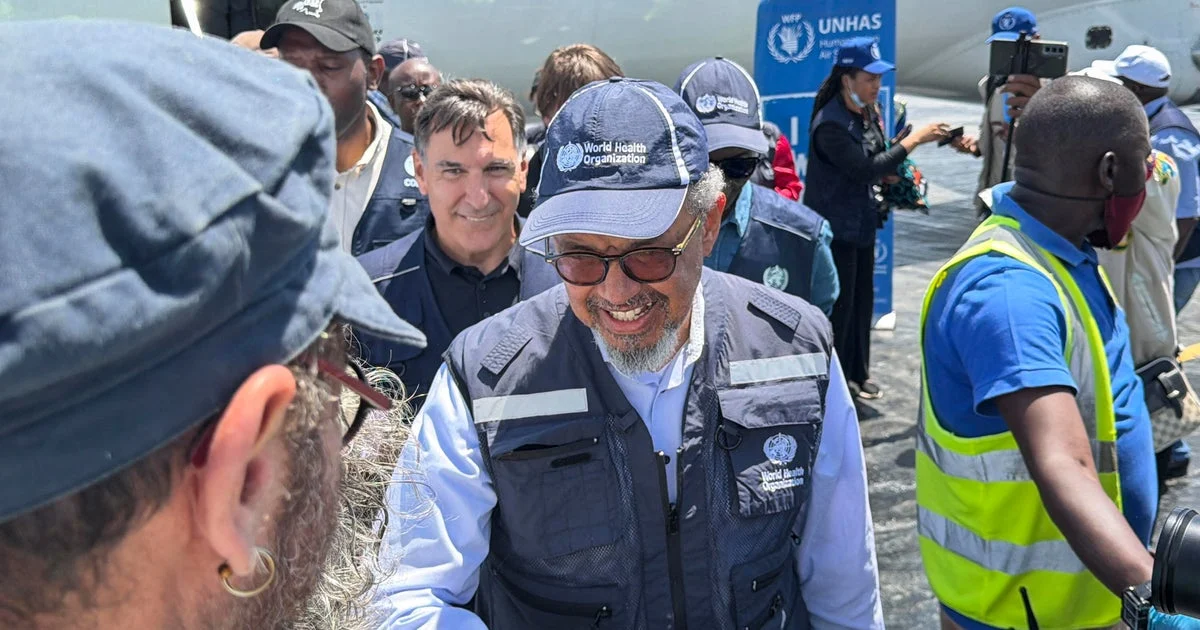
World Health Organization Director-General Tedros Adhanom Ghebreyesus visited Bunia, the epicenter of a rapidly spreading Ebola outbreak in eastern Democratic Republic of Congo (DRC), as confirmed cases continue to outpace the ongoing response efforts.
What happened
Tedros arrived in Bunia on May 30, 2026, to assess the situation firsthand and meet local authorities, health workers, and affected families. The current Ebola strain in the region is caused by the Bundibugyo virus, a rare variant with no approved vaccine or treatment. The WHO reported 906 suspected cases and 223 suspected deaths, though these numbers may be three to four times higher than official counts. Neighboring Uganda has confirmed nine cases and one death linked to the outbreak.
Despite improvements such as better staffing, more protective equipment, and increased medical supplies at treatment centers like Bunia’s Rwampara and General hospitals, the outbreak is spreading faster than aid can be deployed. The European Union recently delivered medical assistance, and the U.S. government announced an additional $80 million in aid, raising its total contribution to over $112 million.
The outbreak response is complicated by security challenges, including attacks on health facilities by local residents opposed to burial protocols differing from traditional rites, and ongoing conflict involving rebel groups such as the Allied Democratic Forces and M23. The virus has also been reported in North Kivu and South Kivu provinces, areas with ongoing rebel control.
Border closures implemented by Uganda and Rwanda have done little to prevent the virus’s spread, and the WHO has urged these countries to reconsider such measures, emphasizing the importance of transparency.
Why it matters
This Ebola outbreak represents one of the fastest spreading in history, challenging public health infrastructure in a region already burdened by conflict and instability. The lack of approved treatments or vaccines for the Bundibugyo strain increases the urgency for effective containment measures. Furthermore, disruptions caused by local resistance, violence, and border restrictions threaten to undermine coordinated international efforts to control the virus, risking wider regional spread.
Background
The Democratic Republic of Congo has experienced multiple Ebola outbreaks in past decades and has built some experience in managing these crises. However, this current outbreak involves a less common Ebola strain, complicating response efforts. The WHO recently upgraded its risk assessment to “very high” at the national level due to the rapid transmission. Neighboring countries, including Uganda and Rwanda, have taken precautionary steps such as border closures, but these have been criticized by health officials for hindering transparency and collaboration essential in epidemic control.
Sources
This article is based on reporting and publicly available information from the following source:
Read more Health & Public Health stories on Goka World News.