
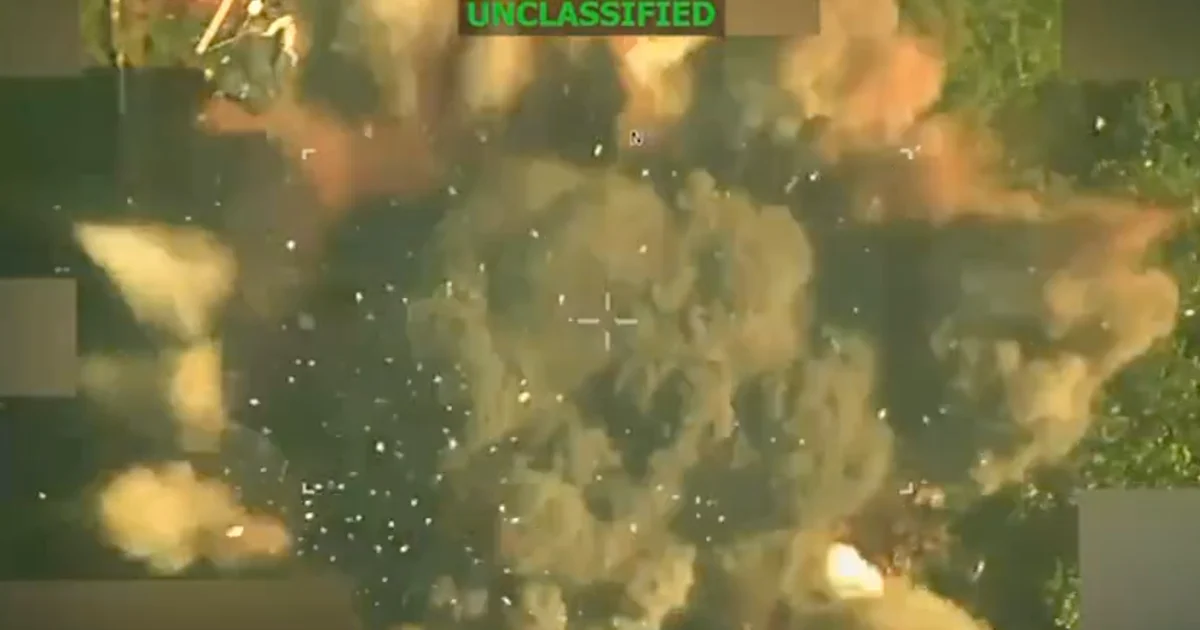
President Donald Trump announced on June 12, 2026, that the U.S. military killed Hector Rusthenford Guerrero Flores, the alleged leader of the Venezuela-based gang Tren de Aragua, in a targeted airstrike. The operation, coordinated with the Venezuelan government, signals a new phase in U.S.-Venezuela cooperation following the removal of former Venezuelan President Nicolás Maduro earlier this year.
What Happened
On June 12, President Trump posted on Truth Social that U.S. Southern Command conducted a “swift and lethal kinetic strike” earlier that week in Venezuela, successfully executing Guerrero Flores, also known as Niño Guerrero. Defense Secretary Pete Hegseth confirmed on social media that the strike targeted a Tren de Aragua compound. The mission reflected close coordination with the current Venezuelan government led by Delcy Rodriguez.
Key Facts
- Hector Rusthenford Guerrero Flores, aged 43, was indicted in New York federal court in late 2025 for racketeering, conspiracy to provide material support to terrorists, and cocaine trafficking.
- The U.S. State Department offered up to $5 million for information leading to his capture.
- Guerrero Flores led Tren de Aragua from its origins as a Venezuelan prison gang to a transnational criminal organization operating across the Americas.
- He escaped prison multiple times, last evading capture after 2023, despite a 17-year sentence handed down in 2018.
- The U.S. military’s operation follows a January 2026 raid that removed Nicolás Maduro from power, charging him with drug trafficking and linking Guerrero Flores as a co-conspirator.
- The Trump administration designated Tren de Aragua as a foreign terrorist organization in early 2025 and invoked the wartime Alien Enemies Act to combat the gang’s U.S. influence.
Why It Matters
The killing of Guerrero Flores represents a significant escalation in U.S. actions against transnational criminal organizations operating from Venezuela. It underscores the evolving U.S.-Venezuelan government cooperation after a military intervention earlier in 2026. The operation aims to disrupt a gang implicated in drug trafficking and violence across the Americas and prevent further incursions into the United States.
Background
Tren de Aragua originated inside Venezuela’s Tocorón Prison, where Guerrero Flores exercised extensive influence. Over more than a decade, the gang expanded internationally. U.S. indictments link Guerrero Flores and Maduro’s regime to large-scale cocaine trafficking into the U.S. The Trump administration’s designation of the gang as a terrorist organization and its use of the 1798 Alien Enemies Act to deport suspected gang members marked a hardline policy stance.
Analysis
Secretary of State Marco Rubio disputed a National Intelligence Council assessment that the Venezuelan government does not direct Tren de Aragua, asserting the U.S. is justified in its position. The military strike reflects the Trump administration’s commitment to aggressively targeting criminal networks tied to drug trafficking and terrorism across Latin America.
Who Is Affected
- The Venezuelan government, currently led by Delcy Rodriguez, cooperating with U.S. actions.
- Members and affiliates of Tren de Aragua across Latin America and the United States.
- U.S. border communities affected by the gang’s operations and trafficking routes.
What Remains Unclear
- The full extent of ongoing coordination between U.S. and Venezuelan authorities remains unspecified.
- The potential for further U.S. military actions targeting criminal organizations in Venezuela.
- The legal proceedings concerning Maduro and his co-conspirators following their indictments in New York.
What Comes Next
This information was not confirmed in the reviewed sources.
Sources
This article is based on reporting and publicly available information from the following source:
Read more Politics stories on Goka World News.