
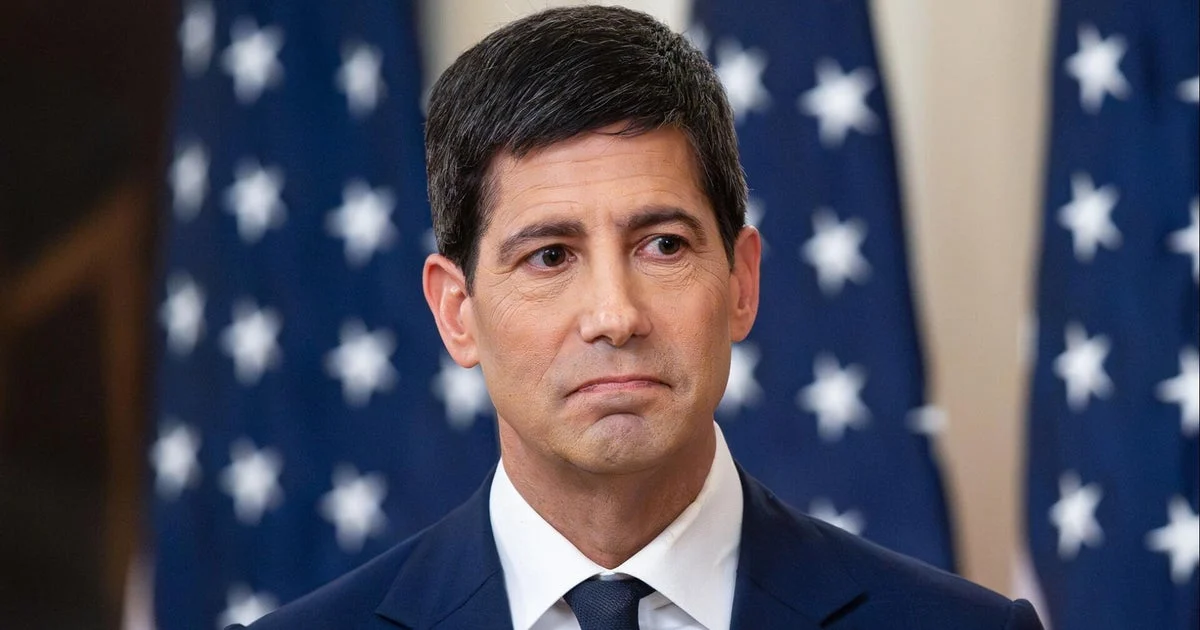
The Federal Reserve on June 17, 2026, decided to keep its benchmark interest rate unchanged at a range of 3.5% to 3.75% amid ongoing inflation pressures. However, nearly half of its policymakers indicated support for a possible rate increase later this year, reflecting a cautious stance on monetary policy under new leadership.
What Happened
At its June meeting, the Federal Open Market Committee (FOMC) voted unanimously to maintain the federal funds rate between 3.5% and 3.75%, as widely expected by economists. This meeting was the first led by new Fed Chairman Kevin Warsh, who succeeded Jerome Powell in May 2026. The Fed also removed the so-called easing bias language from its policy statement, signaling a less defined path toward rate cuts. Additionally, the Fed released its Summary of Economic Projections (SEP), showing that nearly half of FOMC members see a potential rate hike later in the year.
Key Facts
- The federal funds rate remained at 3.5% to 3.75% in June 2026.
- The easing bias phrase was eliminated from the June policy statement.
- Nearly 50% of FOMC members support an interest rate increase before the end of 2026.
- The Fed’s preferred inflation gauge, the Personal Consumption Expenditures (PCE) index, is now forecasted to rise to 3.6% annualized by the end of 2026, up from 2.7% forecasted in March.
- Core inflation, which excludes volatile energy and food prices, could reach 3.3% by year-end.
- The Fed expects core inflation to be about 2.5% by the end of 2027.
Why It Matters
The decision and accompanying statements underscore persistent inflation challenges despite recent energy price declines. Removing the easing bias signals the Fed’s readiness to adjust rates upwards if inflation remains elevated, impacting borrowing costs for consumers and businesses. The shift also sets the tone for markets, investors, and policymakers monitoring inflation trends and economic stability under Chairman Warsh’s leadership.
Background
The previous Fed chair, Jerome Powell, faced pressure from President Trump to lower interest rates as inflation reached its highest in over three years. Under Powell, the Fed had signaled possible easing, but persistent inflation and a strong labor market complicated that outlook. Kevin Warsh’s appointment began a new chapter in monetary policy management with a focus on steady guidance amid fiscal uncertainties.
Analysis
Kay Haigh, global head and CIO of Fixed Income at Goldman Sachs Asset Management, noted that the Fed’s hawkish tone reflects strong labor and inflation data despite a recent oil price pullback. Hank Smith of Haverford Trust described the environment as one requiring caution and steadiness, highlighting the importance of Warsh’s ability to unify Fed leadership and maintain market confidence.
Who Is Affected
Consumers and businesses face continued borrowing costs tied to federal interest rates. Financial markets closely watch Fed signals for rate changes, influencing investment strategies. The broader economy is affected by inflation dynamics impacting energy prices, labor markets, and price stability across sectors.
What Remains Unclear
- Whether the Fed will enact a rate hike later in 2026 remains uncertain and contingent on incoming inflation data.
- The precise timing and magnitude of any future rate changes have not been disclosed.
- The longer-term economic outlook under Chairman Warsh’s tenure is still developing.
What Comes Next
The Fed’s next policy meeting and subsequent SEP update will provide further clarity on interest rate paths and economic projections. Chairman Warsh’s future press conferences will be closely analyzed for guidance on inflation management and monetary strategy.
Sources
This article is based on reporting and publicly available information from the following source:
Read more Business stories on Goka World News.