
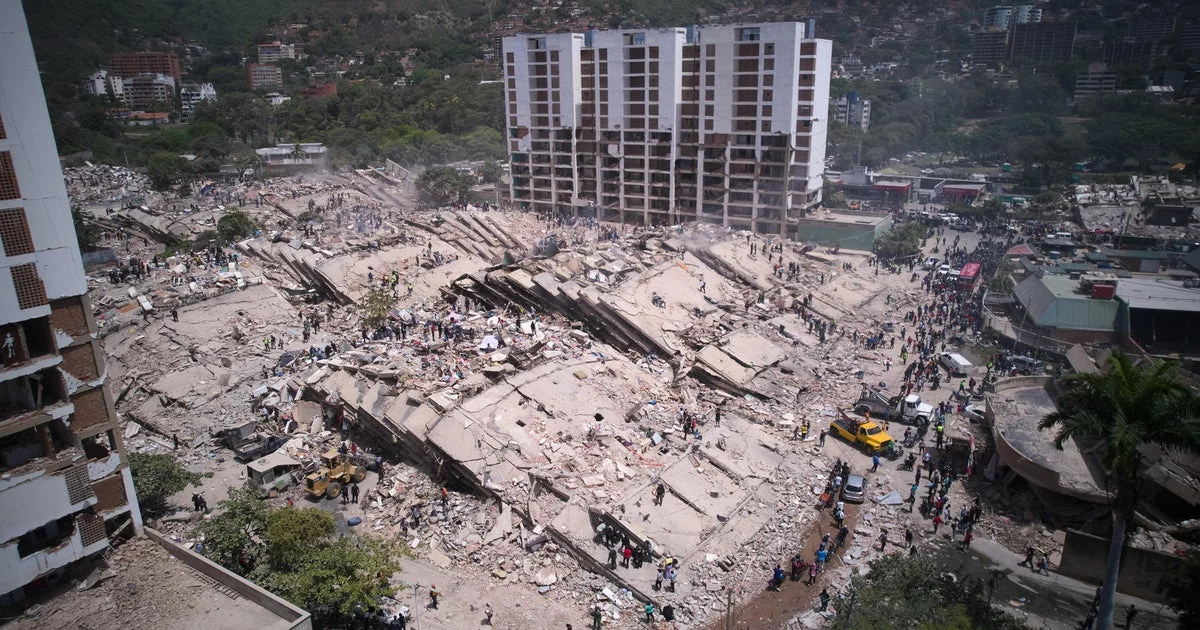
Venezuela is grappling with a mounting humanitarian crisis after twin earthquakes struck near the capital, Caracas, leaving over 1,400 people dead and thousands injured amid widespread destruction. As rescue efforts enter their third day, survivors and officials face mounting challenges amid scarce resources and ongoing aftershocks.
What Happened
On June 24, 2026, two powerful earthquakes hit Venezuela within a minute of each other, with the epicenter located in La Guaira, just north of Caracas. The twin quakes, accompanied by multiple aftershocks, caused extensive damage, toppling homes, apartment buildings, and critical infrastructure. Three days later, the Venezuelan government and international rescue teams continue to search for survivors amid rubble and chaos.
Jorge Rodriguez, president of Venezuela’s National Assembly, announced on June 27 that the official death toll had reached 1,430, with 3,238 people reported injured. Authorities report over 51,000 people missing, though this figure likely includes those temporarily out of contact due to disrupted communication networks.
Local residents have largely taken the lead in search efforts, citing minimal government rescue presence in the hardest-hit zones. Meanwhile, acting President Delcy Rodríguez affirmed the government’s commitment to a full response and welcomed the influx of international rescuers and humanitarian aid. Entry to La Guaira remains restricted by authorities to control access amid logistical difficulties.
Key Facts
The International Organization for Migration estimates that up to 6.76 million Venezuelans have been affected by the earthquakes, including approximately 2 million in Caracas alone. Over 200 individuals have been rescued from collapsed buildings so far, although many remain trapped beneath debris.
International aid is arriving rapidly, with 861 volunteers and rescue workers from countries including Mexico, the United States, El Salvador, Switzerland, and Colombia currently deployed in Venezuela. The U.S. government has pledged $150 million in aid, with additional funding anticipated. Search and rescue teams from Fairfax County, Virginia; Los Angeles; and Miami are operating on the ground alongside Venezuelan responders. Two runways at Simon Bolivar International Airport reopened on June 27 to facilitate incoming humanitarian flights.
Mobile hospitals and humanitarian supplies are being sent to aid the disaster-stricken areas. The USS Fort Lauderdale, an amphibious military ship, is stationed off the Venezuelan coast to support operations near La Guaira.
What This Means
The ongoing rescue and relief efforts underscore the immense scale of the disaster’s impact on Venezuela’s population and infrastructure. With millions affected and thousands missing or injured, the country faces severe challenges in meeting urgent medical and humanitarian needs amid existing economic instability.
The slow government response has pushed many Venezuelans to rely on communal efforts, highlighting systemic weaknesses in disaster preparedness and response. International aid plays a critical role in supplementing domestic resources, but logistical difficulties, security concerns, and aftershocks complicate relief operations.
At a regional level, the crisis adds pressure on neighboring countries already hosting Venezuelan migrants, potentially exacerbating regional humanitarian concerns. The disaster also underscores the vulnerability of urban populations living in structurally precarious housing in earthquake-prone areas.
Background
The earthquakes hit during a period of intense political and economic upheaval in Venezuela. Since early 2026, Delcy Rodríguez has served as acting president following the U.S.-backed removal of former leader Nicolás Maduro. The country continues to face economic disruption, shortages of essentials, and political divisions, complicating both immediate disaster response and longer-term recovery efforts.
What Remains Unclear
Confirmed casualty figures may still evolve as more information emerges from inaccessible areas. The exact number of people trapped under debris or who remain unaccounted for is not verified, with estimates of missing persons possibly including duplicated reports due to disrupted communication systems. Details regarding the full extent of government and international aid coordination have yet to be fully disclosed.
What Comes Next
Authorities plan to continue controlled access to key sites like La Guaira to streamline rescue operations. Additional international aid shipments and rescue teams are expected as infrastructure repairs enable safer transport and communication.
Ongoing aftershocks remain a concern for both rescue efforts and survivors attempting to return to damaged homes. Medical support and humanitarian relief will focus on stabilizing affected populations, but the long-term reconstruction challenge in Venezuela’s complex political environment is just beginning.
Sources
This article is based on reporting and publicly available information from the following source:
Read more World News stories on Goka World News.