
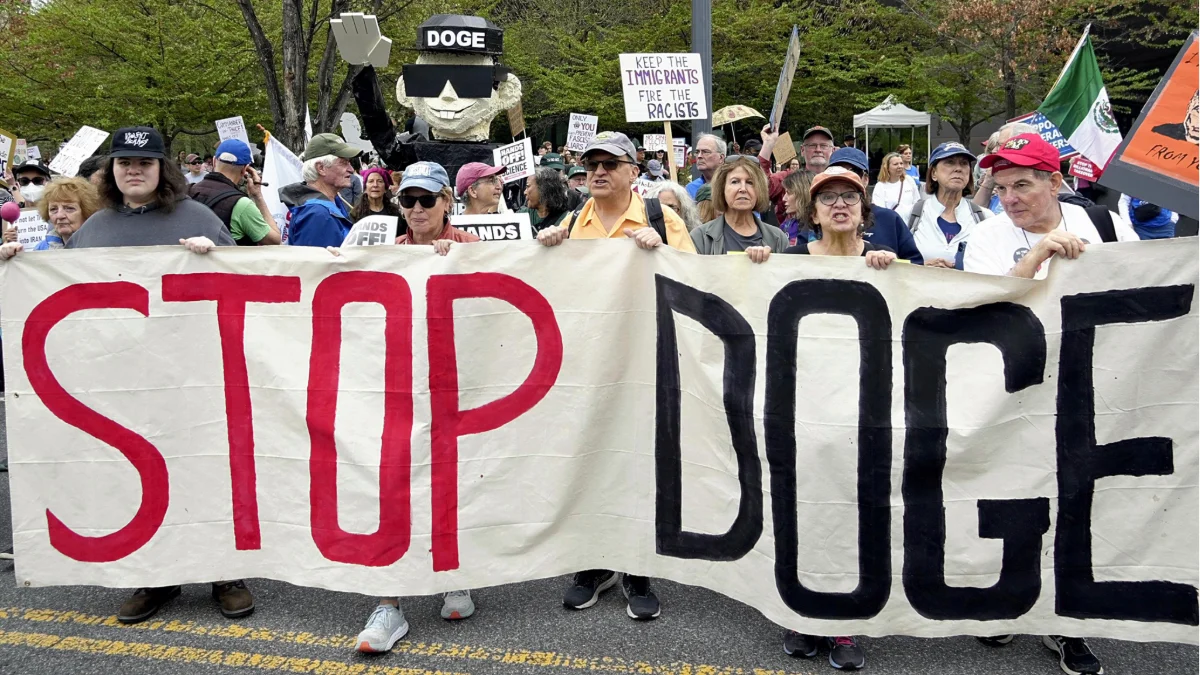
The U.S. federal court delivered a significant rebuke to the Trump administration’s aggressive use of artificial intelligence to accelerate deregulation across federal agencies. In a case centered on the mass termination of National Endowment for the Humanities (NEH) grants, the court found the Department of Government Efficiency’s (DOGE) reliance on ChatGPT outputs to justify these cuts constitutionally flawed and procedurally improper.
What Happened
In May 2025, the federal case American Council of Learned Societies v. National Endowment for the Humanities culminated in a ruling against DOGE’s extensive cancellation of over 1,400 NEH grants. The initiative, linked intimately to executive mandates targeting funding associated with “diversity, equity, inclusion, and accessibility” (DEI) themes, employed ChatGPT to classify grant descriptions for alleged DEI content. Two DOGE staffers input grant summaries into the AI system, directing it to identify any DEI relevance. The subsequent classifications were then used wholesale to justify and execute the terminations.
Crucially, the court highlighted how ChatGPT’s coarse analyses often conflated any mention of race, gender, or related protected classes within grant summaries as disqualifying, even when these references concerned scholarly or cultural content rather than advocacy or policy. For instance, a grant for a documentary on the Colfax Massacre was rejected simply because it explored a historical event impacting Black civil rights. DOGE accepted and formally endorsed these AI-generated rationales without evident human scrutiny.
The court found such actions to violate First Amendment protections by discriminating against “disfavored ideas” and breached equal protection guarantees by basing terminations on references to protected classes.
Key Facts
This judicial decision pertains to the United States federal jurisdiction and specifically addresses federal agency conduct under constitutional law. The dispute involved the National Endowment for the Humanities and the Department of Government Efficiency, a department instituted under the Trump administration’s 2025 AI-driven deregulation agenda. The principle legal instrument at issue was the constitutional guarantee of free speech and equal protection under the law.
The court ruled that DOGE’s strategy violated these constitutional protections by adopting discriminatory criteria generated by the AI system. The agency’s approach lacked meaningful human oversight and allowed a generative AI to function as a de facto decision-maker. The ruling made clear that agencies remain fully responsible for AI-derived decisions and cannot deflect accountability by blaming the tool itself. The decision is effective immediately and invalidates the disputed grant cancellations.
What This Means
This ruling sets a firm precedent that federal agencies may not outsource core regulatory or funding decisions to AI systems without careful, accountable human oversight. It underscores the constitutional risks inherent in deploying large language models like ChatGPT as quasi-autonomous arbiters of government policy and funding.
For federal regulators, the decision signals that relying on AI-generated outputs without critical evaluation can lead to arbitrary, discriminatory, and unlawful outcomes. Public agencies must develop robust protocols to ensure AI tools support—but do not replace—human judgment, especially where constitutional rights are implicated. This case is a cautionary example for governments worldwide exploring AI integration into policy enforcement and regulation.
For researchers, cultural institutions, and grant recipients, the ruling safeguards access to funding judged on merit and content rather than algorithmic misinterpretation linked to protected characteristics or disfavored topics. It affirms that constitutional protections cannot be circumvented by bureaucratic shortcuts or uncritical AI reliance.
Background
The Department of Government Efficiency was established as part of President Trump’s second-term agenda to leverage AI in drastically cutting federal regulations and reallocating government funds. High-profile figures like Elon Musk and Vivek Ramaswamy promoted this vision of AI-powered deregulation beginning in late 2024, leading to aggressive initiatives from January 2025 onward.
Among these initiatives was DOGE’s use of ChatGPT for grant termination assessments at the NEH, specifically targeting grants associated with DEI and “gender ideology,” following presidential mandates to eliminate funding linked to these themes.
Analysis
Legal experts observe that the court’s rejection of the government’s “blame the AI” defense clarifies accountability in agency use of generative AI. As noted by commentators on the case, agencies are judged on their selection, prompting, and adoption of AI-generated content as their own official rationale. This clarifies that AI tools cannot serve as independent authorities; rather, any regulatory action based on AI output requires traditional standards of review and justification.
Digital rights advocates emphasize the ruling as a safeguard against arbitrary administrative decisions and warn against “rubber-stamping” AI outputs without sufficient examination, especially given AI’s known tendencies to hallucinate or produce inconsistent reasoning. The decision highlights the necessity of transparency and human validation in government AI applications.
What Remains Unclear
The ruling does not address future specific regulatory guidelines for integrating AI tools into federal policymaking. Questions remain about how agencies will implement safeguards to balance efficiency gains with constitutional compliance. Further clarity is awaited on formal protocols for AI use and training of government personnel on these tools’ limitations.
What Comes Next
Following this decision, federal agencies are expected to reassess their AI deployment policies to avoid procedural and constitutional missteps. DOGE and related agencies must restore improperly terminated grants and develop new oversight processes. The ruling may influence pending and forthcoming AI governance frameworks within the U.S. government.
Sources
This article is based on reporting and publicly available information from the following sources:
Read more AI Regulation stories on Goka World News.