
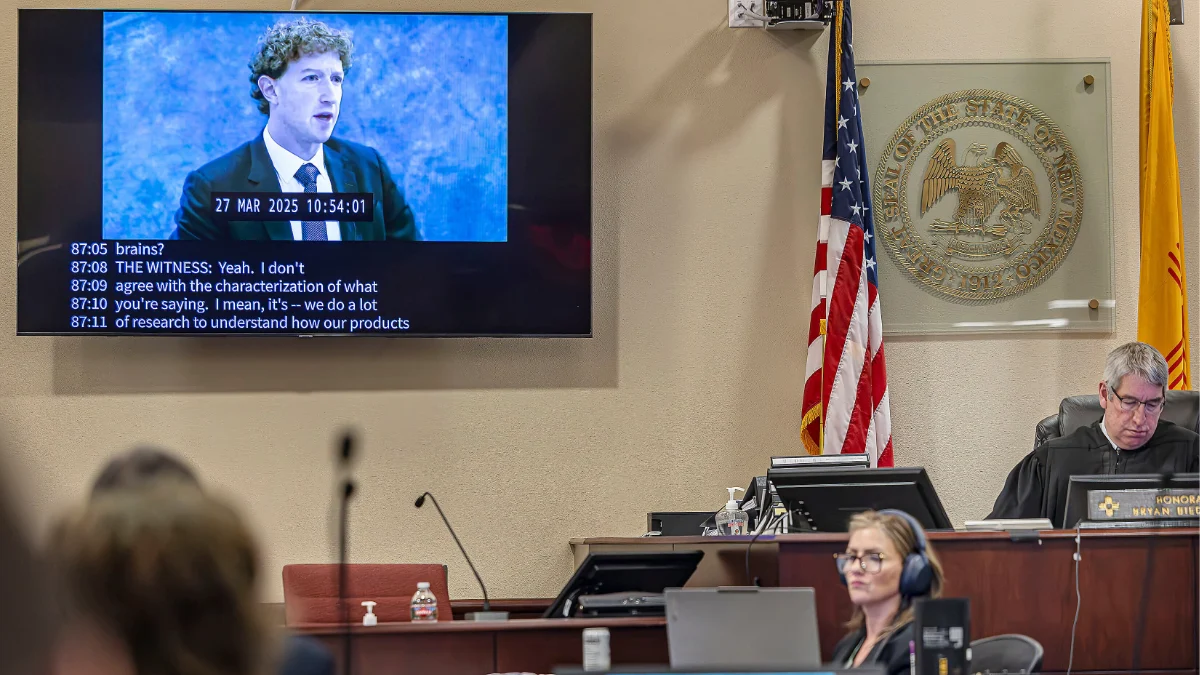
A New Mexico court issued a landmark ruling last week ordering Meta to pay nearly $1 billion in penalties for knowingly causing harm to teenagers through addictive and dangerous platform designs. At the same time, internal TikTok documents reveal the company ran an experiment exposing around 15 million U.S. users to riskier algorithmic content, including videos promoting suicide and self-harm. These legal and internal investigations mark significant shifts in how regulators and courts view social media companies’ responsibilities for user safety, particularly for children and adolescents.
What Happened
On March 4, 2026, a New Mexico judge ruled that Meta’s Instagram constitutes a “public nuisance” due to its design features that harm teen mental health and facilitate child exploitation. The court ordered Meta to pay over $900 million to fund therapy and treatment for affected teenagers instead of directing funds to the state. This ruling stemmed from a trial in which evidence demonstrated Meta’s internal knowledge of harmful effects yet continuation of design choices promoting user addiction.
Simultaneously, details emerged through Bloomberg’s investigation of an internal TikTok document sealed by court order. The document reconstructed the final weeks of 16-year-old Chase Nasca’s life, showing he was placed in a control group excluded from TikTok’s safer recommendation algorithm. This experimental group included approximately 15 million U.S. users, and algorithms continued delivering self-harm and suicide content directly linked to Nasca’s death in February 2022.
Meta and TikTok face mounting lawsuits and legal scrutiny across the United States. Forty-one state attorneys general have filed complaints against Meta regarding addiction and harm. Notably, a California court rejected Meta, Google, and TikTok’s motion to block enforcement of the “Protecting Our Kids from Social Media Addiction Act.”
Key Facts
The New Mexico ruling defines Instagram as a public nuisance under state law, making the platform financially liable for damage caused by its product design. The nearly $1 billion in fines will be allocated to fund mental health services for teens rather than the state treasury. Meta’s internal documents disclosed in court reveal purposeful design choices to increase user time on Instagram, including targeted beauty filters despite known harm to teenage girls.
TikTok’s experiment withheld its safer algorithm from about 10 percent of its U.S. users, randomly assigning them to receive a riskier content feed. The company’s own reviewers identified that content recommending self-harm videos violated platform policies, yet these filters did not apply by design in the experimental group.
Currently, over 42 states have ongoing litigation against Meta for harms linked to platform addiction. Additionally, more than 4,000 personal injury lawsuits have consolidated federally, signaling broad legal exposure. TikTok settled cases scheduled for trial in 2023 to avoid exposing the evidence publicly. Moreover, a Delaware court ruled Meta’s insurer is not liable to defend these lawsuits, as the harm is intentional, not accidental.
What This Means
These rulings and revelations represent a pivotal moment in holding social media companies accountable for the structural risks embedded in their platforms. For the first time, courts recognize that harm to young users is not merely incidental but a foreseeable outcome and core feature of business models optimized for engagement and attention. This challenges the longstanding legal protections under Section 230 that have insulated platforms from liability for design decisions.
From a user perspective, the ruling highlights the real-world consequences of unchecked algorithms that exploit adolescent brain development, increasing risks of addiction, mental health disorders, and exposure to harmful content. For regulators and advocates, this case may motivate more comprehensive digital safety laws aimed explicitly at design standards and algorithmic accountability.
On a global scale, these developments anticipate regulatory efforts in more than 40 countries considering age-based restrictions and platform safety mandates, signaling growing acknowledgment of online harms as a public health and safety issue.
Background
Prior to this ruling, Meta had faced scrutiny for its internal research showing harm from Instagram’s beauty filters and underage users violating age restrictions since at least 2018. The 2023 U.S. Surgeon General advisory linked heavy social media use among teens to doubled risks of depression and anxiety symptoms. Similarly, TikTok claimed to have developed a safer algorithm in 2021, but withheld it experimentally from millions of users.
This emerging body of evidence is reshaping digital policy, as courts increasingly reject the notion that tech firms can disclaim responsibility by framing harms as unintended externalities. Numerous states have pursued legislation modeled on the Protecting Our Kids from Social Media Addiction Act, reinforcing the demand for platform-level interventions.
What Comes Next
Meta intends to appeal the New Mexico ruling, potentially delaying enforcement, but the case sets a critical precedent. Litigation by state attorneys general and consolidated federal lawsuits continue to unfold, with more court decisions expected. Meanwhile, regulatory bodies worldwide are closely monitoring these outcomes as they draft or implement age-gating and safety regulations for minors on social media platforms.
Sources
This article is based on reporting and publicly available information from the following sources:
Read more Digital Policy stories on Goka World News.