
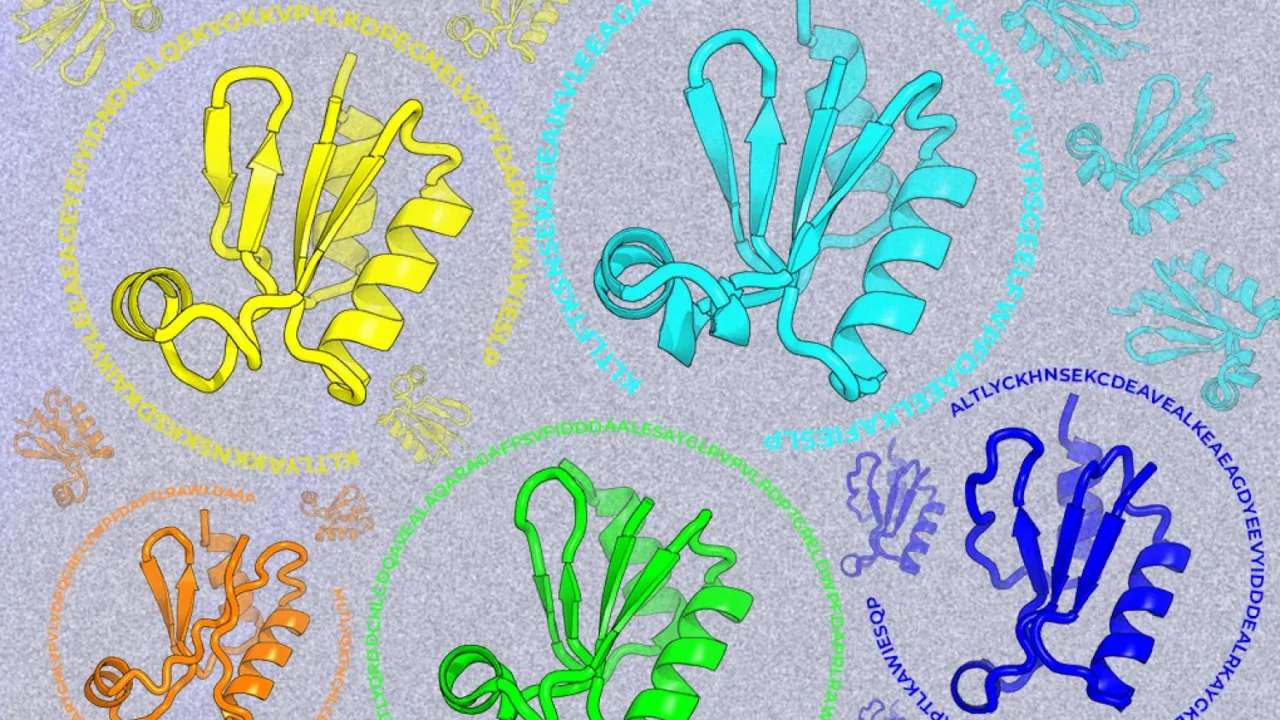
MIT researchers have introduced PottsMPNN, a new machine-learning framework that improves the design of proteins by accurately predicting how different amino acid sequences affect protein stability. This approach allows for the creation of novel proteins whose sequences do not resemble those found in nature, representing a significant step forward in computational protein engineering.
What Happened
The PottsMPNN tool was developed by the Department of Biology at MIT and detailed in a recent publication in the Proceedings of the National Academy of Sciences (PNAS). Led by senior author Amy E. Keating, head of the Department of Biology and professor of biological engineering, the team created this framework to better capture the physical principles underpinning protein folding and stability. Graduate student Foster Birnbaum was the lead author on the paper and contributed key insights into the model’s development.
Distinct from previous approaches, PottsMPNN integrates pairwise amino acid interaction distributions and evolutionary sequence relationships, enabling it to generate diverse sets of sequences likely to adopt targeted protein structures. The framework moves away from traditional metrics that mainly aimed to reproduce naturally evolved sequences, focusing instead on predicting functional stability and folding potential for designed proteins.
Key Facts
PottsMPNN enhances the ability to model the complex “sequence-energy landscape” — the correlation between amino acid identity and protein stability. This capability was achieved by introducing noise during training to diversify generated sequences and incorporating evolutionary relatedness between sequences folding into the same structure. It reflects a departure from relying heavily on native sequences, which has been a standard benchmark in protein design until now.
The model was validated through computational experiments showing improved predictions of how mutations impact stability, a critical factor in designing proteins able to function as intended. The research was published in 2024 in PNAS, with MIT’s Department of Biology leading the project.
What This Means
PottsMPNN marks a transformative moment in protein engineering, opening possibilities for designing entirely novel proteins that do not mimic any natural counterpart. This can accelerate the development of proteins for applications in medicine, biotechnology, and synthetic biology, such as creating novel enzymes or therapeutic agents with tailor-made functions.
By moving beyond the constraints of natural evolutionary sequences, the tool enables researchers to explore a much broader sequence space, potentially discovering protein structures and functions previously inaccessible. This shift could significantly reduce trial-and-error experimentation, lowering costs and speeding up the development pipeline for new biologics.
The framework’s improved understanding of the sequence-energy relationship also provides more reliable predictions of mutation effects, which is vital for designing stable and functional proteins. For industries relying on protein therapeutics and molecular design, this advancement offers a powerful computational resource to enhance innovation and specificity.
Background
Computational protein design has historically depended on inverse folding methods, where a desired folded structure is specified first, and researchers then identify amino acid sequences predicted to adopt that structure. However, the field has faced challenges because many sequences can fold into the same structure, and proteins may adopt multiple conformations depending on environmental context.
Before PottsMPNN, state-of-the-art models from 2022 were widely used but had limitations in sequence diversity and energy landscape understanding. MIT’s research analyzed why those models maintained their dominance while seeking improvements through incorporating physical principles and evolutionary data.
What Remains Unclear
While PottsMPNN has demonstrated improved predictive performance computationally, experimental validation of novel protein sequences designed with the framework remains outstanding. The specific impact on real-world protein folding and function, particularly for entirely new protein structures, awaits further empirical study.
Additionally, how the tool will be adapted or fine-tuned for specialized tasks in therapeutic or industrial protein design remains to be seen, as does its integration into commercial biotechnology pipelines.
What Comes Next
The research team plans further refinement of the PottsMPNN framework, including tailoring it to specific protein design challenges such as predicting mutation consequences more accurately. Future work will likely involve experimental testing of computationally designed proteins to validate the framework’s practical utility.
Continued advances in AI-driven protein design are expected to emerge rapidly, building on this foundational innovation from MIT’s Department of Biology.
Sources
This article is based on reporting and publicly available information from the following sources:
Read more Artificial Intelligence stories on Goka World News.