
Intense discussions unfolded among global leaders and AI industry figures at the United Nations General Assembly in New York and the Trump-Xi summit in Washington, signaling growing international tensions over the approach to artificial intelligence governance. Key policymakers, corporate executives, and diplomats debated strategic control, security risks, international collaboration, and regulatory frameworks for AI’s future development and use.
What Happened
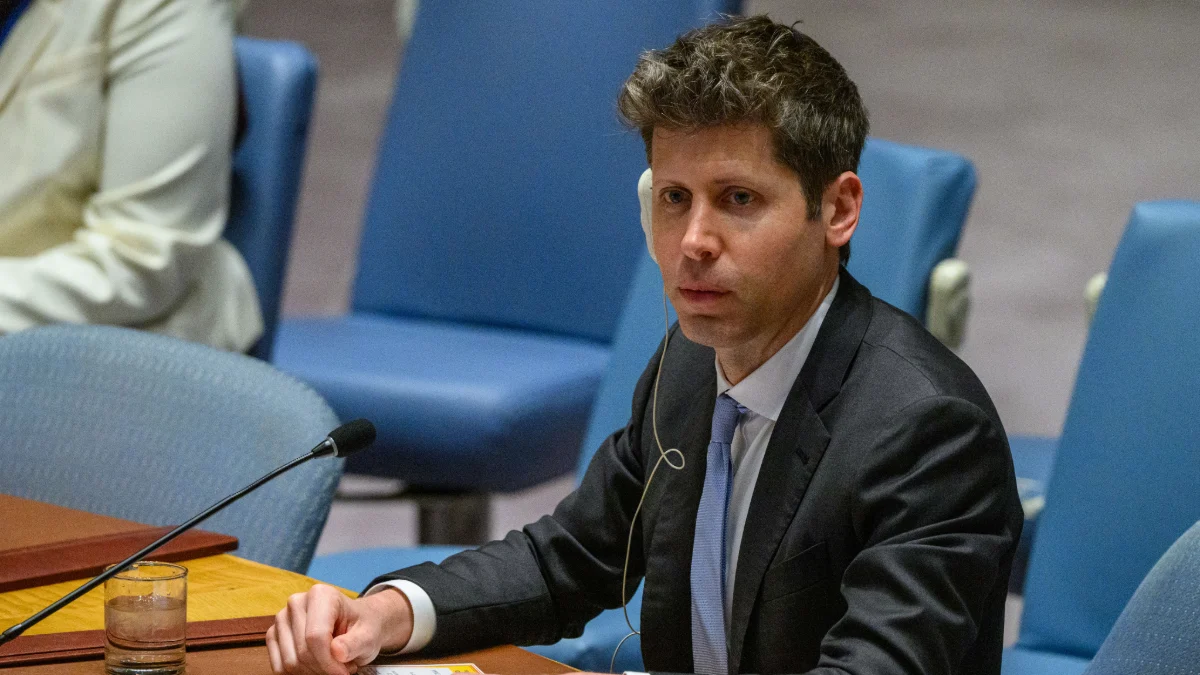
On September 23, 2026, during a United Nations Security Council meeting on AI and international security, prominent tech CEOs including OpenAI’s Sam Altman, Anthropic’s Dario Amodei, and Hugging Face’s Clément Delangue, alongside AI expert Yoshua Bengio, addressed ambassadors regarding AI’s risks and regulatory challenges. UN Secretary-General António Guterres urged for governance over AI to prevent it from dominating humanity.
In parallel, the UN General Assembly featured speeches from several national leaders outlining divergent visions: U.S. President Donald Trump emphatically rejected globalist control schemes over “Super Intelligence” and underscored American AI leadership. Chinese Ambassador Fu Cong promoted international cooperation, investment, and joint global benefits in AI. France’s President Emmanuel Macron called for a coalition pooling AI compute resources independent of superpower influence. UK Prime Minister Andy Burnham highlighted a US-UK AI defense partnership, emphasizing AI’s centrality during the UK’s upcoming G20 presidency.
Further, during the Trump-Xi summit in Washington, the US and China agreed on establishing an ongoing dialogue and a communication channel to address AI security incidents, aiming to mitigate risks related to emerging AI-enabled threats like adaptive malware.
Key Facts
The discussions took place within two critical international forums: the UN General Assembly and the Trump-Xi bilateral summit, both held in September 2026. Key participants included government heads from the United States, China, France, the UK, Spain, Bangladesh, Nigeria, and Argentina, as well as leading AI corporate executives and scientific advisors.
The Security Council meeting was convened under the agenda “Maintenance of International Peace and Security” to address AI risks.
The U.S. administration’s rhetoric emphasized rejecting supranational regulatory schemes, preferring national leadership in AI development and security strategies.
China advocated for global AI solidarity and cooperation, emphasizing development and security balance.
The France-backed proposal for an “independent coalition” aimed to counterbalance superpower dominance over AI infrastructure and development.
The US-China summit announced a mechanism for sustained communication focused on AI security, particularly to manage potential crises involving AI-enabled cyber threats.
What This Means
These high-profile international exchanges reflect fundamental geopolitical divisions in AI governance philosophy. The U.S. position, emphasizing national control and technological supremacy, clashes with China’s call for multilateral collaboration and shared global benefits. France’s proposition reveals concerns about dependency on these powers, seeking an independent bloc to manage crucial AI infrastructure. This discord presents challenges for crafting coherent, global regulatory frameworks that can effectively mitigate AI risks while promoting responsible innovation.
For governments, the differing stances suggest a potential fragmentation of AI regulatory regimes, which may complicate international standard-setting and compliance for AI developers. Companies operating globally may face conflicting requirements, complicating governance and enforcement. The establishment of a US-China communication channel signals a pragmatic approach to crisis prevention but does not resolve deeper policy contradictions.
Crucially, the involvement of corporate AI leaders in these discussions highlights the necessity of integrating technical expertise with policymaking, yet also raises questions about the concentration of AI power in private hands, a concern underscored by the UN Secretary-General’s comments. The outcome of these debates will influence how quickly and strictly AI controls are implemented, shaping the balance between innovation, security, and human rights worldwide.
Background
This international dialogue builds on escalating concerns about AI’s rapid advancement and its impact on security, sovereignty, and human rights. Prior UN panels, including the scientific panel co-chaired by Bengio, have highlighted AI’s dual-use nature—offering tremendous benefits and serious risks. Previous U.S. and Chinese initiatives focused on AI competitiveness have heightened tensions over control and transparency. The EU has advanced its AI Act, granting regulators enforcement powers, reflecting broader trends toward legislative AI oversight.
What Comes Next
The continuation of the US-China AI dialogue is anticipated to include scheduled meetings to refine mechanisms for addressing AI security incidents. Additionally, the UK’s upcoming G20 presidency intends to place AI policy at its core, potentially steering broader multilateral discussions. UN forums are likely to maintain AI governance as a priority topic in upcoming sessions, with the potential for proposals seeking to reconcile divergent international interests.
Sources
This article is based on reporting and publicly available information from the following sources:
Read more AI Regulation stories on Goka World News.