
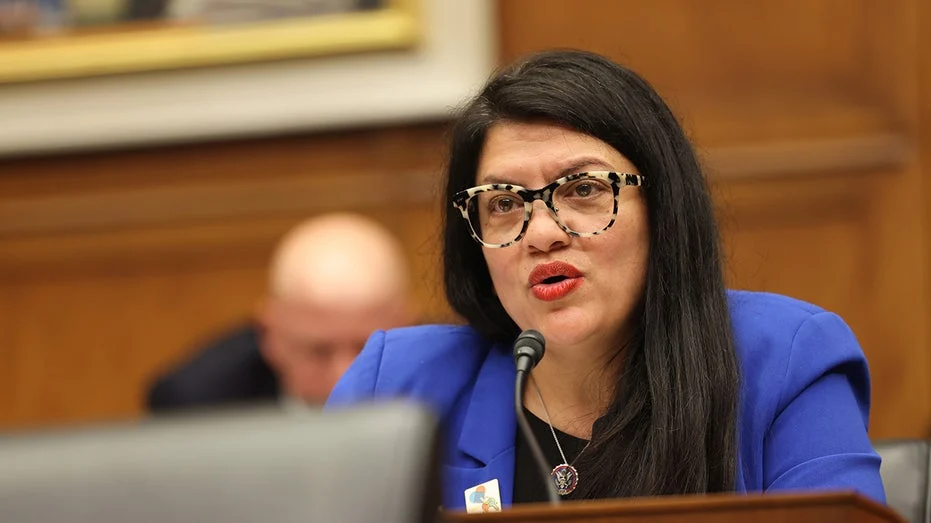
Representative Rashida Tlaib, Democrat of Michigan, has introduced a resolution aimed at preventing the United States from participating in or supporting Israeli military operations in Lebanon without explicit congressional approval. The resolution could compel the House of Representatives to address the issue when it returns to session in mid-April.
Joining Tlaib in co-sponsoring the resolution are progressive Representatives Delia Ramirez of Illinois and Nydia Velazquez of New York. Their effort seeks to limit the authority of the Trump administration concerning Lebanon amid the escalating conflict tied to the broader tensions involving Iran and Israel.
Notably, the resolution stops short of mentioning Hezbollah, the Lebanon-based militia allied with Iran, which has actively engaged against Israel in recent weeks. Hezbollah’s involvement includes rocket attacks on Israeli territory and coordinated assaults alongside Iranian forces, according to reporting from various outlets. The Israeli Defense Forces have responded with airstrikes and a ground offensive in southern Lebanon to counter Hezbollah’s attacks.
Tlaib has characterized the ongoing military efforts as an “ethnic cleansing campaign” against Lebanon, attributing part of the responsibility to U.S. financial and military support for Israel. “This ethnic cleansing campaign is only possible because of U.S. support, funded by our tax dollars,” Tlaib said, according to statements reported by media.
Efforts to contact a spokesperson for Tlaib for clarification on the omission of Hezbollah from the resolution did not receive a response. Critics and observers have noted that focusing solely on U.S. support for Israel without addressing Hezbollah’s active role in the hostilities provides an incomplete picture of the conflict dynamics.
This move by Tlaib follows an earlier unsuccessful attempt by some Democrats to limit former President Donald Trump’s military authority concerning Iran. It also comes as the U.S. military has refrained from directly participating in combat operations in Lebanon, despite the increasing regional instability.
Why it matters
The U.S. has long been involved in Middle East policy, often balancing support for Israel with concerns over Iran-backed groups like Hezbollah. Congressional measures that seek to curtail executive military action reflect ongoing debates about war powers and the appropriate scope of U.S. involvement abroad. Tlaib’s resolution highlights progressive voices calling for greater congressional oversight amidst complex regional conflicts. The omission of Hezbollah, a key actor in the conflict, raises questions about the resolution’s framing and political focus.
Background
Hezbollah, which is designated a terrorist organization by the U.S. government, has been a significant military and political force in Lebanon, receiving support from Iran. The group played a prominent role in the recent escalation of violence following the killing of Iran’s Supreme Leader Ali Khamenei and increasing hostilities between Israel and Iranian-backed forces. Israel’s military operations in southern Lebanon seek to diminish Hezbollah’s capabilities, while tensions have escalated regionally. U.S. law requires congressional approval for prolonged military engagements, placing such resolutions at the center of debates about executive authority and foreign policy direction.
Observers should watch how the House responds to this resolution, particularly whether it prompts broader discussion on U.S. policy in Lebanon and the ongoing conflict involving multiple actors. The measure’s progress may also influence the congressional oversight of military actions connected to the Iran-Israel confrontation.
Read more Politics stories on Goka World News.