
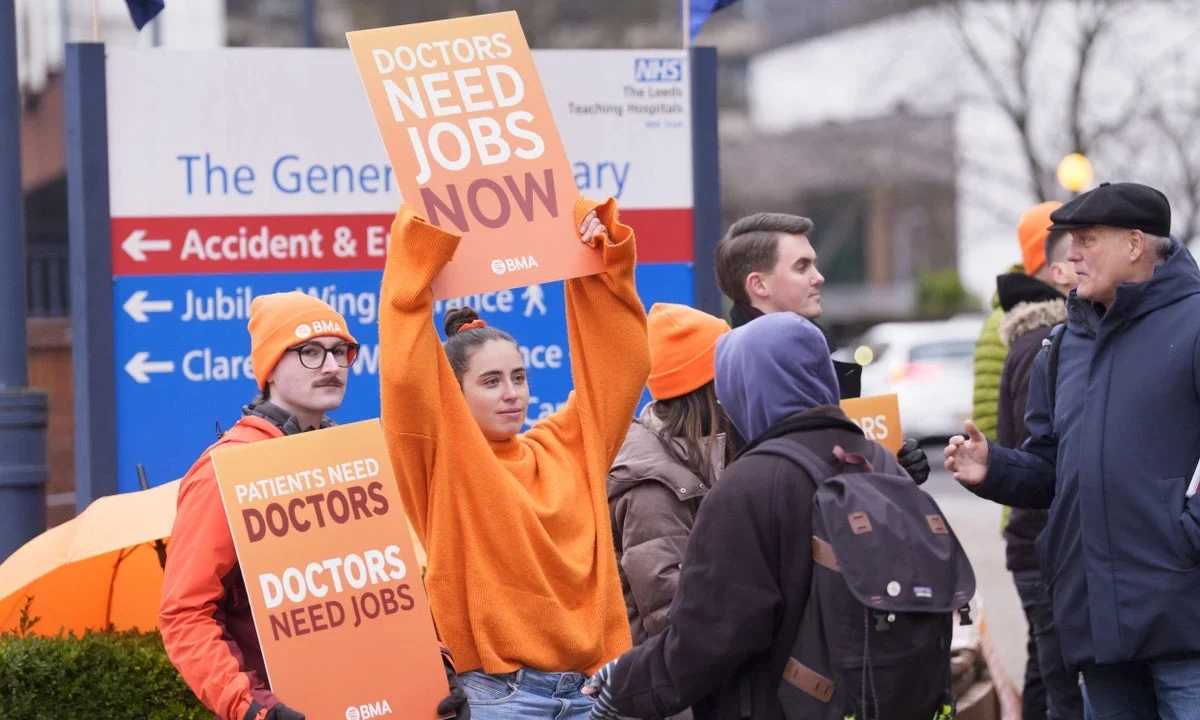
More doctors in England could join strike action after senior medical professionals announced plans to ballot on industrial action amidst a deepening dispute with the UK government over pay and job conditions. Consultants and specialist doctors will vote on whether to escalate their ongoing disagreements following a government proposal of a 3.5% pay award.
The British Medical Association (BMA) is orchestrating simultaneous ballots of consultants and specialist, associate specialist, and specialty (SAS) doctors, scheduled from May 11 until July 6. This move follows fresh tensions as resident doctors prepare for a six-day strike starting April 7, in protest over pay and job vacancies.
Prime Minister Sir Keir Starmer has urged BMA members, particularly resident doctors, to reconsider rejecting the government’s offer. Writing in The Times, he warned that turning down the deal would leave resident doctors worse off, receiving only a standard pay award without the proposed reforms aimed at improving their pay progression and working conditions. Sir Keir has given the resident doctors committee a 48-hour deadline to reconsider the agreement, which includes thousands of new NHS training posts.
The proposed deal promises a minimum of 4,000 new specialty training posts over three years, intended to bolster NHS staffing levels. NHS England chief Sir Jim Mackey confirmed that if the resident doctors proceed with strike action, the offer to expand training places would be withdrawn, citing the prohibitive costs of industrial action management absorbing resources that would otherwise fund new posts.
Dr. Jack Fletcher, chair of the BMA’s resident doctors committee, criticized the government for last-minute changes to the pay offer, stretching payments over a longer period and effectively moving the goalposts. He emphasized that reducing trainee posts during a time of healthcare system strain would be detrimental to patient care and that expanded posts should not be contingent on strike outcomes.
Health Secretary Wes Streeting responded on social media, asserting the government is offering a concrete deal on jobs and pay and expressing hope for resolution before the Easter weekend. However, Tory party member Kemi Badenoch publicly questioned the government’s tactic of using training posts as leverage, highlighting the importance of these positions for patient safety and care continuity.
The upcoming resident doctors’ strike, planned from April 7 to April 13, coincides with the Easter holidays—a period NHS leaders anticipate will be particularly difficult due to reduced staffing and the timing of the strike. Mike Prentice, national director for emergency planning at NHS England, warned that the strike would significantly challenge safe staffing and emergency coverage.
Why it matters
The dispute has significant implications for NHS staffing and patient care at a time when the health system is already under pressure from high demand and stretched resources. The potential withdrawal of investment in thousands of new training posts could exacerbate long-standing workforce shortages, impacting care delivery.
Strikes coinciding with holiday periods risk further disruption in NHS services, increasing strain on emergency departments and primary care settings. The resolution of this dispute will influence government relations with healthcare professionals and could set a precedent for future negotiations on NHS pay and staffing.
Background
Since 2023, resident doctors in England have engaged in multiple strike actions over pay and working conditions. The current government offer of a 3.5% pay increase and thousands of new training posts represents a step toward addressing some concerns, but remains contentious within the medical community.
The BMA has been leading unionized medical staff through these disputes, reflecting broader challenges within the NHS around recruitment, retention, and funding. Ongoing talks and ballots reflect the high stakes involved for both frontline staff and government health policy.
Read more Business stories on Goka World News.