
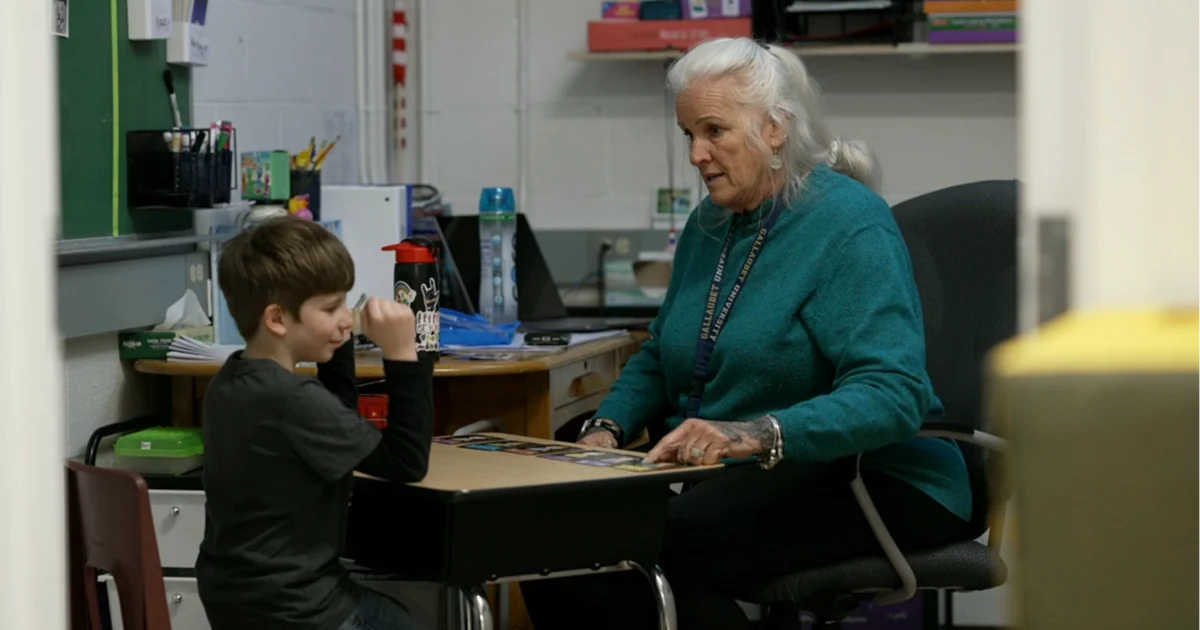
Campton Elementary School in New Hampshire adopted sign language across its classrooms to better communicate with Ben O’Reilly, its only deaf student, transforming his experience at school. Ben, a seven-year-old first grader with additional special needs, had previously felt isolated from both teachers and peers because of the communication barriers.
New Hampshire is among the few states without a dedicated school for the deaf, which meant Ben was the only deaf student in his entire district. Prior to the initiative, aside from his aide Cheryl Ulicny, communication options were extremely limited for him within the school community.
The change began when some of Ben’s classmates started learning basic sign language to connect with him. One student, Reid Spring, remarked that being able to sign helped him form a friendship with Ben. This initial effort soon expanded as the rest of the class and even teachers in multiple grades enrolled in sign language classes, some practicing signing even when Ben was not present.
Ben’s adoptive mothers, Etta and Marlaina O’Reilly, expressed deep gratitude and surprise at the support their son received from the school community. “It’s incredible,” said Etta, describing the experience as overwhelmingly positive.
According to Ulicny, the aide, the widespread learning of sign language within the school has opened up Ben’s ability to communicate and participate with others. “You could just watch his world open up with communication,” she said, noting the profound impact on his social engagement.
Why it matters
This case highlights the significance of inclusive education practices, especially in areas lacking specialized resources for deaf students. By learning sign language, an entire school community can enhance social integration, improve educational outcomes for deaf students, and foster greater empathy and understanding among all students and staff.
Background
New Hampshire’s lack of a dedicated school for the deaf presents unique challenges for deaf students, who often face isolation in mainstream schools without trained staff or peers who can communicate with them effectively. Teaching sign language to hearing classmates and educators offers a practical and inclusive solution frequently recommended by experts in deaf education and special needs support.
Read more US News stories on Goka World News.