
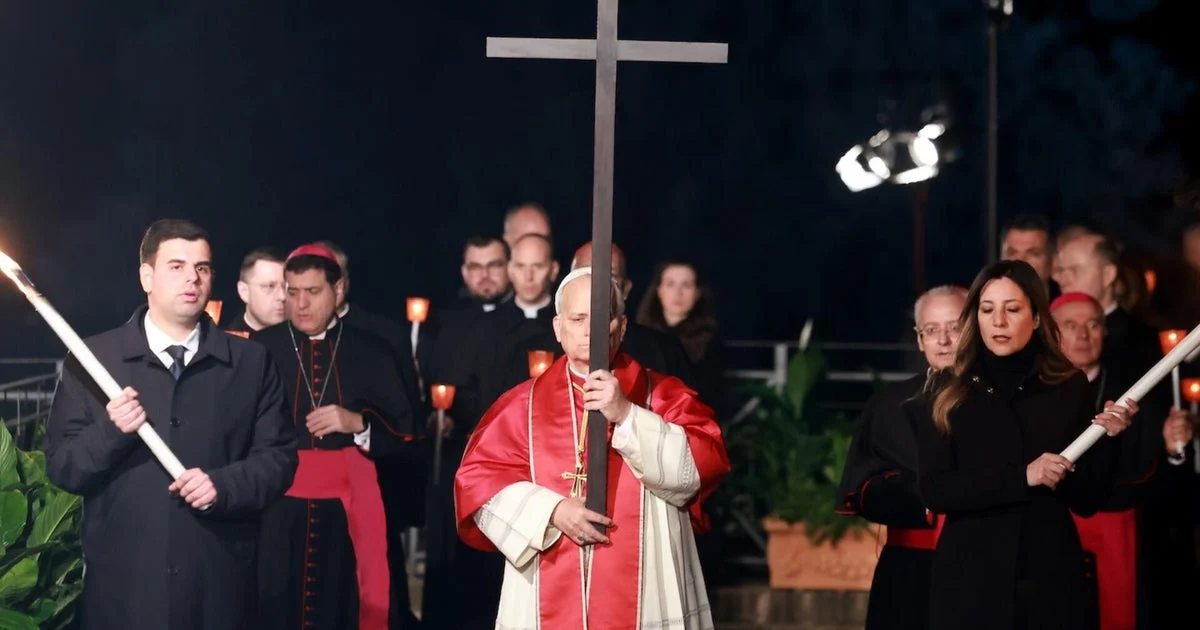
On Good Friday, Pope Leo carried the wooden cross through all 14 Stations of the Cross at the Colosseum in Rome, commemorating the final hours of Jesus Christ’s life. This marked the first time in decades that a pope has personally carried the cross during this traditional ceremony.
The Good Friday ritual involves the Pope or a designated leader walking the stations that represent key moments in Christ’s journey to crucifixion. The practice is a central element of the Christian Holy Week observances.
By carrying the cross himself, Pope Leo brought renewed significance to the event, emphasizing the physical and spiritual weight of the Passion. The Colosseum, an iconic ancient Roman amphitheater, serves as a poignant backdrop given its historical associations with early Christian martyrdom.
Why it matters
The pope’s decision to carry the cross personally after many years marks a notable shift in the observance of this important religious ceremony. It highlights a return to more participatory papal roles during liturgical events and underscores the symbolic importance of Good Friday in Catholic tradition.
Background
The Stations of the Cross ceremony on Good Friday is a longstanding Christian tradition meant to reflect on the suffering and sacrifice of Jesus Christ before his crucifixion. Historically, popes have led this ritual, though in recent decades it has been more common for them to oversee rather than physically perform the entire procession or carry the cross.
In Rome, the Good Friday service at the Colosseum draws thousands of worshipers and pilgrims each year, reinforcing the site’s significance as a place of both ancient Christian history and modern religious devotion.
Read more World News stories on Goka World News.