
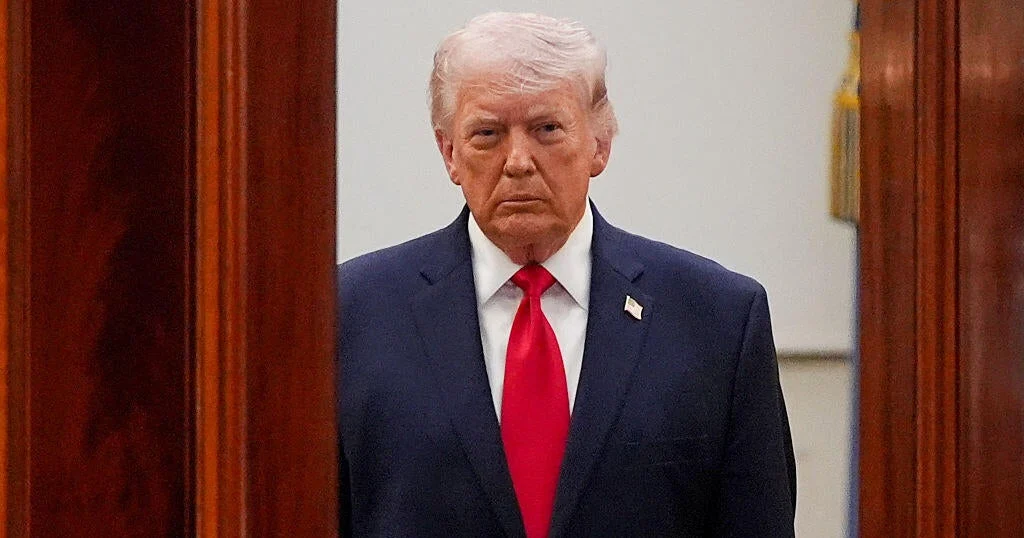
President Donald Trump issued a 48-hour ultimatum to Iran on April 4, 2026, demanding the reopening of the Strait of Hormuz or warning that “all Hell will reign down” on the country. The deadline marks a significant escalation in the ongoing conflict between the United States and Iran.
Trump posted on his social media platform Truth Social: “Remember when I gave Iran ten days to MAKE A DEAL or OPEN UP THE HORMUZ STRAIT? Time is running out – 48 hours before all Hell will reign down on them. Glory be to GOD!” This statement followed a recent prime-time address where Trump declared that U.S. forces had “beat and completely decimated Iran,” claiming their military and economic capabilities were severely damaged, including the destruction of Iran’s radar systems.
Iran’s Response to the Ultimatum
Iran’s central military command dismissed the threat as “helpless, nervous, unbalanced and stupid,” according to a statement from Gen. Ali Abdollahi Aliabadi of the Khatam al-Anbiya Central Headquarters. Aliabadi also warned that “the gates of hell will open for you,” echoing the aggressive tone of Trump’s message.
Ongoing Conflict and Recent Developments
The U.S.-Iran war, initiated by coordinated U.S. and Israeli strikes on February 28, has resulted in thousands of deaths, disrupted global markets, and caused sharp increases in fuel prices. Pentagon reports indicate 365 American service members have sustained injuries during U.S. operations against Iran. The conflict continues to intensify as Iran retaliates with attacks across the region.
Notably, on April 3, an F-15F U.S. fighter jet was shot down over Iranian territory, marking the first American aircraft lost in this war. One crew member was rescued, while another remains missing. Iranian media also reported an A-10 attack aircraft was downed by Iranian defense forces, the first such loss since the 2003 Iraq invasion.
Diplomatic Efforts and Reactions
Despite threats, diplomatic efforts persist. Mediators from Pakistan, Turkey, and Egypt are engaged in negotiations aimed at bridging differences to halt the conflict and reopen the strategic Strait of Hormuz, a vital global shipping route. Iran’s foreign minister, Abbas Araghchi, indicated willingness to participate in talks on April 4.
Republican Senator Lindsey Graham supported Trump’s deadline, warning of a “massive military operation” if Iran does not comply. He emphasized the severity of ongoing U.S. operations against Iran and the necessity of ending Iran’s regional influence, ideally through a peace agreement.
Why it matters
The Strait of Hormuz is a critical chokepoint for global oil shipments, with about one-fifth of the world’s petroleum passing through it. Its closure or disruption threatens significant economic consequences worldwide. The escalation of military threats and actions in this region raises the risk of broader conflict with global repercussions for energy security and international stability.
Background
President Trump initially set a deadline on March 21 to reopen the Strait of Hormuz without threats, threatening to “obliterate” Iran’s power plants if demands were unmet. Following preliminary talks described as “productive,” the administration postponed strikes and extended the deadline to April 6. The current 48-hour ultimatum marks a tightening of the timeline.
Read more Politics stories on Goka World News.