
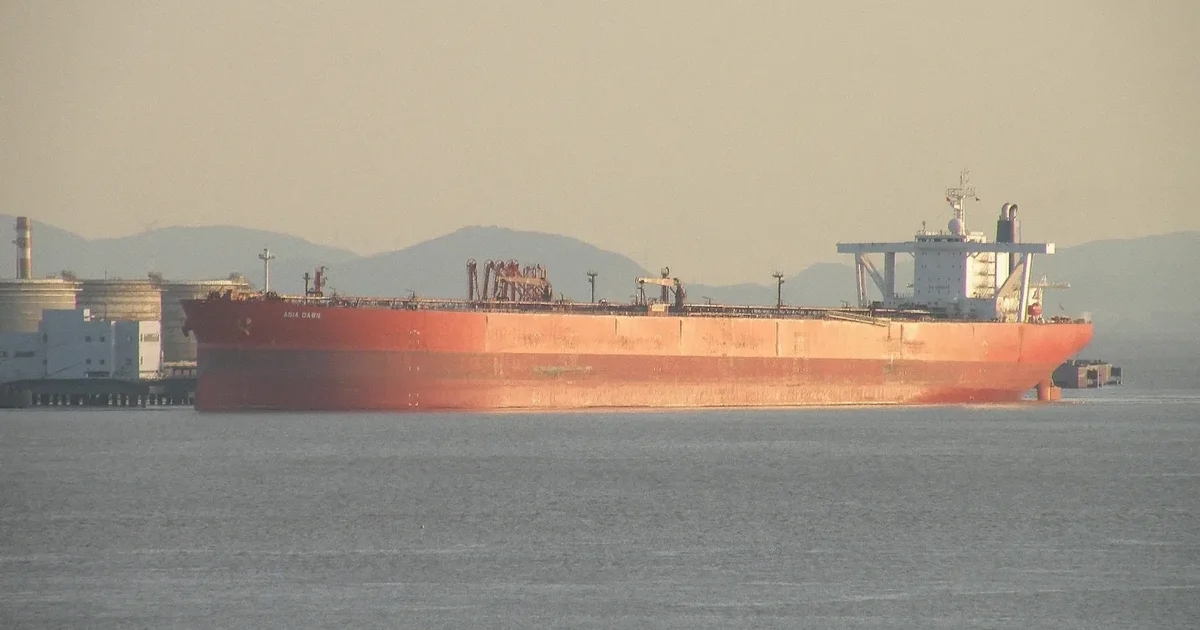
Iran’s state media reported early Wednesday that a bulk carrier carrying food supplies and an Iranian crude oil tanker passed through the Strait of Hormuz into Iranian waters, despite a U.S. naval blockade that began earlier this week targeting Iranian ports. The claims follow a U.S. Central Command (CENTCOM) announcement that the blockade was “fully implemented” as of Monday.
The supertanker reportedly transported up to two million barrels of oil while sailing through international waters with its tracking system active. According to MarineTraffic.com, several vessels, including the Chinese-owned crude oil tanker Alicia, traversed the Strait of Hormuz overnight. Alicia, previously sanctioned for transporting Iranian crude under a former name, appeared to change course but continued through the strait after the blockade commenced.
Two Iranian-flagged container ships under U.S. sanctions were also observed departing the Persian Gulf on Tuesday, sailing close to Iran’s southern coast on Wednesday.
The U.S. blockade, enforced by naval forces in the Gulf of Oman, restricts entry and departure from all Iranian ports and coastal areas but explicitly maintains freedom of navigation for vessels transiting the Strait of Hormuz to or from non-Iranian ports. A U.S. official clarified that the blockade is primarily aimed at vessels entering or leaving Iranian ports, including those under U.S. sanctions.
MarineTraffic data showed additional Iran-linked vessels passing the strait after the blockade began, including some that previously called at Iranian ports such as Bandar Imam Khomeini and Bushehr. Certain ships turned off their transponders near Iranian waters, complicating tracking efforts. CBS News noted the possibility of location spoofing or false reporting by ships but could not confirm such activities.
Among the vessels tracked, the tanker Christianna passed through the strait after being in an Iranian port, and other sanctioned ships such as the Rich Starry and Elpis were seen navigating the area, some turning off their tracking signals close to Iranian islands.
Admiral Brad Cooper, CENTCOM commander, stated that the blockade has effectively stopped maritime economic trade to and from Iran, which heavily depends on international sea trade, within 36 hours of its start. However, the exact geographic limits of the blockade remain unclear, and some sanctioned vessels appeared poised to transit the strait into the Persian Gulf on Wednesday morning.
Why it matters
The Strait of Hormuz is a strategic chokepoint through which a significant portion of the world’s oil exports flow. The U.S. blockade aims to constrict Iran’s economy by halting maritime trade, particularly oil exports. Iran’s reported movements through the strait despite the blockade highlight ongoing tensions and the complexity of enforcing maritime sanctions in a busy, geopolitically sensitive waterway.
Background
The U.S. imposed the blockade amid escalating tensions with Iran, seeking to curb Iran’s economic activities by restricting its port access in the Arabian Gulf and the Gulf of Oman. The U.S. insists it will not interfere with freedom of navigation for vessels not linked to Iran or those not calling at Iranian ports, to avoid disrupting global trade. Iran, in turn, continues to navigate its maritime operations amid sanctions and military pressure.
Read more World News stories on Goka World News.