
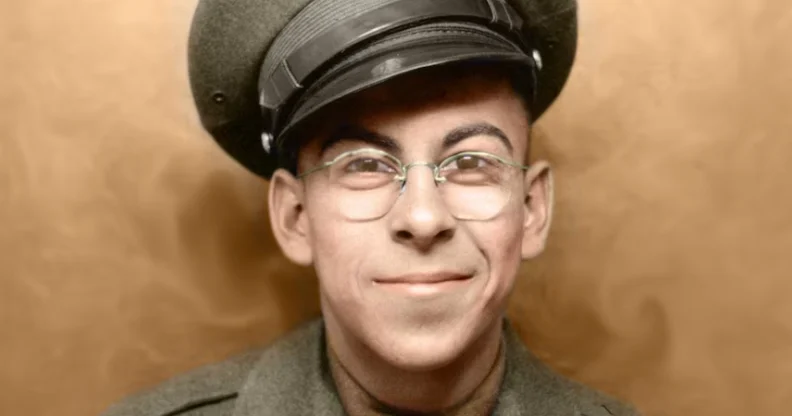
The remains of U.S. Army Sgt. Celestino Chavez, who went missing during the Korean War in 1950, were positively identified by the Defense POW/MIA Accounting Agency (DPAA) on April 15, 2025, 75 years after he vanished in combat. Chavez, a 19-year-old from Gallup, New Mexico, was killed in action near the Chosin Reservoir, a major battle site noted for its intense fighting between United Nations forces and Chinese troops.
Service and Disappearance
Chavez enlisted in the U.S. Army in 1949 at the age of 17. Assigned to D Battery of the 15th Anti-Aircraft Artillery Automatic Weapons Battalion in the 7th Infantry Division, he fought at the Chosin Reservoir in late 1950. On November 27, 1950, he wrote a letter to his mother requesting “no tears” if anything happened to him.
Three days later, Chavez was seriously wounded defending his position but refused evacuation, staying to operate his weapon until enemy attacks were repelled. He collapsed afterward due to blood loss and was evacuated to an aid station. However, when his convoy was ambushed on December 2, 1950, he was reported missing in action and declared presumed dead by December 31, 1953.
Identification and Honors
Due to the harsh conditions and rapid retreat of UN forces, many servicemembers’ remains, including Chavez’s, were not recovered promptly. Over the decades, the DPAA has worked to recover and identify remains from the Korean War, using anthropological analysis, circumstantial evidence, and multiple DNA testing methods.
Chavez’s remains were identified from material provided by North Korea in 2018, when it turned over 55 boxes believed to contain remains of U.S. service members. His remains were transported to New Mexico, where the New Mexico National Guard Funeral Honors Team received his casket in Albuquerque, ensuring he was honored with dignity.
He was posthumously awarded the Silver Star, Purple Heart, and Korean Service Medal with two Bronze Service Stars. His name has been removed from the Courts of the Missing at the National Memorial Cemetery in the Pacific.
Why it matters
The identification of Sgt. Chavez provides closure for his family and community, as he was the only person from Gallup, New Mexico, unaccounted for in the Korean War. It highlights ongoing efforts to recover and honor missing service members decades after conflicts end. Approximately 7,500 U.S. troops remain unaccounted for from the Korean War, underscoring the continued importance of recovery operations by agencies like the DPAA.
Read more US News stories on Goka World News.