
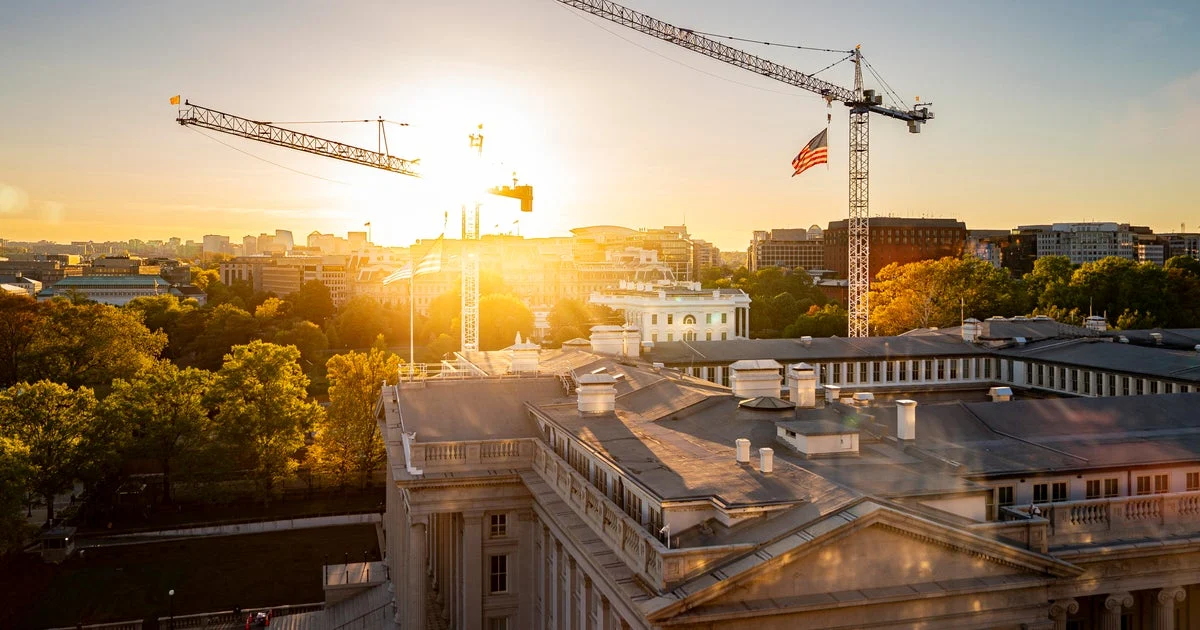
A federal judge has ordered a halt to above-ground construction of a new ballroom at the White House East Wing, while allowing underground work on a presidential bunker to continue. The ruling, made Thursday by U.S. District Judge Richard Leon, revises a previous injunction that blocked the Trump administration’s plan for a 90,000-square-foot ballroom.
Judge Leon’s updated order permits “above-ground construction strictly necessary to cover, secure, and protect” the underground national security facilities beneath the planned ballroom. Allowed activities include waterproofing, water management, structural reinforcement, and sealing exposed construction areas. However, the order prohibits any above-ground construction that would permanently establish the ballroom’s size or scale.
The decision comes after a federal appeals court directed Judge Leon to reconsider potential national security risks of stopping construction. The appeals panel also extended a previous stay to allow the administration to seek Supreme Court review.
In legal filings, the Justice Department argued that halting the project “would imperil the President and national security” by leaving a vulnerable area beside the Executive Residence. They assert the new East Wing design advances critical protections against threats such as drones, ballistic missiles, bullets, and biohazards.
President Trump criticized the ruling on his social media platform, calling the judge’s action “illegal overreach” and insisting the ballroom is vital for national security. He also expressed skepticism about the underground facilities, stating that they “would indeed be useless, without the above-ground sections.”
The ballroom project was announced by President Trump last summer and involved the unexpected demolition of the existing East Wing in October 2025. The National Trust for Historic Preservation filed a lawsuit last year to block the construction, citing concerns over historic preservation.
Why it matters
The ruling impacts the balance between historic preservation and national security at the White House. It underscores legal tensions surrounding significant renovations to a landmark presidential residence. Maintaining national security during high-profile construction projects is critical given ongoing concerns about protecting the President and executive facilities from modern threats.
Background
President Trump’s initiative to build a privately funded White House ballroom aimed to replace the East Wing, which was demolished to make way for the new structure. The project has faced legal challenges focused on preservation and the scale of construction, resulting in court interventions that seek to align national security needs with legal and historical considerations.
Read more US News stories on Goka World News.