
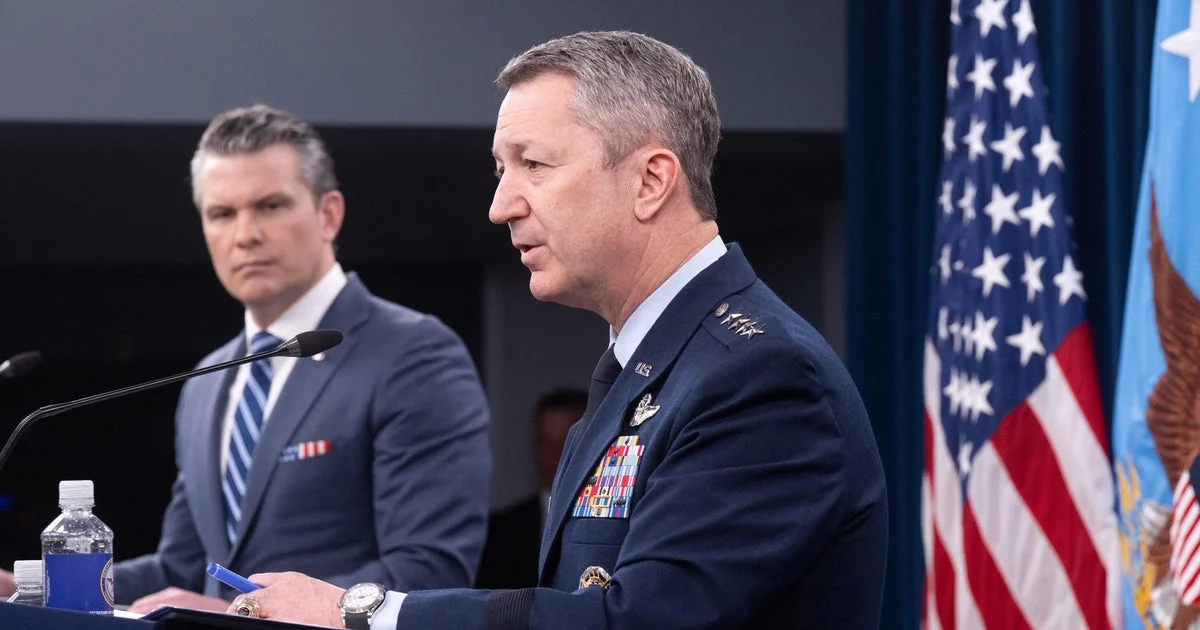
U.S. military officials have issued a stark warning to Iran, stating that force will be used if any ships do not comply with the current U.S.-enforced blockade at the Strait of Hormuz. This announcement comes amid a ceasefire in the ongoing conflict between the two nations.
At a news conference on April 16, 2026, Chairman of the Joint Chiefs of Staff Gen. Dan Caine declared that the blockade applies to all vessels heading into or from Iranian ports, regardless of nationality. He noted that 13 ships had so far turned around to avoid confrontation, a figure later updated by the U.S. Central Command (CENTCOM) to 14 ships within the first 72 hours of the blockade’s enforcement.
Defense Secretary Pete Hegseth reinforced this message, describing the blockade as “successful” and emphasizing the U.S. military’s readiness to escalate to major combat operations if necessary. He stated that the U.S. can swiftly transition from blockade enforcement to full military engagement and stressed the administration’s determination to prevent Iran from acquiring nuclear weapons. “We prefer to do it the nice way through a deal,” Hegseth said, referencing diplomatic efforts led by the vice president’s negotiating team, “or we can do it the hard way.”
The blockade began on Monday in the Gulf of Oman, just outside the Strait of Hormuz—a critical chokepoint that normally facilitates about 20% of the world’s oil shipments. The move comes amid Iranian efforts to maintain control over the strait, which Iran uses to exert pressure by restricting maritime transit.
Iran has publicly threatened to retaliate by sinking American ships and by potentially closing another strategic waterway, the Red Sea. While the ceasefire has lowered the level of maritime traffic in the Strait of Hormuz compared to pre-war conditions, tensions remain high.
Both U.S. officials and Iranian negotiators have engaged in indirect talks since the ceasefire began, but progress remains stalled, particularly over disagreements about Iran’s nuclear program. President Trump has indicated another round of negotiations may occur soon.
The U.S. military’s firm stance underscores continuing uncertainties surrounding the ceasefire’s durability. Gen. Caine emphasized that U.S. forces remain ready to resume combat operations “at literally a moment’s notice,” signaling that the blockade is a key frontline in managing escalating U.S.-Iran tensions.
Why it matters
The Strait of Hormuz is a vital international shipping corridor, especially for the global oil supply, making the U.S. blockade a significant geopolitical move with implications for global energy markets and regional stability. The U.S. military’s readiness to use force highlights the risk of renewed conflict and underscores the fragile nature of the ceasefire between the U.S. and Iran.
Background
The U.S.-Iran conflict escalated earlier in 2026 following years of tensions over Iran’s nuclear ambitions and regional influence. The Strait of Hormuz has been at the center of these disputes because Iran has threatened to close it in response to sanctions and military actions. The ceasefire initiated on April 8 aimed to reduce hostilities but has yet to resolve key issues, with ongoing military posturing by both sides.
Read more US News stories on Goka World News.