
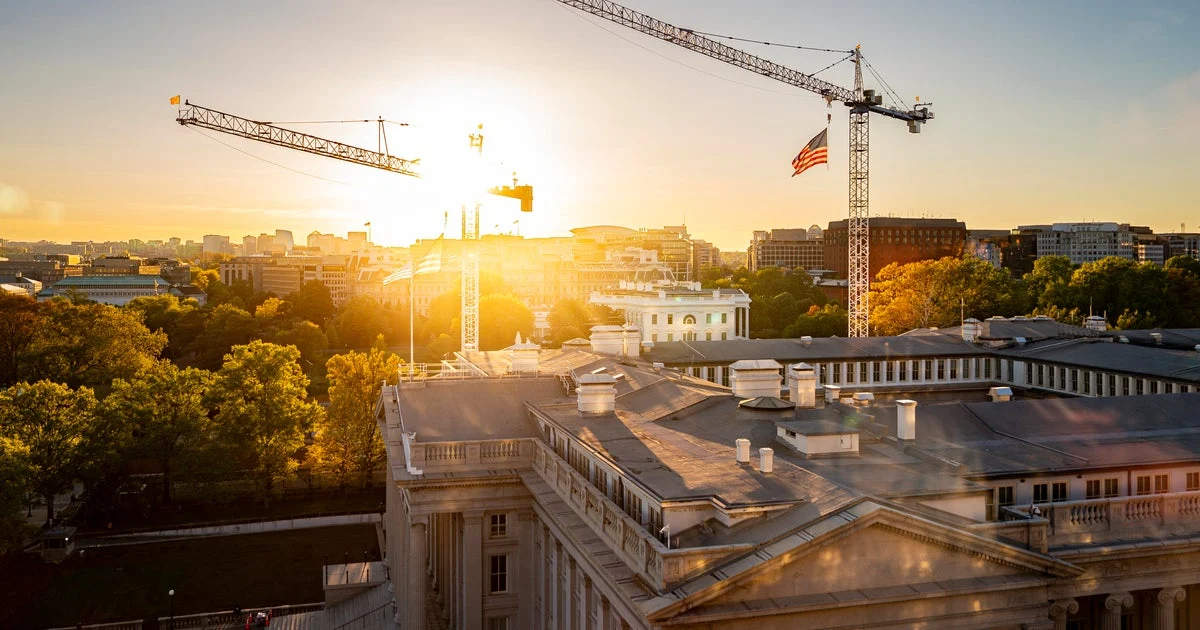
The U.S. Court of Appeals for the District of Columbia has granted an administrative stay on a lower court’s order that blocked most above-ground construction on a new White House ballroom, allowing the project to proceed for now. The next hearing in the case is scheduled for June 5, meaning construction will likely continue through that date.
The construction includes both a new ballroom and an underground presidential bunker at the White House. Earlier, U.S. District Judge Richard Leon temporarily halted most above-ground work in March but allowed underground bunker construction to continue. He based his decision on concerns raised about the potential implications for historic preservation and other factors.
The Department of Justice quickly appealed Judge Leon’s ruling, arguing that stopping the ballroom’s construction would put the President and national security at risk. In its appeal filed on Thursday, the Justice Department claimed the ruling “would imperil the President and national security and indefinitely leave a large hole beside the Executive Residence.”
Former President Donald Trump strongly criticized Judge Leon’s decision, denouncing it on his social media platform TruthSocial as a “highly political Judge” making an “illegal overreach.” He emphasized the ballroom’s importance for national security and described the construction as a “Historic and Militarily Imperative Project.” Additionally, Trump claimed the underground bunker is ineffective without the associated above-ground ballroom sections.
Trump announced plans for the privately funded ballroom last summer and unexpectedly demolished the East Wing in October to make way for the project. The National Trust for Historic Preservation has challenged the construction legally, filing a lawsuit late last year to block the building of the new East Wing.
Why it matters
The legal dispute over the White House ballroom touches on issues of presidential security, historic preservation, and the scope of judicial authority in matters involving the executive branch. The court’s decision to allow construction to resume maintains presidential security plans while the case is pending, avoiding delays that could impact the administration’s priorities.
Background
President Trump announced the ballroom project, which includes an underground bunker, as a privately funded initiative intended to enhance White House functions and security. The demolition of the existing East Wing for this purpose drew criticism and legal challenges from preservation groups concerned about the historical integrity of the White House grounds. Judge Leon’s earlier intervention reflected these concerns before the appeals court mandated reconsideration, emphasizing national security implications.
Read more Politics stories on Goka World News.