
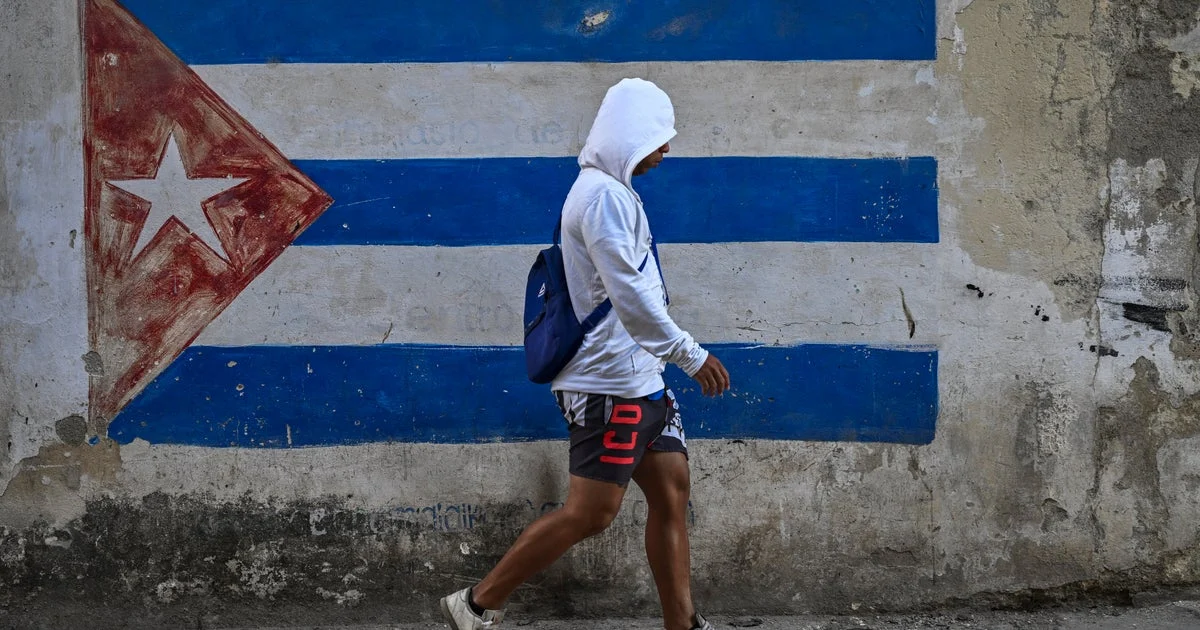
A delegation of senior U.S. State Department officials visited Cuba last week on a U.S. government plane, the first such visit since former President Barack Obama traveled to the island in 2016, four officials told CBS News.
During the visit, the delegation met with Raúl Guillermo Rodríguez Castro, grandson of former Cuban President Raúl Castro, who is considered a significant figure in the current Cuban government, according to a State Department official. The identities of other participants on both sides of the talks were not disclosed.
The discussions focused on the Trump administration’s demands for political and economic reforms in Cuba as well as the release of political prisoners, said the official. The U.S. also proposed providing Cuba access to Starlink, Elon Musk’s satellite internet service operated by SpaceX, as part of the engagement.
The delegation warned Cuban leaders that the country’s economy is in a state of severe decline and emphasized a narrow window for reforms backed by the U.S. before conditions become irreversible. The official noted that President Donald Trump remains open to diplomatic solutions but will prevent Cuba from collapsing into what the administration considers a national security threat if Cuban officials fail to act.
Cuba faces an ongoing energy crisis exacerbated by the Trump administration’s threat to impose heavy tariffs on countries supplying oil to the island, effectively halting most shipments. However, the U.S. granted a humanitarian exemption allowing a Russian-flagged tanker to dock in Havana last month.
President Trump has repeatedly spoken about Cuba as a potential target for U.S. intervention, calling it a “failing country” and suggesting it “could be next” following recent U.S. actions in Venezuela and Iran. Earlier this week, Trump hinted at potentially visiting Cuba in the near future and expressed a desire to bring about a “new dawn” for the island.
Cuba’s government confirmed that talks with the U.S. are ongoing but remained skeptical of U.S. intentions. Cuban President Miguel Díaz-Canel, speaking at a recent rally, rejected Trump’s rhetoric and vowed to prepare for any possible U.S. military action, stating it is “our duty to prepare to avoid it and, if it becomes inevitable, to defeat it.”
Recently, Cuba announced plans to ease some restrictions on foreign investment, a move criticized by U.S. Secretary of State Marco Rubio as insufficient.
Why it matters
The unprecedented visit demonstrates a rare channel of dialogue amid one of the tensest periods in U.S.-Cuba relations since the Obama era. The trip signals the Trump administration’s dual strategy of applying severe pressure on Cuba’s economy while remaining open to limited diplomatic engagement. Potential U.S. technological aid via Starlink and the focus on political prisoners highlight the administration’s priorities. Meanwhile, Cuba’s warnings of military preparedness underline escalating threats of confrontation.
Background
The U.S. and Cuba’s diplomatic relations have been fraught, especially after the Trump administration reversed many policies from the Obama presidency aimed at normalization. Since 2019, the U.S. has imposed stringent sanctions on Cuba, including threats to countries supplying oil that have deepened Cuba’s energy crisis. This environment frames the current talks and the administration’s hardline stance balanced with limited overtures.
Read more Politics stories on Goka World News.