
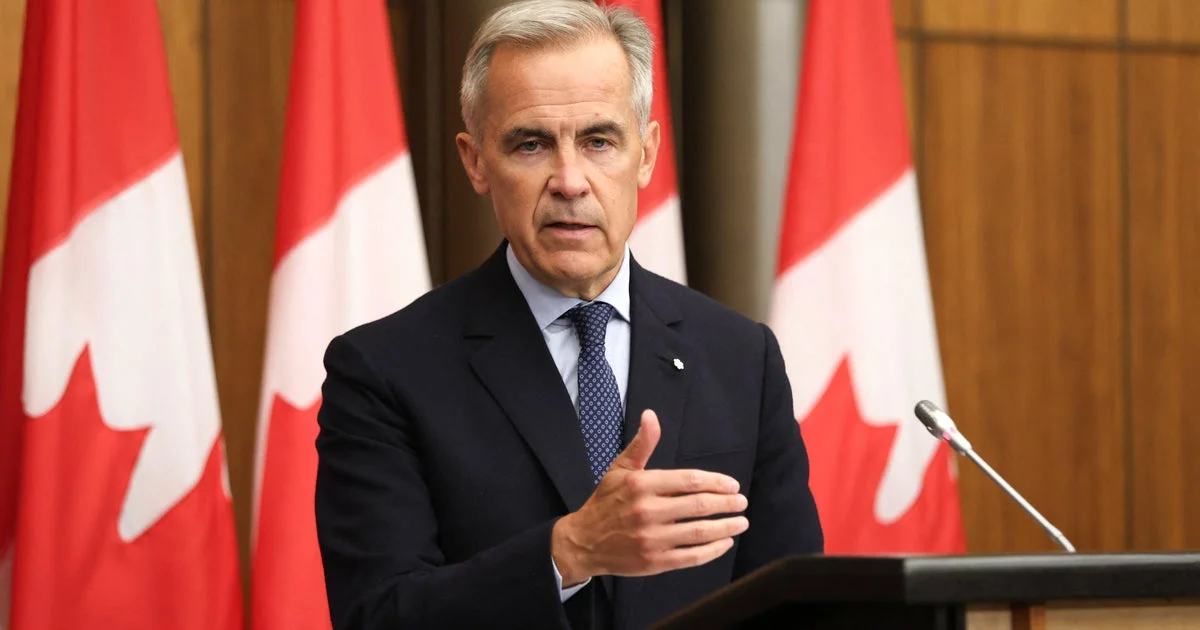
Canadian Prime Minister Mark Carney stated in a video address on Sunday that Canada’s historically strong economic ties to the United States have become a liability that the country must urgently address. Carney emphasized the need to diversify Canada’s trade and investment relationships amid shifting U.S. trade policies.
In his nearly 10-minute message, Carney described how U.S. trade measures, including tariffs last seen during the Great Depression era, have undermined sectors such as automotive and steel industries in Canada. These policies have generated uncertainty, stalling business investments and threatening economic stability.
“Many of our former strengths, based on our close ties to America, have become weaknesses. Weaknesses that we must correct,” Carney said.
Plans to Strengthen Economic Independence
Carney outlined his government’s efforts to attract new investments, negotiate trade agreements with other countries, and boost domestic economic capacity. He highlighted goals such as doubling clean energy capacity, reducing internal trade barriers, increasing defense spending, downscaling taxes, and improving housing affordability.
“We have to take care of ourselves because we can’t rely on one foreign partner,” Carney stressed. “We can’t control the disruption coming from our neighbors. We can’t control our future on the hope it will suddenly stop.”
He further warned that simply hoping the United States would revert to previous trade practices “is not a feasible strategy. Hope isn’t a plan and nostalgia is not a strategy.”
Context of Evolving Canada-U.S. Relations
Carney, who previously led central banks in Canada and the United Kingdom, has been vocal about growing geopolitical and economic uncertainties. Earlier in January, at the World Economic Forum, he criticized economic coercion by major powers, prompting public pushback from then-President Donald Trump.
Trump had also made controversial remarks suggesting Canada should become the 51st U.S. state, comments that angered many Canadians and reinforced concerns about Canada’s overreliance on the U.S.
Carney’s address follows his recent election victory securing a majority government and increasing pressure from opposition parties to finalize a new U.S.–Canada trade agreement ahead of scheduled NAFTA reviews in July 2026.
Why it matters
Carney’s focus on reducing Canada’s economic dependence on the United States reflects broader shifts in North American trade dynamics amid rising protectionism. With the U.S. government raising tariffs and altering trade policies, Canada faces significant risks to key industries and investment inflows.
By pursuing diversification and internal economic strengthening, Canada aims to enhance its resilience against external shocks and assert greater control over its economic and security future, signaling a strategic recalibration in one of the world’s closest bilateral partnerships.
Read more Business stories on Goka World News.