
Japan confirmed its first fatal bear attack of 2026 after a 55-year-old woman was found dead in Iwate prefecture in northern Japan, according to the Ministry of the Environment. This incident follows a record 13 fatal bear attacks in 2025, more than double the previous high.
Two additional human remains were uncovered this week in northern Japan, one in Iwate and another in Yamagata prefecture. Authorities have linked these deaths to possible bear attacks but have not confirmed the causes. The body found in Yamagata was identified by broadcaster NHK as Chiyoko Kumagai, 69, who went missing while foraging for wild plants. Her injuries suggested they were inflicted by an animal, likely a bear.
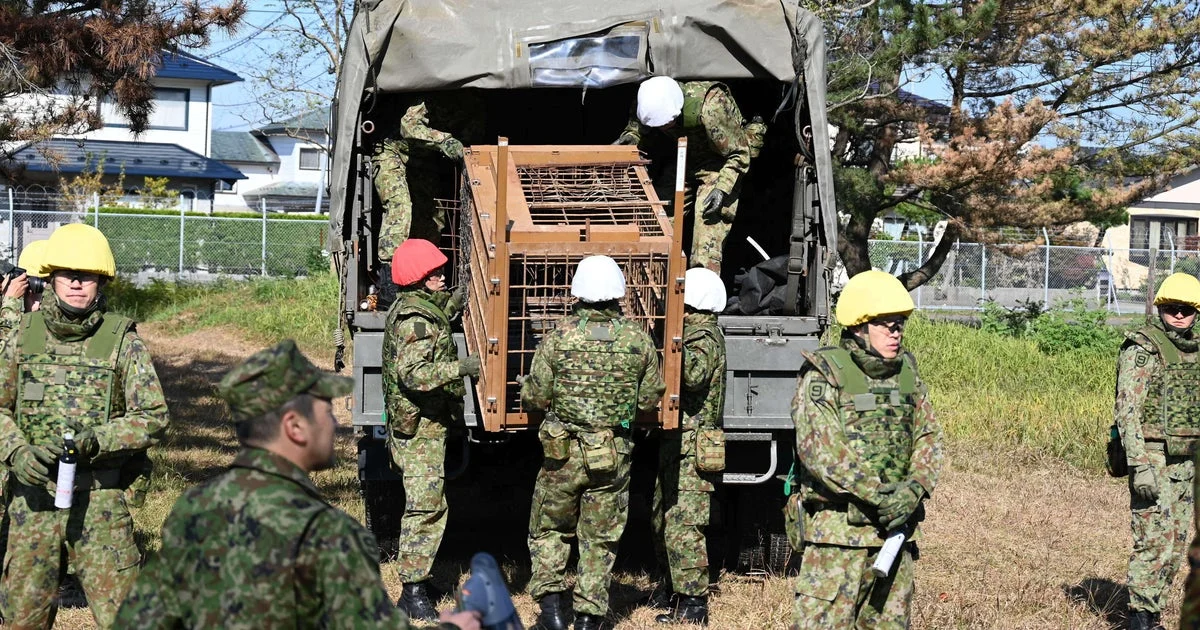
The rise in fatal and non-fatal bear encounters has increased alarm nationwide. Last year, bears were frequently sighted in urban areas such as airport runways, golf courses, near schools, hot spring resorts, and even inside supermarkets. The government responded by deploying troops to hunt and trap problem bears. One notable incident last year involved a bear that rampaged through a supermarket for two days before being lured and captured.
Experts attribute last year’s surge in aggressive encounters to a combination of rapidly growing bear populations and human depopulation in rural areas, which has expanded bear habitats closer to human settlements. The brown bear population in Japan has doubled over the last 30 years to roughly 12,000, while the Asian black bear population on the main island, Honshu, has risen to 42,000. These increases, coupled with poor nut and other natural food harvests in 2025, forced bears to venture into towns and villages in search of food.
This spring, local media report record numbers of bear sightings as animals have emerged from hibernation. In regions including Miyagi, Akita, and Fukushima, sightings in April were four times higher than the previous year. Koji Yamazaki, a bear expert and head of the Ibaraki Nature Museum, noted that the Tohoku region has a dense and growing bear population and urged residents to remain vigilant. He also cited factors such as abandoned farmland and depopulation as contributing to increased human-bear conflicts.
Most attacks are attributed to Asian black bears, prevalent on Honshu, while the larger brown bears, weighing up to 1,100 pounds and capable of outrunning humans, are primarily found in the northern island of Hokkaido. In response to bear problems, some towns in Hokkaido have even implemented deterrents such as robotic wolves to scare bears away.
Japan’s environment and local authorities continue to monitor the situation closely as bear activity rises during the spring months.
Why it matters
The growing number of bear attacks raises concerns about public safety in rural and suburban Japan, prompting government interventions and wildlife management efforts. With bear populations expanding and human settlements shrinking in some areas, human-wildlife conflicts are expected to continue without effective mitigation measures. Increased awareness and preparedness are crucial for residents in affected regions.
Background
Bear attacks in Japan have increased sharply in recent years, driven by ecological and demographic changes. A warming climate has supported greater bear populations by increasing food availability such as nuts, deer, and boars. Meanwhile, rural depopulation has led to abandoned lands that bears occupy, facilitating closer contact between humans and bears. The government has responded by deploying Self-Defense Forces personnel to assist in catching and relocating aggressive bears and by promoting community awareness campaigns.
Sources
This article is based on reporting and publicly available information from the following source:
Read more World News stories on Goka World News.