
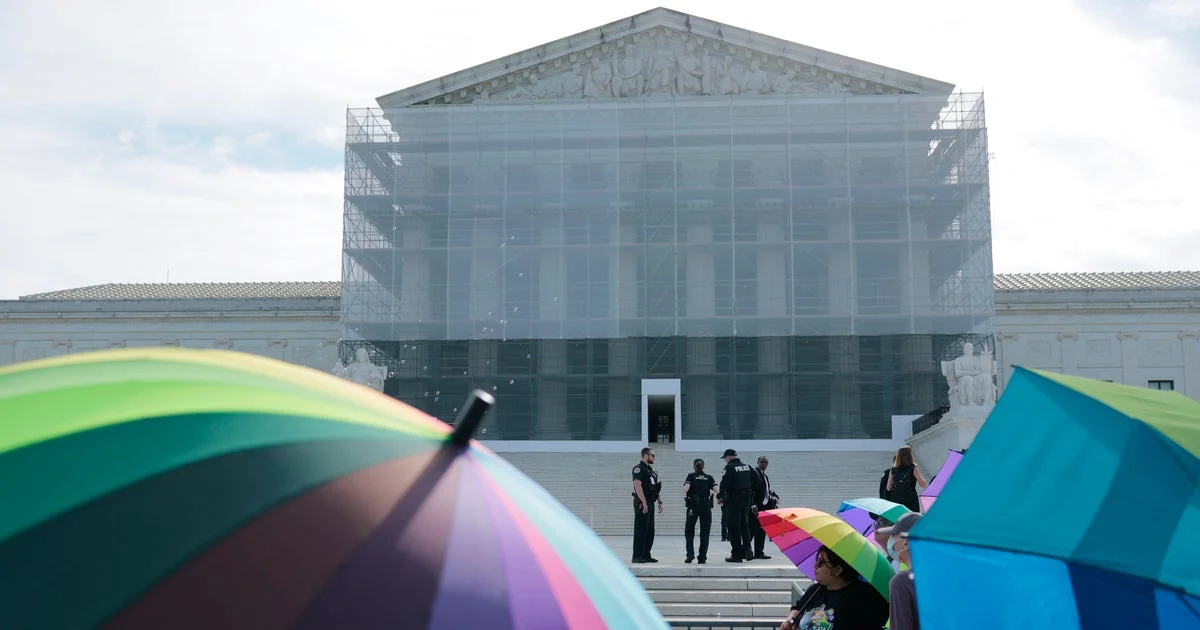
The Supreme Court on Monday declined to hear an appeal from Massachusetts parents challenging their public school district’s approach to their child’s gender transition, leaving intact a lower court ruling that rejected the parents’ claims.
The case centered on Stephen Foote and Marissa Silvestri, whose middle-school child, identified as B.F., attends school in Ludlow, Massachusetts. The parents alleged the school encouraged their child’s social gender transition without their knowledge or consent, including teachers using a different name and pronouns and allowing B.F. to choose bathroom facilities.
According to court filings, the parents opposed the school’s actions, wanting to address their child’s mental health and gender identity concerns privately and with professional guidance. They claimed the school implemented an unwritten policy that allowed students to socially transition at school while restricting parent communication to legal names and pronouns.
School officials countered that their decisions followed the student’s direct request communicated via email, in which B.F. identified as “genderqueer” and asked staff to use a preferred name and pronouns. They stated that their actions complied with Massachusetts Department of Elementary and Secondary Education guidance, which advises schools to respect transgender students’ privacy when there are safety or acceptance concerns at home.
The parents filed a civil rights lawsuit in 2022, asserting the school district violated their fundamental right to direct their child’s upbringing and medical care. The federal district court dismissed the case, and the 1st U.S. Circuit Court of Appeals upheld that dismissal, stating parents do not have a constitutional right under the Due Process Clause to dictate how public schools administer education or related policies.
In their Supreme Court appeal, the parents’ lawyers emphasized established legal precedents affirming parental rights in child-rearing decisions. They argued more than 1,000 school districts have similar policies that allow social transition without parental notification, and the Court must clarify that parents do not forfeit these rights by enrolling their children in public schools.
Represented by the conservative group Alliance Defending Freedom, the parents framed their objections on moral grounds, stating that “gender transition harms their children,” while insisting constitutional parental rights must be upheld regardless of religious belief.
While the Supreme Court declined to hear this case, it may consider related disputes on parental rights and gender identity policies in schools, including an upcoming case from Florida. Previous actions by the Court reflect ongoing national legal debates over balancing parents’ rights, student privacy, and school policies in the context of gender identity issues.
Why it matters
This case highlights the increasing legal complexity surrounding parental rights and transgender student policies in public education. Decisions like this affect how schools navigate students’ gender identities while considering family involvement, safety, and privacy.
With similar cases pending, the Supreme Court’s future rulings may establish clearer national standards on the extent of parental authority in education related to gender identity and how schools must engage families in such sensitive matters.
Read more Politics stories on Goka World News.