
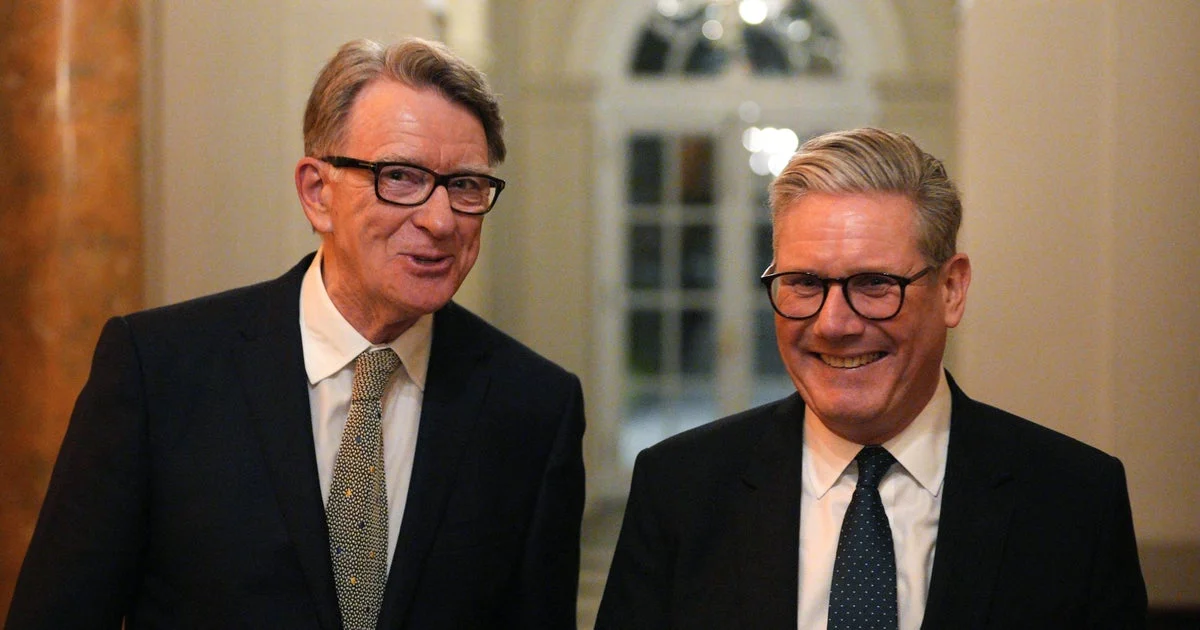
British Prime Minister Keir Starmer is embroiled in a political scandal over the appointment of Peter Mandelson as the UK ambassador to the United States, after new evidence emerged about Mandelson’s close ties to convicted sex offender Jeffrey Epstein and a flawed government vetting process. The controversy has led to calls from opposition parties demanding Starmer’s resignation, intensifying scrutiny over his role and knowledge of Mandelson’s background.
Controversial Appointment and Security Vetting
Starmer appointed Mandelson, a Labour Party veteran and former close associate of Epstein, to the ambassadorial post in early 2025. However, questions arose after leaked documents revealed Mandelson’s friendship with Epstein and alleged involvement in sharing confidential information with him. Mandelson has denied any complicity in Epstein’s crimes but remains under investigation following an arrest in February related to the ongoing Epstein case.
Starmer has acknowledged exercising “wrong judgement” in selecting Mandelson and apologized publicly to Epstein’s victims and the British public. Starmer blamed the Foreign Office for failing to alert him or his cabinet to concerns raised during a formal security vetting conducted in January 2025—months after Mandelson’s appointment was announced. The vetting reportedly recommended against granting Mandelson security clearance necessary for the diplomatic role, but the concerns cited were not explicitly linked to Epstein.
Following the revelations, Starmer dismissed Sir Olly Robbins, the senior Foreign Office civil servant responsible during the vetting period, citing accountability issues. Robbins testified to a parliamentary committee that his office faced “an atmosphere of pressure” from Starmer’s team to expedite Mandelson’s posting, with a “generally dismissive attitude” towards the security concerns.
Political Fallout
The scandal has prompted significant backlash in the House of Commons, where lawmakers across the political spectrum accused Starmer of dishonesty or incompetence in handling the appointment process. Two MPs were expelled from parliamentary sessions for accusing the prime minister of lying, indicating the high tensions surrounding the issue.
Despite the criticisms, Starmer has so far resisted calls to resign, maintaining that he was unaware of the full extent of Mandelson’s association with Epstein at the time of the appointment. Nevertheless, Labour’s standing in opinion polls has suffered, particularly ahead of local elections scheduled for May 2026, increasing pressure on Starmer’s leadership.
Donald Trump’s Reaction
Former U.S. President Donald Trump, who had previously criticized Starmer on other issues, acknowledged Starmer’s error in appointing Mandelson but expressed optimism about his potential political recovery. Trump wrote on social media that Starmer made a “really bad pick” but added, “Plenty of time to recover, however!”
Why it matters
This controversy underscores the risks political leaders face when appointing officials with potentially compromising ties, especially amid heightened sensitivities related to the Epstein scandal. Security vetting in government appointments is a critical process designed to prevent reputational and national security risks, and failures in this process can erode public trust and destabilize political leadership.
Read more Politics stories on Goka World News.