
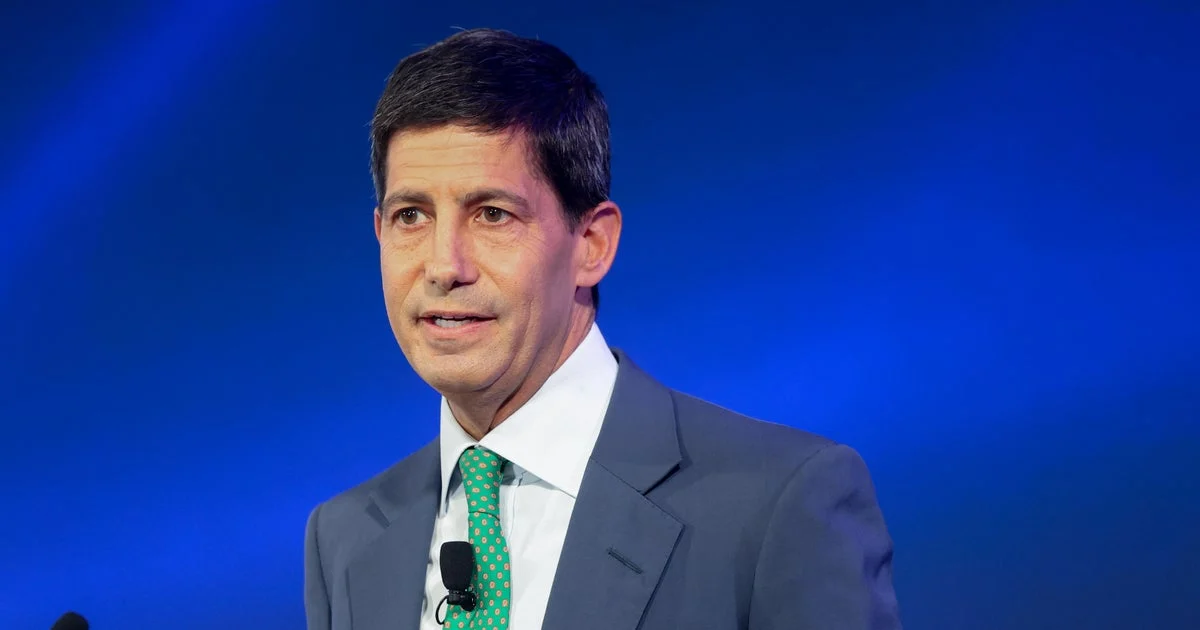
Kevin Warsh, President Donald Trump’s nominee to replace Jerome Powell as chair of the Federal Reserve, is scheduled to appear before the Senate Banking Committee on Tuesday to discuss his economic views and plans for the central bank. The hearing marks a critical step in Warsh’s confirmation process, with a majority vote from the 24-member committee needed to advance his nomination to the full Senate.
Warsh is widely expected to be confirmed to succeed Powell, whose term ends on May 15, although opposition from Senator Thom Tillis, a Republican who wants a Justice Department investigation into Powell to conclude first, could complicate the vote.
Focus on Interest Rate Policy and Inflation
During his tenure as a Federal Reserve governor from 2006 to 2011, Warsh was considered “hawkish,” emphasizing controlling inflation through tighter monetary policy. However, he has more recently expressed support for lowering interest rates, citing the potential for artificial intelligence to boost economic productivity and reduce price pressures.
Senators are expected to question Warsh on whether he supports cutting borrowing costs amid rising inflation, which hit a 3.3% annual rate recently—the highest in nearly two years—exacerbated by increased energy costs linked to the ongoing Iran war. Deutsche Bank analysts characterize Warsh’s stance as relatively hawkish compared to other policymakers despite his openness to rate cuts.
President Trump has advocated for lower interest rates, signaling he will likely pressure Warsh to pursue rate reductions once confirmed. Still, the Federal Open Market Committee sets rates by majority vote, limiting the chair’s sole influence.
Monetary Policy and the Federal Reserve’s Balance Sheet
Warsh is also expected to face questions about monetary policy tools beyond interest rates, including shrinking the Federal Reserve’s balance sheet, which expanded significantly after the 2008 financial crisis. Warsh has previously argued that reducing the balance sheet could help curb inflation by tightening the money supply.
Reducing the Fed’s balance sheet often leads to higher interest rates, making its management a delicate issue amid calls for rate cuts. Analysts note Fed officials appear to prefer a gradual approach to balance sheet reduction, and Warsh’s position on this will likely be scrutinized.
Questions Over Personal Wealth and Financial Disclosures
Aside from policy issues, Democratic senators may probe Warsh’s personal wealth and financial transparency. His disclosures reveal a net worth exceeding $100 million, significantly higher than past Fed chairs, and he is married to cosmetics heiress Jane Lauder, whose net worth Forbes estimates at $2.5 billion.
If confirmed, Warsh has committed to ending advisory roles with private investment firms and divesting certain holdings to avoid conflicts of interest.
Why it matters
The confirmation of Kevin Warsh as Federal Reserve chair comes at a critical economic juncture, as the U.S. faces rising inflation and geopolitical tensions affecting energy prices. His stance on interest rates and monetary policy will significantly influence the Fed’s approach to balancing economic growth and price stability.
Warsh’s financial background and transparency may also attract scrutiny, reflecting broader concerns over conflicts of interest among top economic policymakers.
Read more Politics stories on Goka World News.