
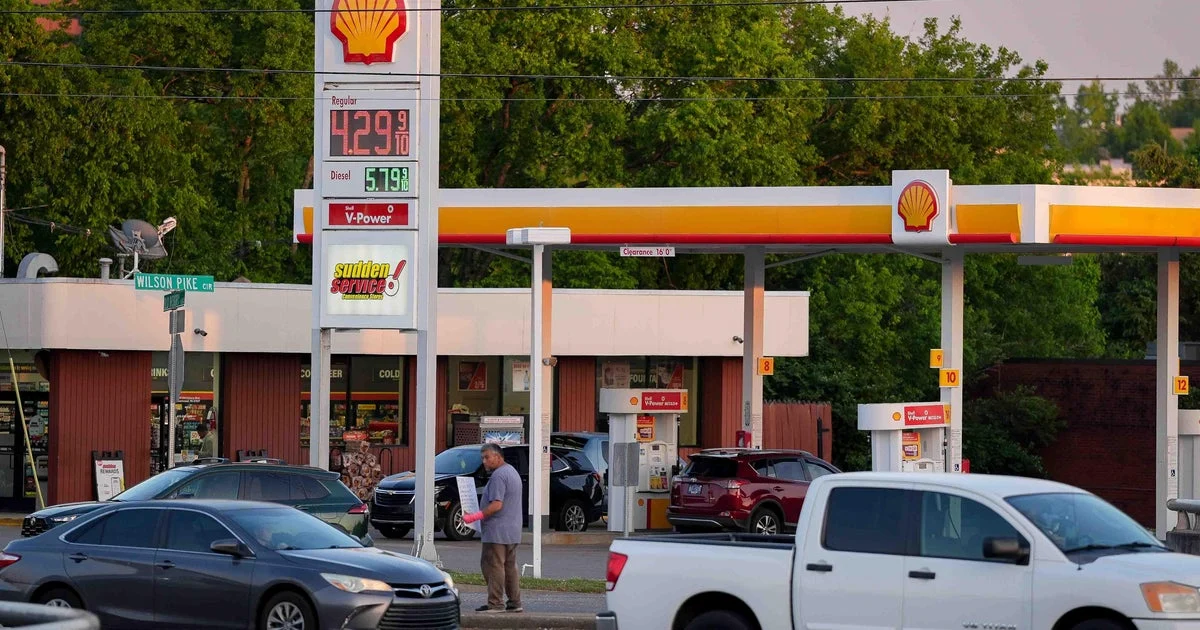
Gasoline prices in the United States are unlikely to return to below $3 per gallon in 2026, experts say, due primarily to ongoing disruptions from the war involving Iran. Despite recent declines toward $4 per gallon, analysts warn that significant price drops are improbable without a major economic event such as a recession.
Persistent Impact of the Iran Conflict on Oil Supply
The onset of military strikes on Iran by the U.S. and Israel in late February severely disrupted oil shipments through the Strait of Hormuz, a critical shipping route for global oil. Before the conflict began, the national average gas price was approximately $2.98 a gallon. Prices surged to $4.17 per gallon by early April, reflecting the constrained oil supply.
Mark Zandi, chief economist at Moody’s Analytics, explained that the damage to oil infrastructure in the Middle East and uncertain reopening of the Strait of Hormuz are expected to keep global oil supplies tight. This reduced supply is likely to sustain elevated fuel prices for months or even years, with $3 per gallon appearing an optimistic floor only in the longer term.
Price Fluctuations and Market Uncertainty
Patrick De Haan, petroleum analyst at GasBuddy, noted that gas prices could dip below $3 per gallon if the Strait of Hormuz reopens by late 2026, but he emphasized this is far from guaranteed. Energy Secretary Chris Wright echoed this uncertainty, suggesting that prices might drop later this year or even next year, while former President Trump predicted prices would fall as soon as the conflict ends.
Volatility remains a key concern, with oil prices responding sharply to geopolitical developments and threats of further military escalation. For instance, after Iran stated the Strait was “completely open,” prices fell but quickly rebounded amid renewed tensions. De Haan also highlighted that potential U.S. strikes on Iranian civilian infrastructure could cause prices to spike again.
Seasonal demand increases during the extended hurricane season, from June through November, also contribute to expected fuel price fluctuations, with analysts anticipating summer price rises.
Economic Impact on U.S. Households
Higher gas prices disproportionately affect lower-income Americans. Research from Goldman Sachs indicates that the bottom 20% of earners spend roughly four times as much of their after-tax income on fuel compared to the top 20%. Additionally, increased fuel costs could negate much of the tax refund gains resulting from the 2025 Republican tax legislation.
The Stanford Institute for Economic Policy Research estimates the average U.S. household will spend about $740 more on gasoline in 2026 due to elevated oil prices linked to the Iran conflict. This figure contrasts with an average tax refund increase of approximately $350 compared to 2025.
Why it matters
The persistence of elevated gas prices affects household budgets, inflation, and economic stability, especially among lower-income groups. The geopolitical risks surrounding the Strait of Hormuz add uncertainty to global energy markets, influencing fuel costs well beyond the immediate conflict timeline.
Background
The Strait of Hormuz is a vital narrow passage for roughly a fifth of the world’s oil trade. Disruptions there have historically caused significant volatility in oil prices. The 2026 conflict involving Iran has reignited concerns over Middle East stability and the security of global energy supplies, causing sustained high fuel prices in the U.S. and worldwide.
Read more Business stories on Goka World News.