
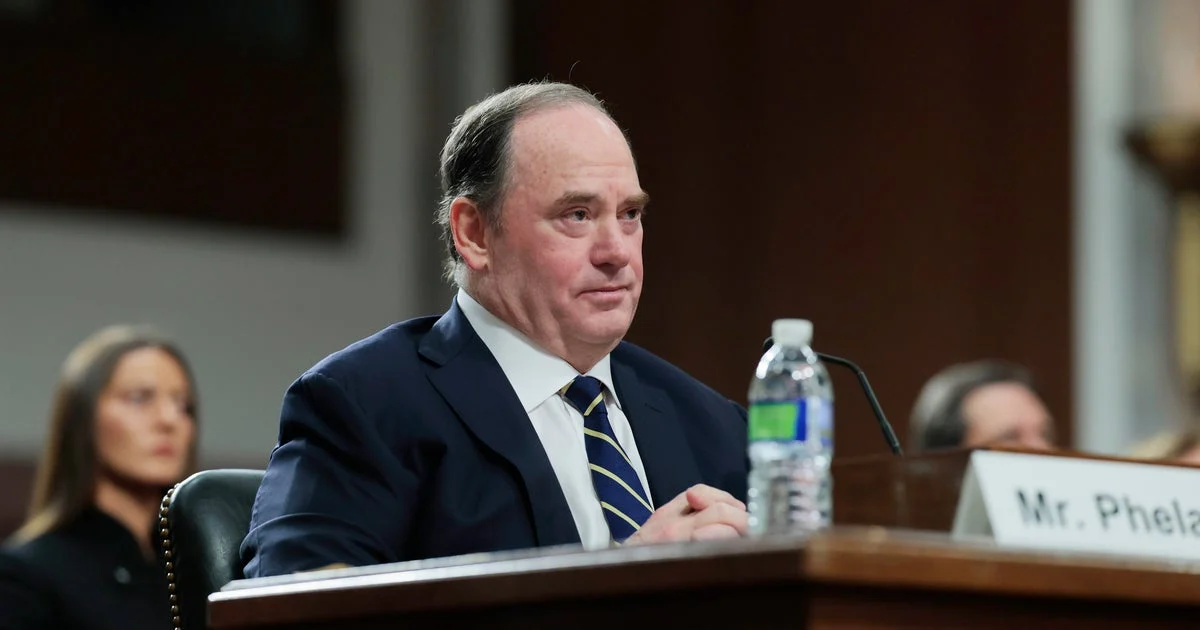
John Phelan has left his position as Secretary of the Navy effective immediately, the Pentagon announced Wednesday. The decision was confirmed by chief Pentagon spokesman Sean Parnell and came after President Donald Trump and Defense Secretary Pete Hegseth agreed on the need for new Navy leadership.
Undersecretary of the Navy Hung Cao, a Navy veteran and former 2024 GOP Senate nominee in Virginia, will serve as the Navy’s acting civilian leader. Cao lost to Democratic incumbent Tim Kaine in that race.
Recent Changes in Military and Cabinet Leadership
Phelan’s departure continues a pattern of high-profile turnovers within the Trump administration. Earlier this month, Defense Secretary Hegseth requested the resignation of Army Chief of Staff Gen. Randy George. Other key Army officers, including leaders of the Transportation and Training Command and Chaplain Corps, were also removed. Additionally, Navy Admiral Alvin Holsey retired as head of the U.S. Southern Command at the end of last year.
At the Cabinet level, three secretaries have left since last month: Attorney General Pam Bondi was dismissed, and both Homeland Security Secretary Kristi Noem and Labor Secretary Lori Chavez-DeRemer resigned.
Navy Operations and Phelan’s Tenure
The Department of the Navy, responsible for naval and Marine Corps forces, is playing a critical role in the ongoing conflict with Iran. While a temporary ceasefire has lasted about two weeks, the U.S. continues to enforce a naval blockade on Iranian ports under Trump’s orders. The administration has also suggested that Navy ships may eventually escort oil tankers through the Strait of Hormuz.
Phelan, previously a financier associated with billionaire Michael Dell’s family investment office, was confirmed as Navy secretary by the Senate in March 2025 with a 62-30 vote, including support from 11 Democrats. During his leadership, the Navy participated in military strikes on alleged drug trafficking vessels near Latin America and was involved in the seizure of oil tankers linked to Venezuela. Earlier this year, former Venezuelan President Nicolás Maduro was transported to a U.S. aircraft carrier following his capture by American forces.
Phelan was also instrumental in President Trump’s initiative to expand the Navy’s fleet by commissioning up to 25 new battleships, dubbed the “Trump-class” battleships, which he introduced alongside Hegseth and Trump at Mar-a-Lago last year.
His most recent public engagement was Tuesday at the Sea Air Space Conference near Washington, D.C.
Why it matters
The resignation of Navy Secretary Phelan and other senior military leaders reflects significant shifts in leadership amid critical U.S. military operations, particularly those concerning Iran. These changes could affect naval strategy and execution during a volatile period in the Gulf region. The decision also illustrates broader instability within the Trump administration’s defense and Cabinet ranks, which may influence policy and military command continuity.
Background
The Navy Secretary serves as the top civilian official overseeing naval forces and the Marine Corps. Leadership changes at this level occur infrequently and tend to signal shifts in military priorities or administrative strategy. Phelan’s tenure aligned with President Trump’s efforts to strengthen the Navy’s capabilities and increase its operational presence globally, especially regarding tensions with Iran and involvement in Latin America. The ongoing naval blockade and discussions of tanker escorts highlight the Navy’s vital role in these geopolitical maneuvers.
Read more Politics stories on Goka World News.