
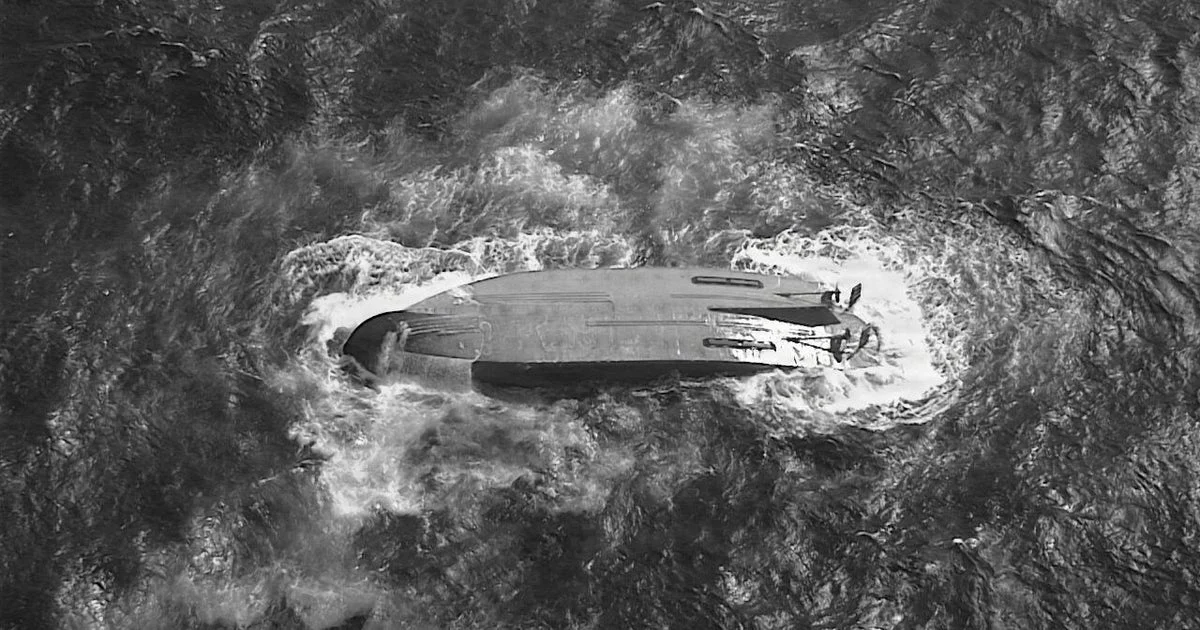
Rescue teams located the body of one of six missing crew members from the U.S.-flagged cargo ship Mariana, which capsized near the Northern Mariana Islands during Super Typhoon Sinlaku in mid-April. The U.S. Coast Guard confirmed the recovery after U.S. Air Force divers used an underwater remotely operated vehicle to search inside the overturned vessel on April 21.
The Mariana, a 145-foot cargo ship, had reported losing its starboard engine to the U.S. Coast Guard on April 15 amid the storm. Contact with the vessel was lost the following day, prompting an extensive search operation.
Additional underwater inspections were carried out by Japan Coast Guard divers, but no further crew members were found inside the ship. Coast Guard aircrews are continuing efforts to locate the five remaining missing crewmen and an orange 12-person life raft in the surrounding waters of the Commonwealth of the Northern Mariana Islands.
Search operations have spanned over 99,000 square miles and involve coordinated efforts from agencies in the U.S., Guam, Japan, and New Zealand. The overturned Mariana was initially spotted about 40 miles northeast of Pagan Island and subsequently found to have drifted 26 nautical miles further northeast. Debris, including a partially submerged inflatable life raft, was sighted roughly 110 miles from the ship’s location.
Super Typhoon Sinlaku struck the Northern Mariana Islands with sustained winds reaching up to 150 mph, classifying it as a strong Category 4 storm. The typhoon caused significant wind damage and flooding on islands such as Tinian and Saipan. Prior to landfall, Sinlaku reached maximum sustained winds of 175 mph, making it the most powerful storm to form in 2026 after typhoons Narelle and Dudzai.
Cmdr. Preston Hieb, Coast Guard Oceania District’s search and rescue coordinator, expressed condolences for the families of the crew and emphasized ongoing collaboration among partner agencies to sustain the search. Challenging weather conditions initially slowed efforts but search teams have maintained operations using all available resources.
Why it matters
The incident highlights the hazards faced by maritime vessels during severe tropical storms in the Pacific, especially in areas near U.S. territories. Ongoing search and rescue efforts underscore international cooperation in disaster response and maritime safety. The loss of contact and capsizing of a U.S.-flagged vessel raises critical concerns about preparedness and emergency communication in vulnerable regions prone to extreme weather events.
Background
The Northern Mariana Islands, a U.S. commonwealth in the Pacific, are frequently impacted by typhoons capable of causing extensive damage. Maritime vessels operating in this region must navigate rapidly changing and dangerous storm conditions. Super Typhoon Sinlaku’s high wind speeds and the resultant mechanical failure aboard the Mariana underscore the risks typhoons pose to shipping and crew safety. Multinational rescue responses have become vital in searching vast ocean areas for missing mariners in such disasters.
Read more US News stories on Goka World News.