
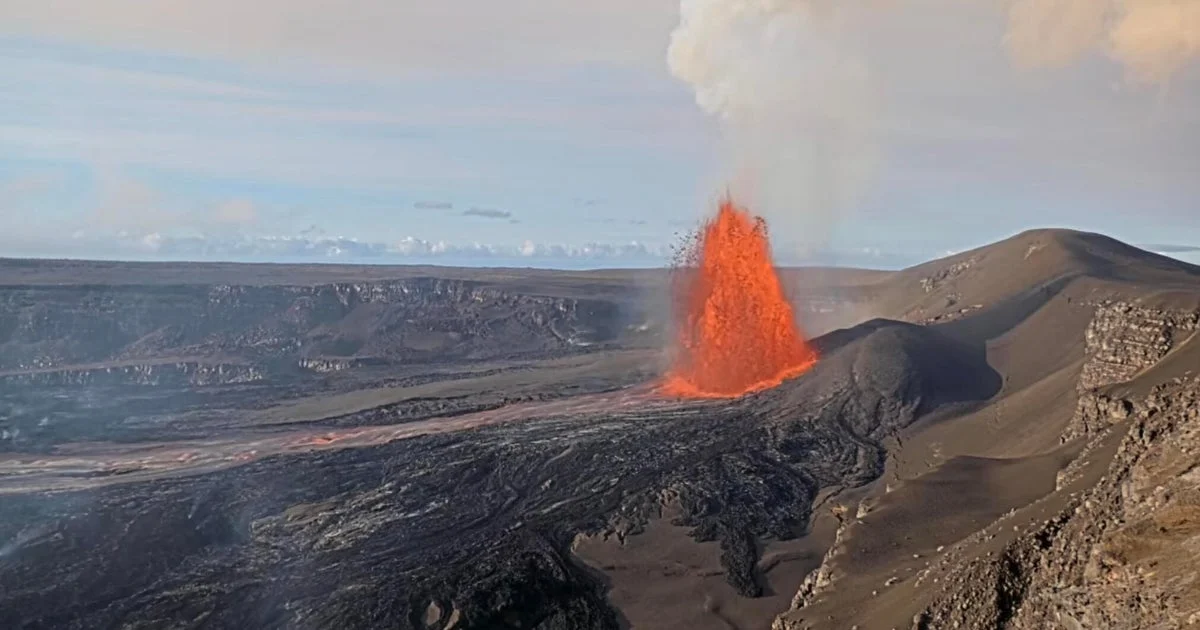
Hawaii’s Kilauea volcano erupted again early Thursday morning, producing lava fountains that shot up to 1,000 feet above the ground, according to the United States Geological Survey (USGS). This is the 45th recorded eruption episode from Kilauea over the past year and a half.
The eruption began around 1:30 a.m. local time, with molten lava streams visible through a USGS-operated livestream more than 18 hours later. Kilauea’s Hawaiian Volcano Observatory reported that lava fountains from the volcano’s northern vents initially rose to about 500 feet, later reaching peaks of 700 and eventually 1,000 feet.
The volcanic plume—consisting of lava, gas, steam, and ash—rose to approximately 16,500 feet above ground level within an hour of the eruption’s onset. This plume height was the highest recorded during the current eruption series.
Current Eruption Characteristics
Kilauea lies within Hawaii’s Volcanoes National Park on the Big Island and is one of the world’s most active volcanoes. Since December 2024, it has been erupting intermittently, with most episodes lasting less than a day. These eruptions have been limited to the Halemaʻumaʻu crater inside the volcano, so no immediate threats to residential areas or infrastructure have been reported.
The USGS has placed the volcano under a “volcano watch” status with an “orange” aviation alert, indicating limited hazards and either minor or no ash emissions. The National Weather Service also issued an ashfall advisory for downwind communities overnight due to the potential for volcanic materials drifting away from the crater.
Health and Safety Warnings
Officials caution that volcanic gases released from the eruption can cause respiratory problems when dispersed into the atmosphere, creating a condition known locally as “vog” (volcanic smog). Additional hazards include volcanic fragments called tephra—ash, pumice, and glassy materials—that can fall miles from the volcano. These fragments can irritate the skin, eyes, and respiratory system, and authorities advise minimizing exposure.
Previous eruptions, such as one in March, led to temporary closures within the national park and nearby highways. At that time, a shelter was opened for residents and visitors affected by ashfall, though it was only needed briefly.
Why it matters
Kilauea’s ongoing activity continues to draw scientific interest and public attention due to its frequent eruptions and the potential impact on air quality and local infrastructure. Monitoring by USGS helps provide timely warnings to minimize risks from ashfall, gas emissions, and volcanic debris.
Background
Kilauea is located within Hawaii Volcanoes National Park on the island’s southeastern region. Its eruptions primarily occur within the Halemaʻumaʻu crater, maintaining a pattern of frequent but largely localized volcanic activity since late 2024. This activity has attracted tourism, but also necessitates continuous monitoring for health and safety considerations.
Read more Science Discoveries stories on Goka World News.