
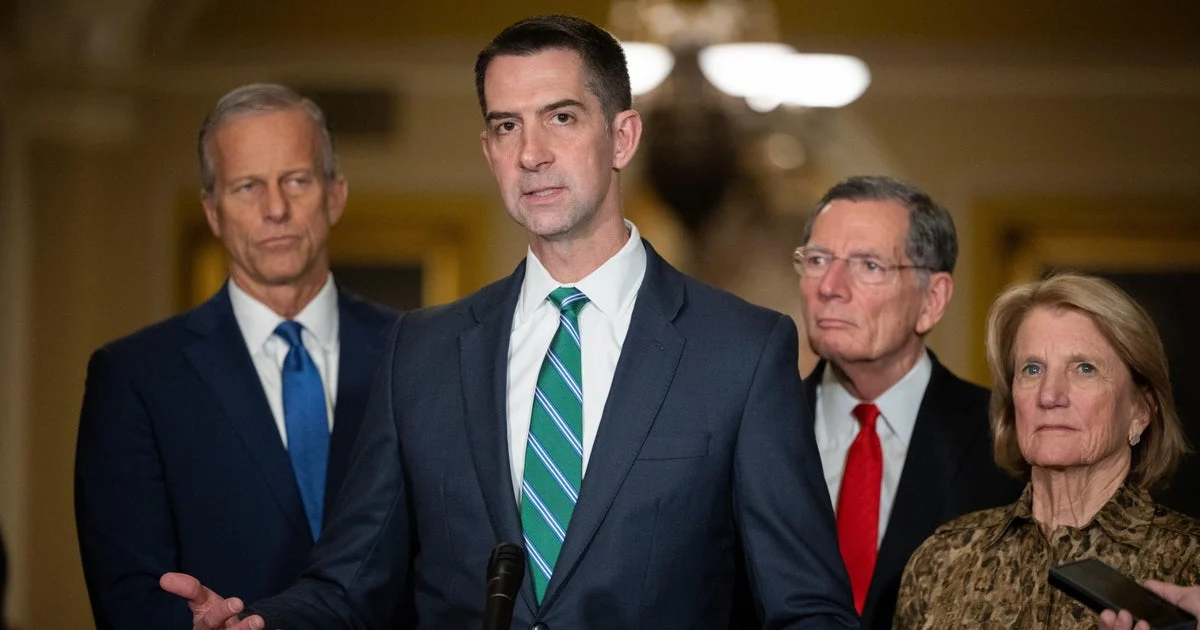
Senator Tom Cotton has introduced the “Critical Infrastructure Airspace Defense Act,” a bill aimed at enabling operators of the nation’s most sensitive infrastructure to actively defend against potentially hostile drones. The legislation responds to gaps in current law that prevent private-sector operators, despite their responsibility for securing critical sites, from legally countering aerial threats in real time.
The bill targets a limited subset of private infrastructure operators—specifically those managing facilities designated by the Department of Homeland Security (DHS) as “high risk,” including nuclear plants, key electrical substations, and bulk-power system control centers. It grants federally trained and certified personnel the authority to detect, track, disrupt, seize, or destroy unauthorized drones posing a credible threat, consistent with existing federal counter-drone guidance.
Key provisions and implementation
The legislation requires DHS to establish a federal certification program within 180 days, in partnership with the Federal Aviation Administration, the Department of Energy, and other agencies. Only personnel trained and authorized under this program may exercise the new counter-drone authorities. The bill also allocates $250 million over five years to help infrastructure operators acquire and deploy approved counter-UAS (unmanned aircraft system) technology.
Legal liability protections would shield operators and employees acting in good faith from lawsuits, except in cases of gross negligence or willful misconduct. DHS must report regularly to Congress on the use of these authorities, including classified assessments. The authorization would expire in 2031 unless renewed by Congress.
Context of drone threats to critical infrastructure
The bill follows several incidents raising national security concerns over drone threats to critical infrastructure. Notably, in 2020 a drone crashed near an electrical substation in Pennsylvania, apparently modified to damage equipment, marking the first known attempt targeting U.S. energy infrastructure. More recently, a 2024 wave of unexplained drone sightings in New Jersey exposed challenges in tracking and responding to unidentified drones near sensitive sites, despite no confirmed national security threat.
Government agencies and industry experts warn that commercially available drones’ low cost, ease of modification, and capability for surveillance or delivering explosives pose growing risks to critical infrastructure, such as hospitals, water treatment plants, and power grids.
Why it matters
Currently, counter-drone authority predominantly resides with federal agencies and some law enforcement, while private infrastructure operators have limited legal power to protect their facilities from drone incursions. The bill’s passage would mark a significant shift, allowing trained private operators to actively mitigate airspace threats, a capability considered crucial to safeguarding vital services against emerging security challenges.
While infrastructure groups generally support expanding counter-drone powers, concerns about privacy and potential misuse persist among civil liberties advocates and aviation stakeholders. The legislation reflects a broader national debate over balancing security needs with regulatory safeguards in an era of rising drone-related threats.
Read more Politics stories on Goka World News.