
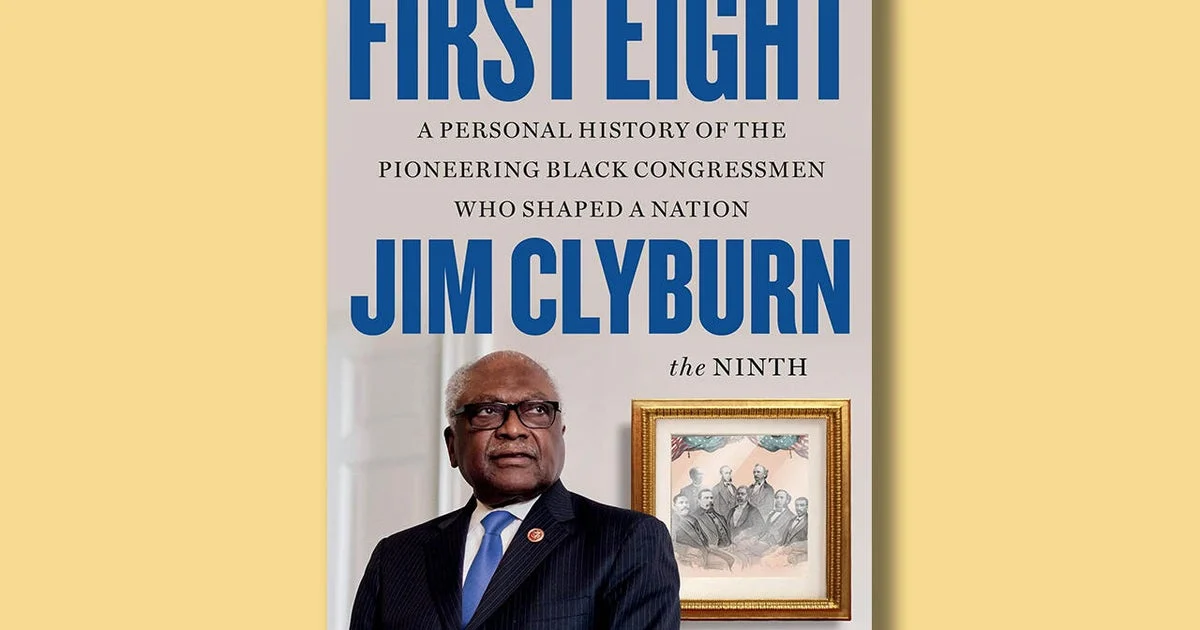
South Carolina Representative Jim Clyburn has written a new book, The First Eight: A Personal History of the Pioneering Black Congressmen Who Shaped a Nation, detailing the lives and legacies of the first eight African American men elected to Congress from South Carolina. These men served during and following the Reconstruction Era, a turbulent period immediately after the Civil War, and played a pivotal role in advancing civil rights amid fierce opposition.
Clyburn, who represents South Carolina as the ninth Black congressman from his state, reflects on the progress and struggles of these early lawmakers. He first recognized their impact by displaying portraits of the First Eight in his Congressional office, emphasizing the foundation they provided for his own career. Despite this, many remain unaware of these figures, often assuming Clyburn was the first Black representative from South Carolina—a gap of nearly a century since the last of the eight, George Washington Murray, served.
The First Eight came from varied backgrounds. Some, like Richard Harvey Cain and Robert Brown Elliott, were Northerners new to South Carolina, while others, including Robert Carlos De Large, Alonzo Jacob Ransier, and Thomas Ezekiel Miller, were born in the state to free Black parents. Joseph Hayne Rainey, Robert Smalls, and George Washington Murray were born enslaved but secured their freedom through different means.
All eight men rose to prominence in law and politics amid the era’s social upheaval, asserting the promise of equality for the four million newly emancipated Black Americans. Serving largely as Republicans during Reconstruction—a period when the Republican Party championed abolition—they faced violent resistance from so-called Redeemer Democrats intent on restoring white supremacy. Clyburn explains that party ideologies have since shifted significantly, with most African Americans now aligning with the Democratic Party, which today advocates for civil rights protections.
Why it matters
Clyburn’s book revisits a critical yet often overlooked chapter in American history, illuminating the bravery and leadership of Black lawmakers who laid the groundwork for modern civil rights advancements. Understanding the First Eight’s contributions contextualizes ongoing struggles for racial justice and highlights the enduring legacy of Reconstruction policies in shaping state and national politics.
Background
The Reconstruction Era (1861–1877) followed the Civil War and was marked by efforts to integrate formerly enslaved African Americans into political life. South Carolina, with a large Black population, saw its first Black representatives elected to Congress during this time, only to face systematic disenfranchisement and violent backlash during the Redemption period. The First Eight were among the few to achieve national office before this political rollback. Their story offers insight into the roots of racial politics in the South and the evolution of party affiliations among African Americans across centuries.
Read more Politics stories on Goka World News.
Sources
This article is based on reporting and publicly available information from the following source: