
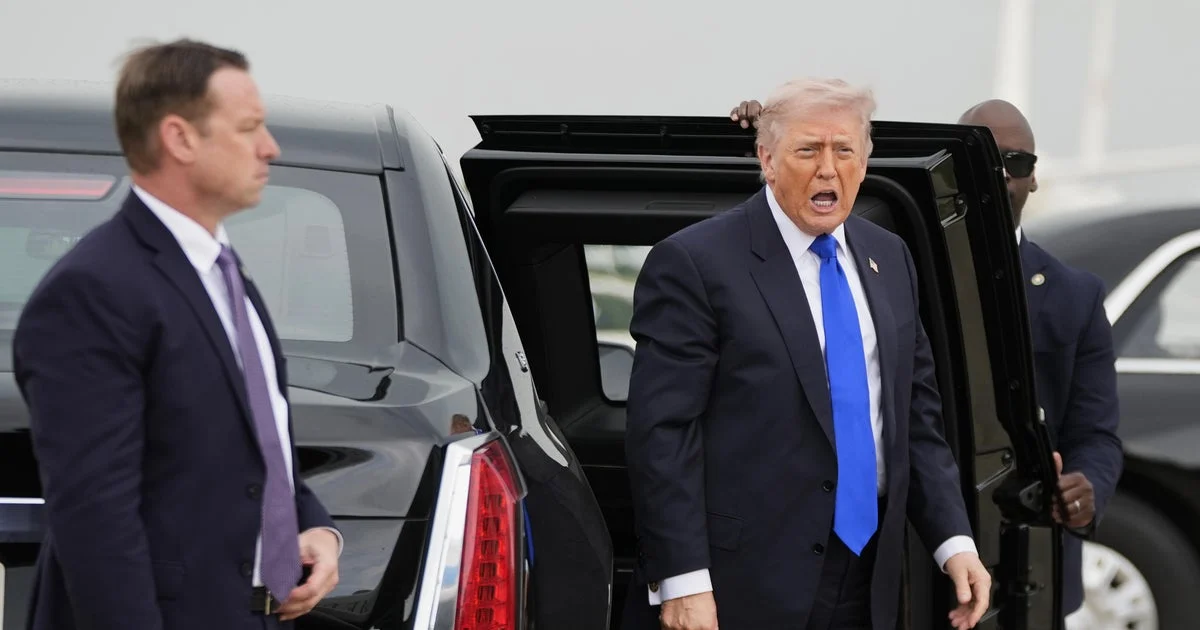
President Donald Trump announced on April 25, 2026, that he had canceled a planned trip by his envoys Jared Kushner and Steve Witkoff to Islamabad, Pakistan, aimed at initiating peace talks with Iran. Trump cited delays, confusion within Iran’s leadership, and a strong U.S. negotiating position as reasons for halting the mission.
In a message on his platform Truth Social, Trump stated, “I just cancelled the trip of my representatives going [to] Islamabad, Pakistan, to meet with the Iranians. Too much time wasted on traveling, too much work!” He added that Iran’s leadership was marked by “tremendous infighting and confusion,” claiming that “nobody knows who is in charge, including them.” The president emphasized U.S. advantage by declaring, “Also, we have all the cards, they have none! If they want to talk, all they have to do is call!!!”
White House press secretary Karoline Leavitt had earlier confirmed that Kushner and Witkoff would travel to Pakistan for direct negotiations more than 50 days after the U.S. and Israel launched airstrikes against Iran. The trip was intended to leverage Pakistan’s role as an intermediary in facilitating discussions.
Meanwhile, Iranian Foreign Minister Abbas Araghchi was in Islamabad during the same period, engaging with Pakistani Prime Minister Shehbaz Sharif before departing for Oman. Pakistan continues to act as a diplomatic channel between Tehran and Washington amid ongoing hostilities.
The conflict has significantly impacted the global oil market by disrupting shipping through the Strait of Hormuz, a pivotal maritime passage through which roughly 20% of the world’s oil supply transits. As a result, oil prices have surged while inflation in the United States has reached its highest level in nearly two years.
The U.S. maintains a blockade against Iranian ports and vessels, with Defense Secretary Pete Hegseth affirming on April 24 that the blockade would remain “as long as it takes.” His remarks echoed Trump’s position that the U.S. controls the timeline of Operation Epic Fury, the ongoing campaign of airstrikes and naval pressure on Iran.
In Iran, the government has urged citizens to reduce electricity consumption due to damage inflicted by U.S. and Israeli strikes on energy infrastructure. State media quoted Iranian President Masoud Pezeshkian advising people to limit home lighting to conserve power.
Why it matters
Trump’s cancellation of the peace mission underscores ongoing uncertainties in resolving the conflict with Iran, highlighting the U.S. administration’s confidence in its military and diplomatic position. The disruption of the Strait of Hormuz and sustained U.S. blockade continue to exert significant economic and geopolitical pressure, influencing global oil markets and U.S. inflation.
Background
The U.S. and Israel began airstrikes against Iran over 50 days ago in response to escalating tensions and security threats. Pakistan has played a crucial mediating role between the two sides, with diplomatic efforts aiming to de-escalate the conflict. The blockade and military operations reflect a U.S. strategy to apply pressure while controlling the timing and terms of any potential negotiations.
Read more Politics stories on Goka World News.
Sources
This article is based on reporting and publicly available information from the following source: