
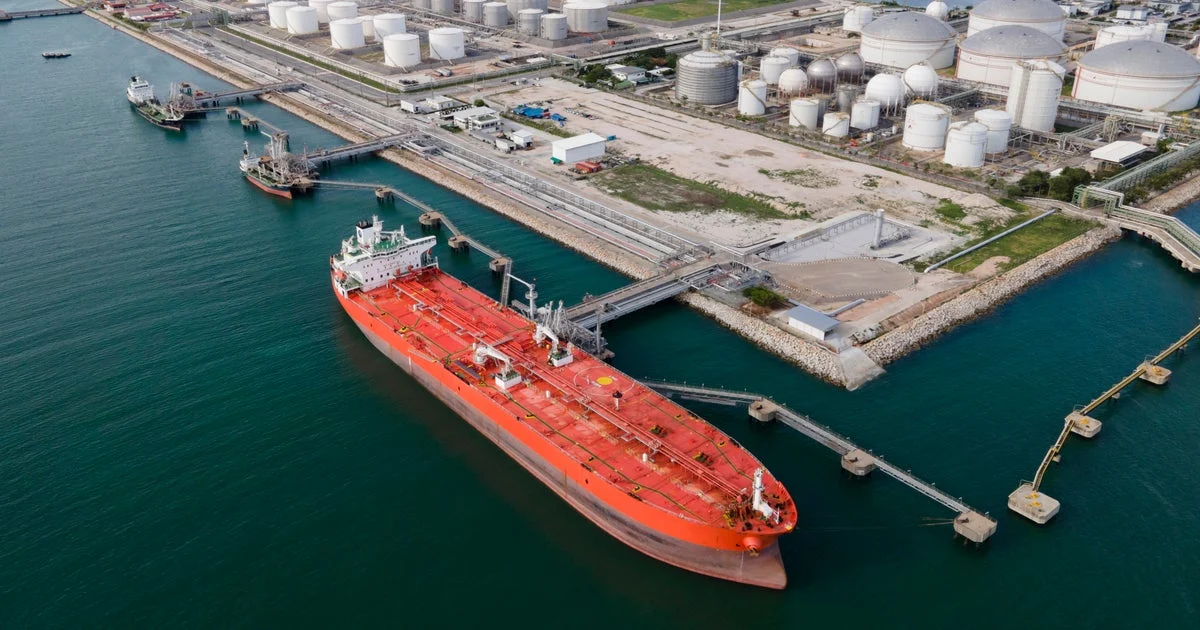
President Donald Trump has extended the waiver of the Jones Act for an additional 90 days, starting May 18, to help reduce fuel prices amid ongoing disruptions caused by the war in Iran, White House press secretary Taylor Rogers announced. The Jones Act requires that goods shipped between U.S. ports be carried on vessels that are U.S.-built, owned, and operated.
The original waiver was issued on March 18 for 60 days as the conflict in Iran cut off approximately 20% of the world’s oil supply, pushing energy costs higher. Since then, more than 40 tankers have utilized the waiver, increasing the availability of transporting goods between U.S. ports by over 70%, according to White House data. This has allowed more than 9 million barrels of U.S. oil to be delivered to domestic ports more quickly.
“The waiver extension provides both certainty and stability for the U.S. and global economies,” Rogers said on social media platform X, citing new data showing that significantly more fuel supply has reached U.S. ports faster since the initial waiver. The Trump administration views this action as one of several efforts to mitigate short-term disruptions in energy markets and secure vital energy products, industrial materials, and agricultural necessities.
Supporters argue the Jones Act is outdated and drives up domestic shipping costs. Colin Grabow, associate director at the Herbert A. Stiefel Center for Trade Policy Studies at the Cato Institute, stated that the extension indicates the administration believes the waiver is beneficial by increasing the number of available ships for domestic shipping.
However, the American Offshore Maritime Association (AOMA) criticized the extension, saying it harms the U.S. maritime industry and does not lower consumer prices. AOMA president Aaron Smith asserted that gasoline prices have risen nationwide despite the waiver. He also accused the waiver of favoring foreign shippers and undermining the foundation of the U.S. Navy during a critical time.
The Jones Act waiver is part of a broader set of measures by the Trump administration in response to the Iran war’s impact on energy markets. In March, the President ordered the release of 172 million barrels of oil from the U.S. Strategic Petroleum Reserve and temporarily lifted sanctions on Russian oil imports. Nonetheless, shipping traffic remains below prewar levels, and experts emphasize reopening the Strait of Hormuz as essential to stabilizing oil prices globally.
Why it matters
The extension of the Jones Act waiver is a significant intervention in U.S. energy policy, aimed at increasing domestic fuel supply and alleviating price pressures caused by geopolitical instability. It highlights ongoing tensions between supporting the domestic maritime industry and responding flexibly to global energy market disruptions. The waiver’s impact on shipping logistics and fuel costs remains a contentious issue among industry stakeholders and policymakers.
Background
The Jones Act, enacted in 1920, restricts domestic shipping to U.S.-flagged, -built, and -crewed vessels, intending to protect the U.S. maritime industry and national security. Critics say it raises costs, while supporters assert it preserves a vital maritime workforce and infrastructure. The 2026 Iran war caused significant disruption to oil supply routes, prompting the Trump administration to temporarily waive the act to expedite domestic transportation of energy products and reduce fuel price spikes.
Read more Politics stories on Goka World News.
Sources
This article is based on reporting and publicly available information from the following source: