
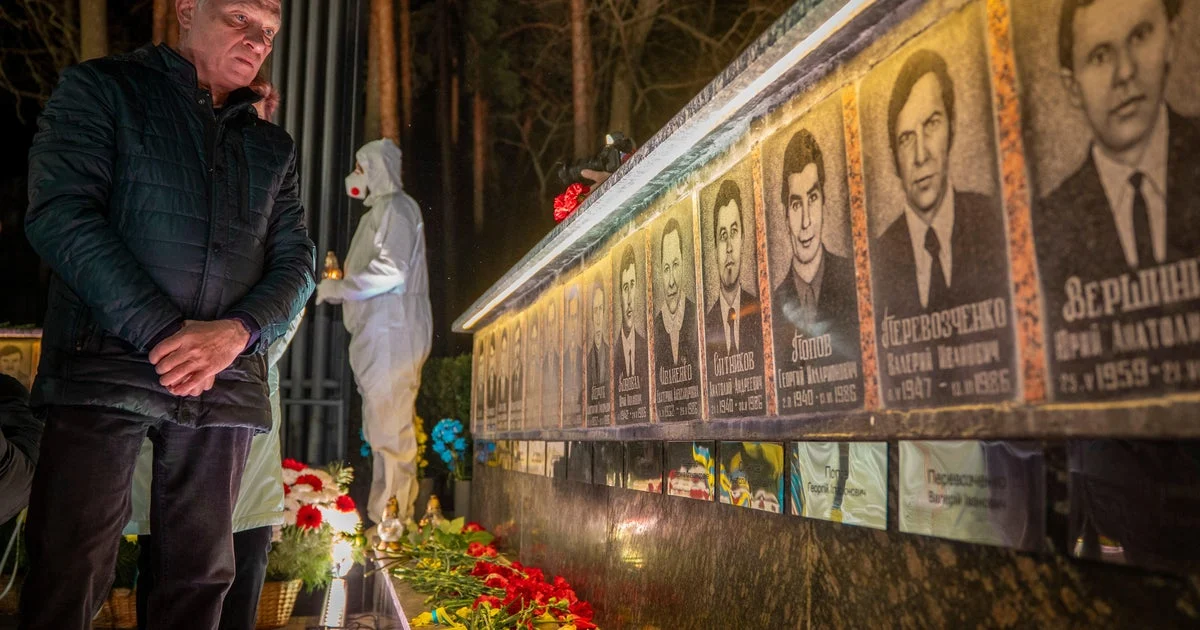
At least 16 people were killed in a series of drone and missile strikes across Ukraine, Russian-held territories, and Russia itself on the 40th anniversary of the Chernobyl nuclear disaster, authorities reported Sunday.
In Ukraine’s city of Dnipro, Russian attacks caused nine fatalities, according to the regional head Oleksandr Hanzha. Meanwhile, a Ukrainian drone strike on the port city of Sevastopol in Russian-occupied Crimea killed one man, regional officials said. Crimea has been under Russian control since 2014 and is widely recognized internationally as Ukrainian territory.
Russian-installed authorities in Luhansk—where Russia has claimed to have full control despite Ukrainian denials—reported three deaths in an overnight Ukrainian drone strike on a village, with two additional fatalities reported from earlier attacks on Saturday. These attacks have not been independently confirmed.
Russian border authorities also reported a woman killed in a Ukrainian drone strike on Belgorod, Russia’s border region. Ukraine’s General Staff said its forces targeted an oil refinery in Yaroslavl, deep inside Russia, setting fire to a facility critical for producing fuel for the Russian military. Russia has not commented publicly on the Yaroslavl attack.
Renewed Concerns Over Chernobyl Safety
The anniversary of the 1986 Chernobyl nuclear disaster has brought renewed attention to the ongoing conflict’s risks to nuclear safety. Ukrainian President Volodymyr Zelenskyy warned that Russian attacks near the plant threaten to repeat the disaster, citing past incidents when Russian-Iranian drones flew over the site and struck its protective confinement structure.
Rafael Grossi, director general of the International Atomic Energy Agency (IAEA), emphasized during a visit to Kyiv the urgent need to repair damage to the Chernobyl plant’s New Safe Confinement structure—a $2.1 billion arch built over Reactor No. 4. He warned that neglecting repairs could endanger the plant’s old sarcophagus and lead to a man-made catastrophe. The IAEA estimates at least €500 million ($586 million) will be needed for those repairs.
Ukraine claims Russian drones struck the New Safe Confinement outer shell in February 2025, though Russia denies targeting the plant and alleges Ukraine staged the attacks.
Military Cooperation Between Russia and North Korea
On the same day, Russia’s Defense Minister Andrei Belousov visited North Korea for discussions with leader Kim Jong Un about expanding military cooperation. Russian state media reported they agreed to establish sustainable, long-term military cooperation. Belousov awarded Korean service members who had participated in defending Russia’s Kursk region, which saw an incursion from Ukraine in August 2024.
Why it matters
The strikes highlight the continuing volatility of the Russia-Ukraine conflict and its expansion into Russian territory, including attacks on strategic military and industrial targets. The anniversary also underscores international concerns about the stability and safety of nuclear facilities amid warfare. Damage to the Chernobyl plant’s protective infrastructure poses environmental and public health risks beyond the battlefield, raising the urgency for international monitoring and repairs.
Ukraine’s use of long-range drones capable of striking deep inside Russia marks a significant shift in the conflict’s dynamics, potentially impacting Russian military logistics and energy supplies. Meanwhile, Russia’s deepened military ties with North Korea suggest evolving international alignments related to the war.
Read more World News stories on Goka World News.
Sources
This article is based on reporting and publicly available information from the following source: