
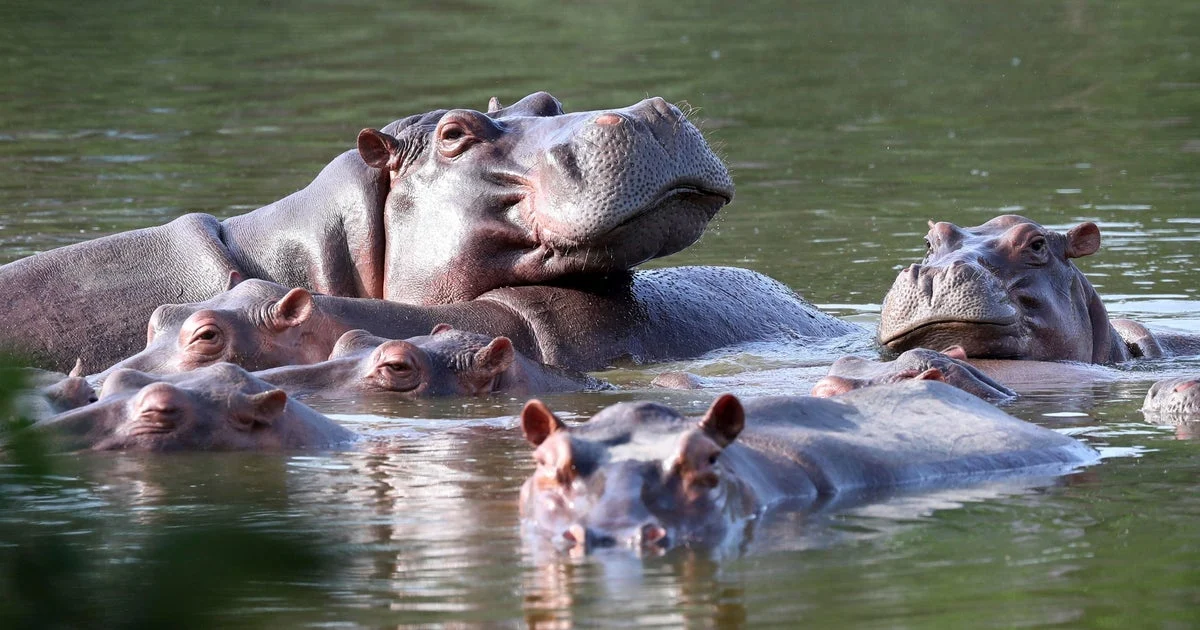
Anant Ambani, son of Indian billionaire Mukesh Ambani, has formally requested the Colombian government to halt plans to kill the invasive hippos descended from animals introduced by drug lord Pablo Escobar.
Ambani proposed a safe, scientifically managed translocation of approximately 80 hippos to his Vantara animal center, a large wildlife rescue and conservation facility in Gujarat, western India. The center already houses hundreds of animals, including elephants, bears, tigers, lions, leopards, and crocodiles.
The Colombian hippos, originally imported by Escobar in the 1980s for his private zoo, have thrived along the Magdalena River, where they have caused ecological damage and occasionally attacked fishermen. The government classifies them as an invasive species and has considered culling or sterilization to control their population growth.
Experts have warned that sterilization alone may be insufficient, and transferring the hippos overseas has been proposed, though the estimated cost of deportation stands at about $3.5 million. Ambani’s plan includes veterinary-led capture and transport, alongside preparations for a naturalistic habitat at Vantara.
In a statement, Ambani emphasized the hippos’ status as sentient beings with no choice in their circumstances, expressing a responsibility to save them through humane means. Vantara is located near the Reliance Jamnagar Refinery Complex, one of the world’s largest crude oil refineries, where summer temperatures can exceed 100 degrees Fahrenheit.
The hippos remain a notable feature of the former Nápoles ranch, once Escobar’s estate, now a public theme park with other African species on display. The Colombian government confiscated the property after Escobar’s death and recently repurposed portions to support victims of the country’s armed conflict.
Local animal welfare groups have opposed attempts to kill the hippos, citing ethical concerns and highlighting their role in Colombia’s ecology. Independent observers note that, without natural predators, the hippos’ population expansion threatens endemic species and river ecosystems by consuming large amounts of vegetation and contaminating waterways with their waste.
Why it matters
The fate of Colombia’s “cocaine hippos” raises complex environmental, ethical, and financial issues. Their invasive presence disrupts native ecosystems, but culling faces opposition on animal welfare grounds. Ambani’s offer presents an alternative that could preserve the species while mitigating ecological harm, though logistical and financial challenges remain significant.
Read more World News stories on Goka World News.
Sources
This article is based on reporting and publicly available information from the following source: