
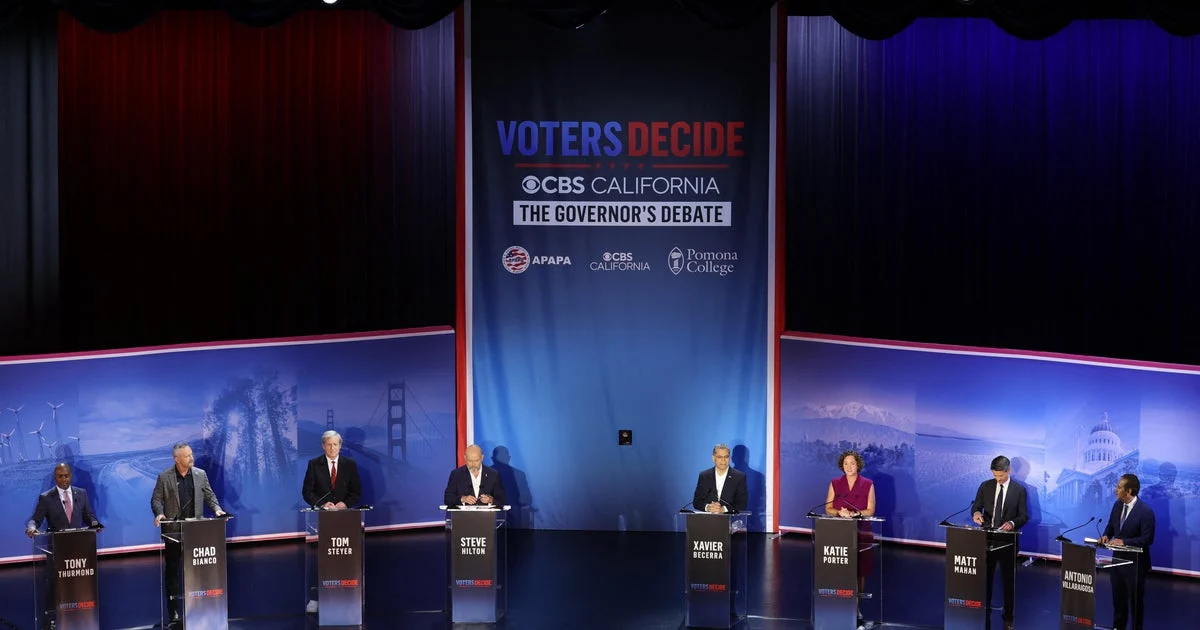
California gubernatorial candidates faced off in a televised debate at Pomona College on April 28, 2026, addressing major issues such as housing affordability, gas prices, and insurance market troubles with the June 2 primary election looming.
Key Policy Proposals on Housing and Gas Prices
Democrats put forward competing strategies to tackle California’s housing crisis. State Superintendent Tony Thurmond promised to build 2.3 million housing units by 2030, utilizing surplus school district properties and providing down-payment assistance grants for prospective homeowners. Former Los Angeles Mayor Antonio Villaraigosa proposed a $25 billion first-time homebuyer assistance program designed to help Californians enter the housing market without taxpayer costs. Meanwhile, Congresswoman Katie Porter advocated for two years of free tuition at public university systems to reduce financial burdens on young residents, indirectly supporting economic mobility in the state.
On the issue of gas prices, several Democrats, including San Jose Mayor Matt Mahan, called for suspending the state gas tax, highlighting its disproportionate impact on working-class and rural residents. Contrasting this, former U.S. Health and Human Services Secretary Xavier Becerra warned such a suspension could destabilize funding for infrastructure projects like road and transit maintenance.
Billionaire environmental activist Tom Steyer blamed higher gas prices on national factors such as the ongoing war with Iran and policies from former President Trump. He suggested California consider outsourcing oil refining as a strategy to combat price gouging from a limited number of refineries in the state.
Insurance Market Challenges and Rate Freeze Debates
California’s insurance system was a contentious topic during the debate. Katie Porter sharply criticized the state’s FAIR Plan—a government program offering insurance to residents unable to secure private coverage—calling it a “huge financial liability.” Republican candidate Chad Bianco labeled the FAIR Plan as a “failed environmental policy” that drove insurers away from California, sparking back-and-forth exchanges early in the debate.
Xavier Becerra doubled down on his pledge to temporarily freeze homeowner insurance rates, despite legal concerns raised by the California Supreme Court regarding the constitutionality of such freezes. He emphasized the need to hold insurance companies accountable for sudden policy cancellations that leave homeowners exposed.
Healthcare and Political Divides
Healthcare costs also stirred debate among candidates. Becerra highlighted his role in crafting the Affordable Care Act and criticized former President Trump’s actions which he claimed reduced premium tax credits, affecting millions of Californians’ affordability. He directly challenged Republican candidate Steve Hilton, accusing him of aligning with Trump’s policies. Hilton responded by condemning what he described as political divisiveness in California.
Why it matters
This debate comes five weeks before California’s unique open primary system narrows the gubernatorial field, where the top two vote-getters advance regardless of party affiliation. With Californians facing escalating living costs, housing shortages, and ongoing infrastructure concerns, the candidates’ proposals offer voters contrasting visions for managing the state’s economic challenges.
Background
California’s housing affordability crisis, insurance market instability, and high fuel costs have been persistent issues heightened by economic shifts and national policy debates. The governor’s race attracts considerable attention as the winner will steer policy on these fronts in the nation’s most populous state.
Read more Politics stories on Goka World News.
Sources
This article is based on reporting and publicly available information from the following source: