
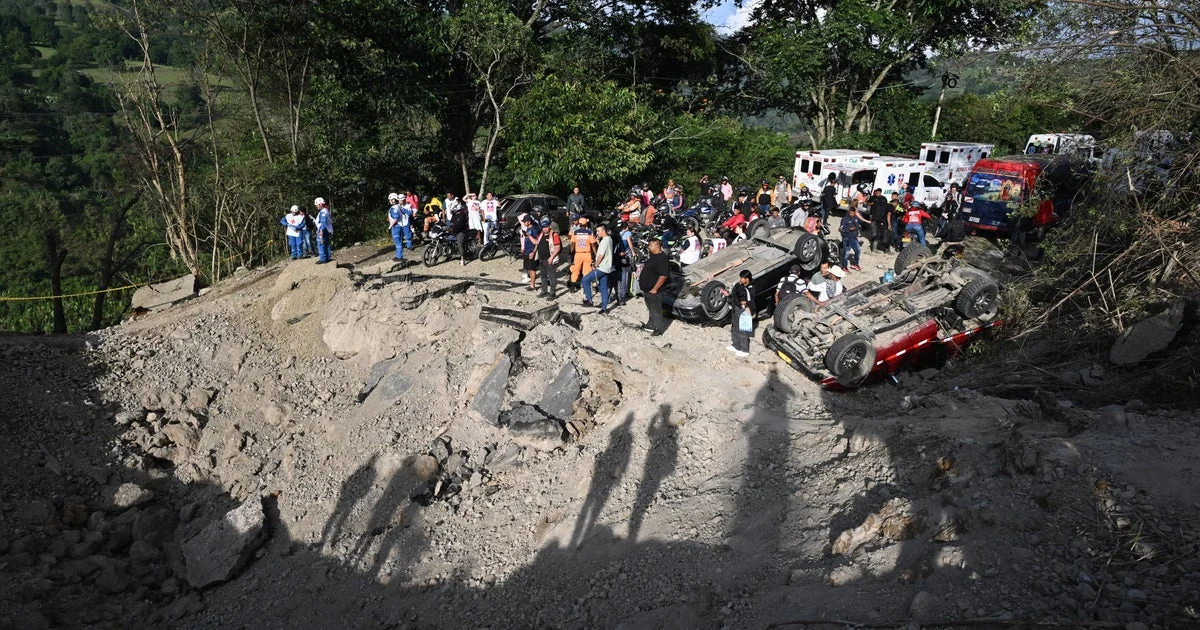
Colombian authorities announced a $1.4 million reward for information leading to the capture of Iván Jacob Idrobo Arredondo, alias “Marlon,” who is accused of ordering a bombing that killed 21 people and injured dozens more in the Cauca region. The attack occurred Saturday on a busy motorway in southwest Colombia, creating a 650-foot crater and destroying several vehicles.
Defense Minister Pedro Sanchez identified Marlon as responsible for the bombing on the Popayán-Cali road and several other attacks in the area. Describing Marlon as a “demented terrorist” targeting civilians, Sanchez vowed to take all necessary actions to prevent similar attacks in the future.
The explosion killed at least 15 women, according to Cauca Governor Octavio Guzmán, who called it the most brutal attack against civilians in decades. The bomb detonated after assailants blocked traffic with a bus and another vehicle, according to the head of Colombia’s armed forces, Hugo López.
President Gustavo Petro condemned the bombing on social media, labeling the perpetrators as “terrorists” and “fascists” and calling for the deployment of top security forces to confront them.
Armed Groups and Ongoing Violence
Marlon is linked to an armed group led by Iván Mordisco (real name Néstor Gregorio Vera Fernández), Colombia’s most wanted man. Mordisco heads the Central General Staff, a dissident faction of the Revolutionary Armed Forces of Colombia (FARC) which did not demobilize following the 2016 peace accord.
The bombing took place amid a wave of violence targeting infrastructure in the Cauca and Valle del Cauca regions, with 26 attacks reported over two days. These acts of violence occur as Colombia prepares for a presidential election on May 31, where security issues remain central to the campaign.
Mordisco’s group has been linked to previous deadly attacks, including a drone strike and car bombing last August that killed at least 18 people. Recent bombings may be retaliatory, following the arrest of four of Mordisco’s brothers and the death of his girlfriend in a Colombian air force strike in which Mordisco was reportedly wounded.
Why it matters
The attack heightens concerns about continued guerrilla violence despite the 2016 peace accord, complicating Colombia’s political climate ahead of a crucial election. The targeting of civilians underscores the ongoing security challenges faced by the government and local communities in regions affected by armed groups and drug trafficking.
The deadly bombing and ensuing manhunt highlight Colombia’s struggle to curb violent dissident factions that refuse to disarm, posing risks to public safety and political stability.
Read more World News stories on Goka World News.
Sources
This article is based on reporting and publicly available information from the following source: