
Researchers at MIT have demonstrated that the order of genes along a DNA strand alters its physical structure during gene activation, influencing whether neighboring genes are stimulated or suppressed. These findings provide new insights that could improve the design of synthetic gene circuits.
The study, published in Science, was led by senior author Katie Galloway, an assistant professor of chemical engineering at MIT, with lead authorship by postdoctoral researcher Christopher Johnstone. The team included collaborators from the University of British Columbia and Leiden University Medical Center.
Gene syntax affects DNA structure and expression
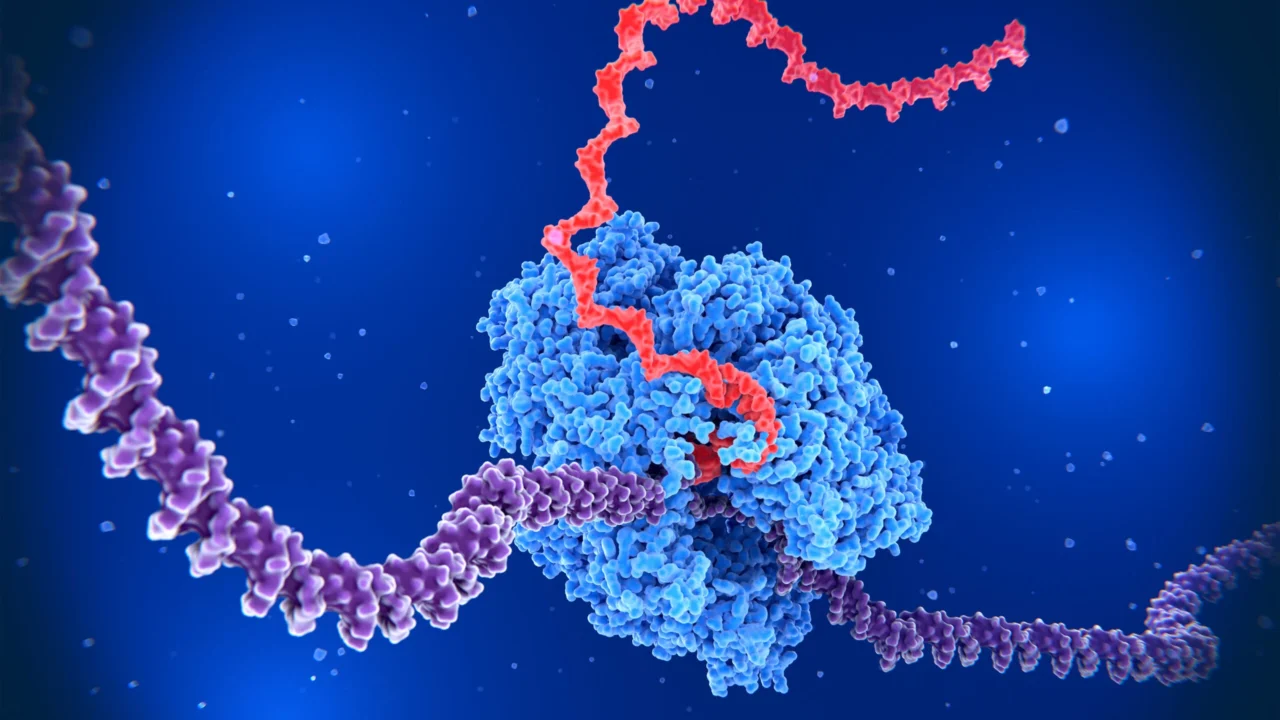
When a gene is transcribed into messenger RNA, the DNA helix unwinds locally to allow RNA polymerase to copy the sequence. This unwinding loosens DNA upstream of the gene while tightening it downstream, affecting RNA polymerase’s ability to bind and transcribe adjacent genes. As a result, genes upstream of an active gene tend to be expressed more, while downstream genes are often suppressed.
Galloway’s team had previously used computational models to predict how different gene arrangements—referred to as “syntax”—could affect gene expression. They examined three configurations: tandem (genes arranged sequentially in the same direction), divergent (genes transcribed away from each other), and convergent (genes transcribed toward each other). The model suggested that divergent arrangements amplify expression of both genes, whereas in tandem setups, downstream genes are repressed by upstream activation.
Experimental validation and implications for synthetic biology
To validate these predictions, the researchers engineered gene circuits with pairs of genes in each of the three configurations in human cell lines, including induced pluripotent stem cells. Their experiments confirmed the model’s predictions: divergent gene arrangements elevated expression of both genes, sometimes by up to 25-fold, while tandem arrangements suppressed downstream gene expression.
Using a genome mapping technique called Region Capture Micro-C, the team observed tightly twisted DNA structures—plectonemes—forming downstream of active genes, which physically impede RNA polymerase binding.
The researchers also employed a new gene insertion method, STRAIGHT-IN Dual, enabling precise integration of gene pairs into the genome to facilitate these experiments. This technique is detailed in a companion paper published in Nature Biomedical Engineering.
Guiding the design of dynamic gene circuits
The study highlights a novel dimension for synthetic gene circuit design, emphasizing that gene order and physical arrangement can be manipulated to control gene expression beyond biochemical modulators alone. For example, divergent gene syntax can maximize simultaneous expression of two genes, useful for producing therapeutic proteins like antibodies.
Galloway noted that this understanding of “gene syntax” enables programmed coordination of gene activity and dynamic circuit behaviors such as toggle switches or oscillators. This approach can be applied to gene therapies and cellular reprogramming technologies aiming for precise gene expression control.
Why it matters
These findings offer synthetic biologists a new toolkit for optimizing gene circuit output by adjusting the physical layout of genes on DNA strands. This advances possibilities in biotechnology and medicine where fine control of gene expression is critical, including gene therapy, drug production, and cellular engineering.
Sources
This article is based on reporting and publicly available information from the following source:
Read more Science Discoveries stories on Goka World News.