
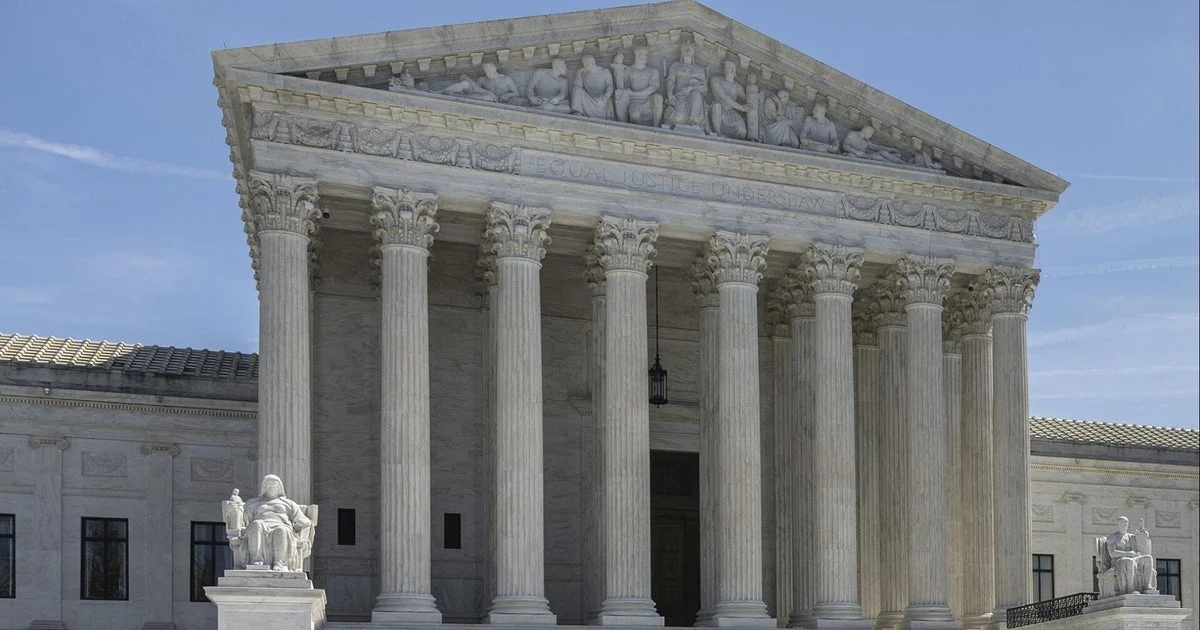
The governors of Tennessee and Alabama have initiated special legislative sessions to redraw their congressional maps in response to the Supreme Court’s narrowing of the Voting Rights Act. These moves could reshape the political landscape in both states by potentially reducing Democratic representation.
Tennessee’s Special Session and Political Goals
Tennessee Governor Bill Lee, a Republican, called lawmakers into a special session beginning Tuesday to update the state’s congressional districts. Lee emphasized the need to ensure districts “accurately reflect the will of Tennessee voters” and urged swift action since the state’s primary elections are scheduled for August 6.
Senator Marsha Blackburn, also a Republican and gubernatorial candidate, has advocated for redrawing the map to grant Republicans an advantage in all nine of Tennessee’s congressional districts. This includes plans to split Memphis’s sole Democratic district, currently held by Rep. Steve Cohen. Former President Donald Trump has publicly encouraged Lee to redraw the districts to gain an additional House seat for Republicans.
Alabama’s Ongoing Redistricting Battle
Alabama Governor Kay Ivey announced a special legislative session starting Monday aimed at potentially scheduling special primaries to accommodate a new congressional map. Ivey cited the need for readiness if the courts allow changes before the state’s May 19 primaries. Candidate filing deadlines passed in January, complicating timing.
Alabama’s congressional district boundaries have been subject to extensive legal challenges. In 2023, the Supreme Court ruled that the state’s House map violated the Voting Rights Act. Subsequent legal scrutiny led to a court-appointed expert creating a map with two districts where Black voters constitute a significant share of the electorate, both currently held by Democrats.
If courts permit, Ivey intends to revert to the state legislature’s 2023 map, which featured one majority-Black, Democratic-leaning district. However, a court injunction requires the current map to remain in place until after the 2030 census. Alabama’s Attorney General has petitioned the Supreme Court to overturn that injunction, citing the recent high court ruling.
Impact of the Supreme Court’s Louisiana Ruling
The trigger for these redistricting efforts was the Supreme Court’s May 2026 decision in Louisiana v. Callais, which struck down a Louisiana congressional map that included two majority-Black districts. The Court ruled that districts must only be challenged under the Voting Rights Act if there is strong evidence of intentional racial discrimination, significantly scaling back how race factors into district drawing.
The ruling has reverberated across multiple southern states, prompting legislative actions and legal contests over congressional maps. Louisiana officials have halted upcoming primaries pending redistricting, and states like Mississippi and Florida are also considering changes, although timing and prior primary schedules limit some states’ ability to redraw maps this election cycle.
Why it matters
These developments illustrate a dramatic shift in redistricting rules following the Supreme Court’s interpretation of the Voting Rights Act. The decision effectively reduces the federal oversight designed to protect minority voting power and may lead to fewer majority-Black districts in southern states. This could alter the partisan balance in the U.S. House by increasing Republican prospects in areas previously represented by Democrats.
With midterm elections looming, the timing and outcomes of these special sessions will influence candidate lineups and voter representation in critical states, potentially affecting congressional control and legislative agendas at the national level.
Sources
This article is based on reporting and publicly available information from the following source:
Read more Politics stories on Goka World News.