
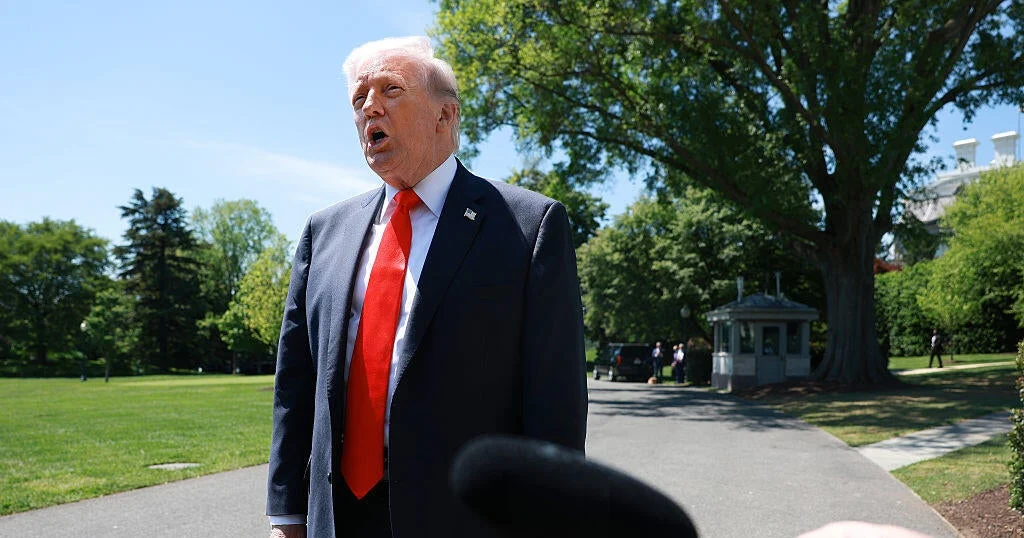
President Donald Trump officially informed congressional leaders on May 1, 2026, that hostilities between the United States and Iran have “terminated,” following a conflict that began on February 28, 2026. This notification marks a significant moment as it coincides with the expiration of the 60-day limit on unauthorized military hostilities set by the 1973 War Powers Resolution.
Notification to Congress and Conflict Timeline
In letters addressed to House Speaker Mike Johnson and Senate President pro tempore Chuck Grassley, Trump stated, “There has been no exchange of fire between the United States Forces and Iran since April 7, 2026,” asserting that the active combat phase has ceased. The initial hostilities were triggered by coordinated U.S. and Israeli strikes on Iranian targets, which escalated into broader regional tensions.
The War Powers Resolution requires the president to notify Congress within 48 hours of initiating military action and to terminate such hostilities within 60 days without congressional approval. Trump’s notification, sent on March 2, started this legal countdown, which expired on May 1.
Ceasefire and Continued Military Posture
The Trump administration argues that a ceasefire brokered in early April effectively paused the 60-day clock. Defense Secretary Pete Hegseth testified before the Senate Armed Services Committee that the ceasefire “stopped the clock” on statutory deadlines, reflecting the administration’s position that active hostilities have ended.
However, some lawmakers, including Democratic Senator Tim Kaine, have expressed skepticism, stating that the War Powers Resolution does not support pausing the deadline due to a ceasefire. Despite the ceasefire, the U.S. continues to enforce a naval blockade on Iranian ports and maintains more than 50,000 troops in the Middle East, highlighting ongoing tensions and the threat level.
Hegseth also warned that the military is prepared to resume strikes quickly if ordered, emphasizing the administration’s readiness to respond to Iranian threats.
Legal and Constitutional Context
The confrontation brings renewed attention to the War Powers Resolution, a law intended to constrain presidential war-making authority and require congressional approval for prolonged military engagements.
Historically, presidents have often bypassed or disputed this law’s applicability. Trump himself stated at the White House that the War Powers Resolution has never been strictly followed, with previous presidents viewing it as unconstitutional.
Previous administrations have also interpreted the statute flexibly to continue operations beyond 60 days, citing factors like the absence of “hostilities” or implicit congressional approval through funding.
Why it matters
This development tests the limits of executive military authority and congressional oversight amid ongoing geopolitical tensions with Iran. The administration’s interpretation that hostilities have ended despite continued military actions raises important legal questions over the War Powers Resolution’s enforcement. How Congress responds could shape U.S. policy and constitutional precedent on authorizing use of force abroad.
Sources
This article is based on reporting and publicly available information from the following source:
Read more Politics stories on Goka World News.