
Iran has issued a stern warning that any ship attempting to pass through the Strait of Hormuz without coordinating with Iranian authorities will face forceful opposition, directly challenging the United States’ announcement of plans to escort commercial vessels through the narrow and strategically vital waterway.
The Islamic Revolutionary Guard Corps spokesman Brigadier General Mohbi stated on Monday that maritime traffic must obey Iran’s “transit protocols,” which require ships to navigate designated routes with prior coordination. Mohbi emphasized that vessels violating these requirements “will be stopped with force,” underscoring Tehran’s claim of control over this crucial chokepoint.
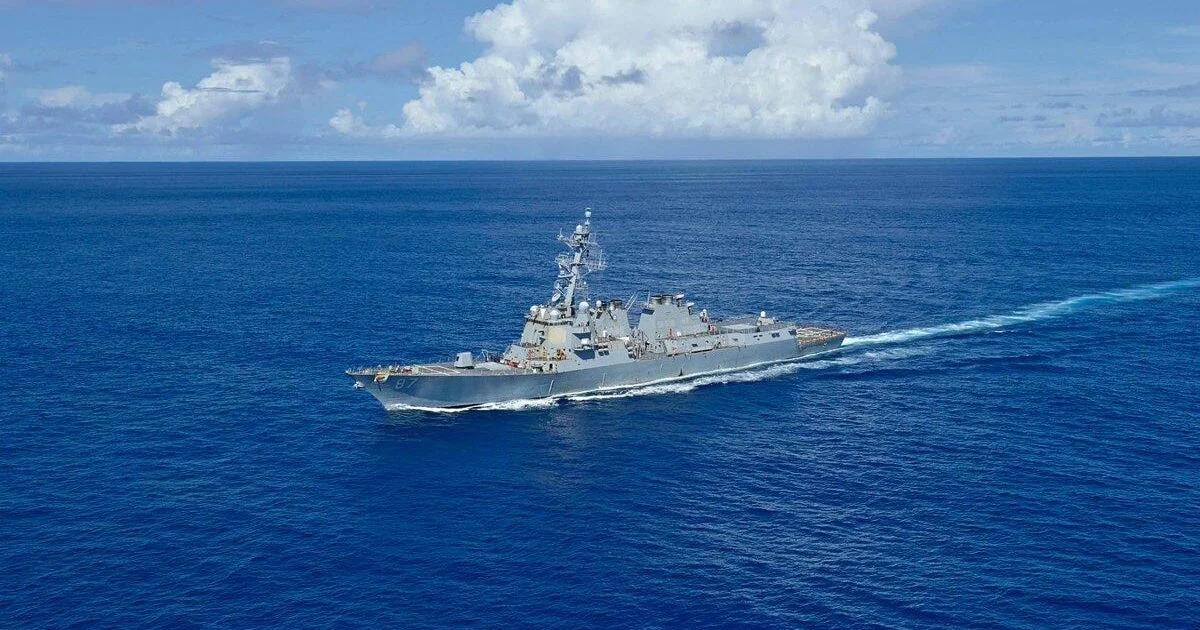
This warning is part of escalating tensions following President Donald Trump’s announcement of “Project Freedom,” a U.S. military operation involving 15,000 personnel and over 100 aircraft aimed at safely guiding commercial ships stranded in the Persian Gulf out through the Strait of Hormuz. The U.S. has established an “enhanced security area” south of the strait’s usual shipping lanes and urged vessels to coordinate passage with Omani authorities due to potential dangers from mines.
Iran’s military has also cautioned that any U.S. forces entering the strait will be attacked. Major General Ali Abdollahi of Iran’s central military command affirmed that the security of the strait is under Tehran’s control and that all safe passage must be coordinated with Iranian armed forces. This is a direct response to the ongoing U.S. naval blockade of Iranian ports, which Iran sees as a violation of the ceasefire that has paused large-scale hostilities since February.
The Strait of Hormuz is a critical maritime passage where roughly one-fifth of the world’s oil typically transits. The Iranian threats, combined with the U.S. blockade and planned military escort, have fueled international concern over potential confrontations in the Persian Gulf and contributed to elevated global energy prices.
Why it matters
The Strait of Hormuz is vital for global energy supplies, and any disruption threatens economic stability worldwide. Iran’s assertion of control over the strait and its threats of force heighten the risk of military conflict just as the U.S. escalates its maritime security efforts to counter Iranian restrictions on shipping.
The U.S. plan to escort commercial ships aims to mitigate the long-standing disruption caused by Iran’s maritime restrictions and maintain open shipping routes critical for oil exports. However, Iran’s declaration that it will use force against unauthorized transit vessels and any U.S. naval presence risks further escalating tensions in an already volatile region.
Background
Since a U.S. and Israeli military campaign against Iran began in February 2026, tensions in the Persian Gulf have primarily centered on control of the Strait of Hormuz, where Iran recently blocked and attacked vessels that transit without its consent. The ceasefire that halted direct military strikes has not resolved underlying disputes. The U.S. imposed a naval blockade on Iranian ports, while Iran adamantly insists the strait’s security is its jurisdiction, maintaining threats against global shipping and rejecting ongoing U.S. demands.
Pakistan has played a limited mediating role, facilitating the transfer of Iranian crew members from a U.S.-seized cargo vessel, but broader diplomatic efforts remain stalled. European nations advocate for a coordinated reopening of the strait but have declined to participate militarily until a political resolution is achieved.
Sources
This article is based on reporting and publicly available information from the following source:
Read more World News stories on Goka World News.